
Yesterday afternoon – our time in Bali drawing to a close – we visited the SAKA Museum, in Ayanya. It describes itself as:
An Ode to the Balinese Saka Calendar
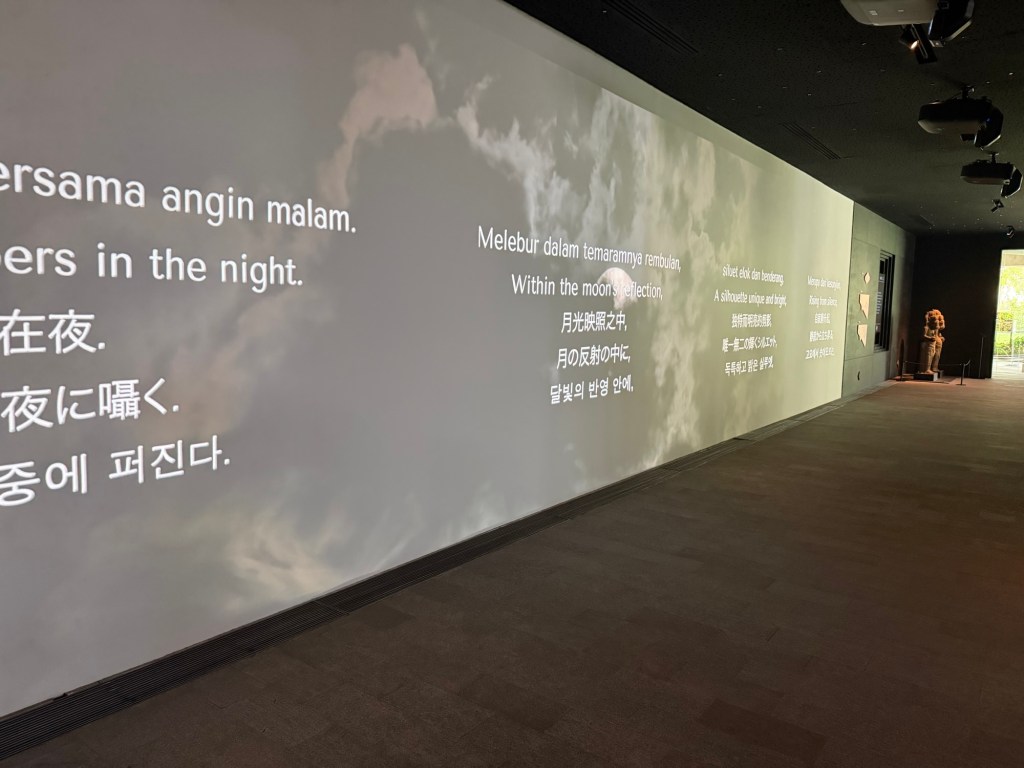
Let us begin and end with something quite beautiful. Words mounted on the wall as you enter the impressive space.
From silence, sound is born,
emerging from a vast, quiet depth,
A multitude of melodies converging,
within a myriad of tones’ depth.
Sound gives birth to form,
amidst the harmonious specter,
Crafting a universe for humans,
a canvas for thought and wisdom.
“Sasi wimba haneng gata”
a tribute to the moon’s gentle trace,
Mirrored in tranquil waters,
a calm reflection finds its place.
Rising from silence,
A silhouette unique and bright,
Within the moon’s reflection,
Nyepi’s wisdom whispers in the night.
Silence is the mirror of your soul.
A visit to and walk through the museum is, essentially, a truly captivating exploration of the Balinese Day of Silence, Nyepi.
This blog is an attempt at capturing the illuminating couple of hours we enjoyed at SAKA. It did, in so many ways, serve as a quite brilliant, artistic re-cap of the Balinese culture we have attempted to soak up over the past 10 days.
Kasanga, the ninth month in the Balinese Saka calendar, marks a period of renewal and transformation for the Balinese.
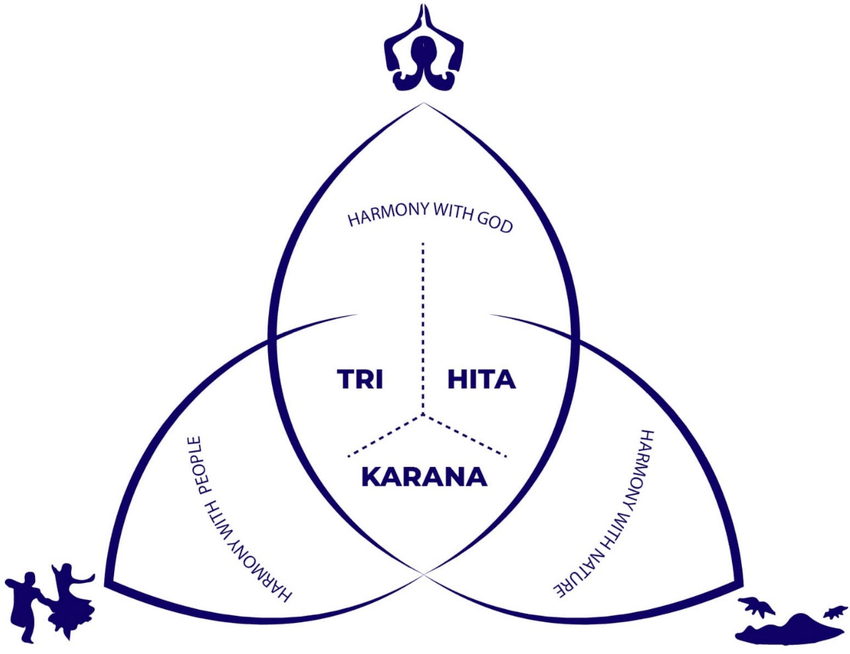
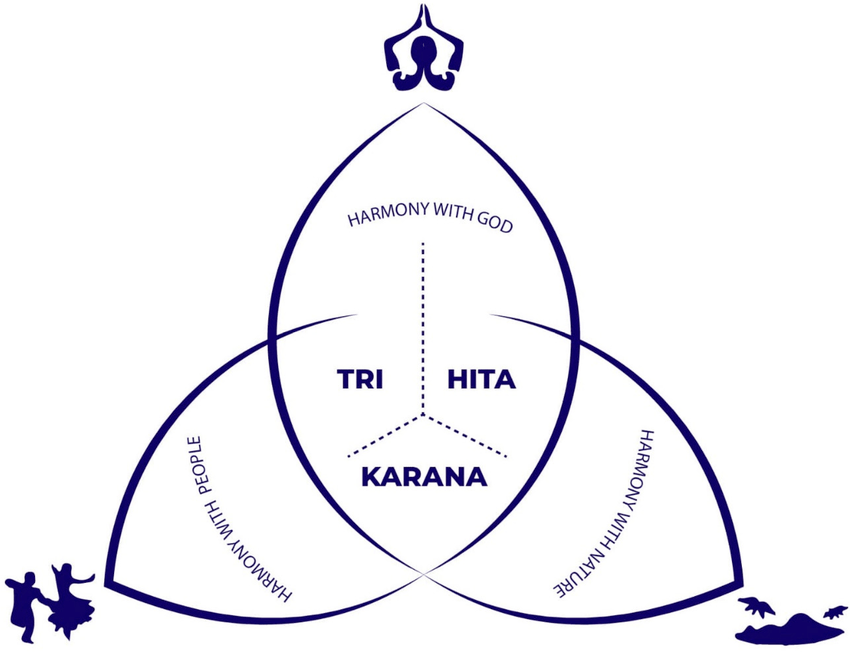
Falling in March, it is when Bali observes Nyepi, the Day of Silence, which marks the beginning of the Saka New Year. This period invites deep spiritual reflection, purification, and the restoration of balance between humans, nature, and the divine.
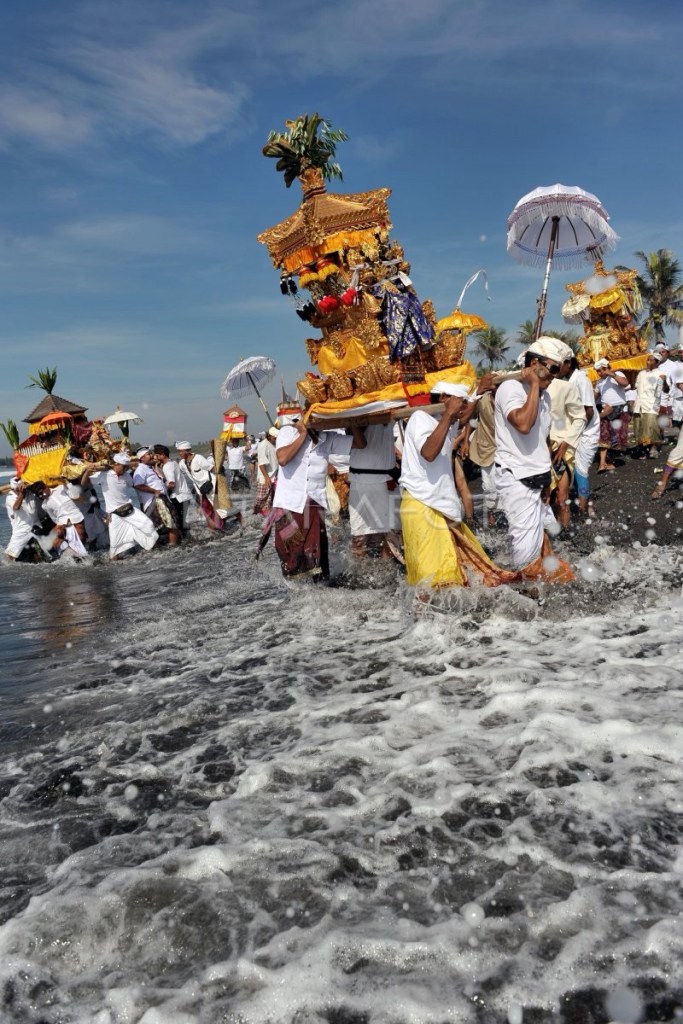
The Kasanga rites unfold in a series of sacred rituals. Melasti is a cleansing procession to the sea, where sacred objects are purified.
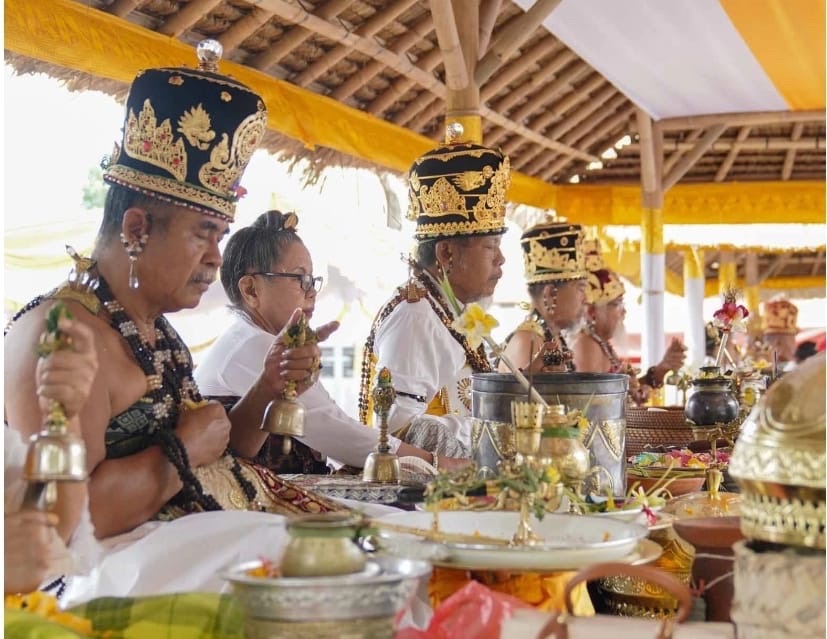
Tawur Kasanga follows, with large scale offerings to maintain cosmic harmony.
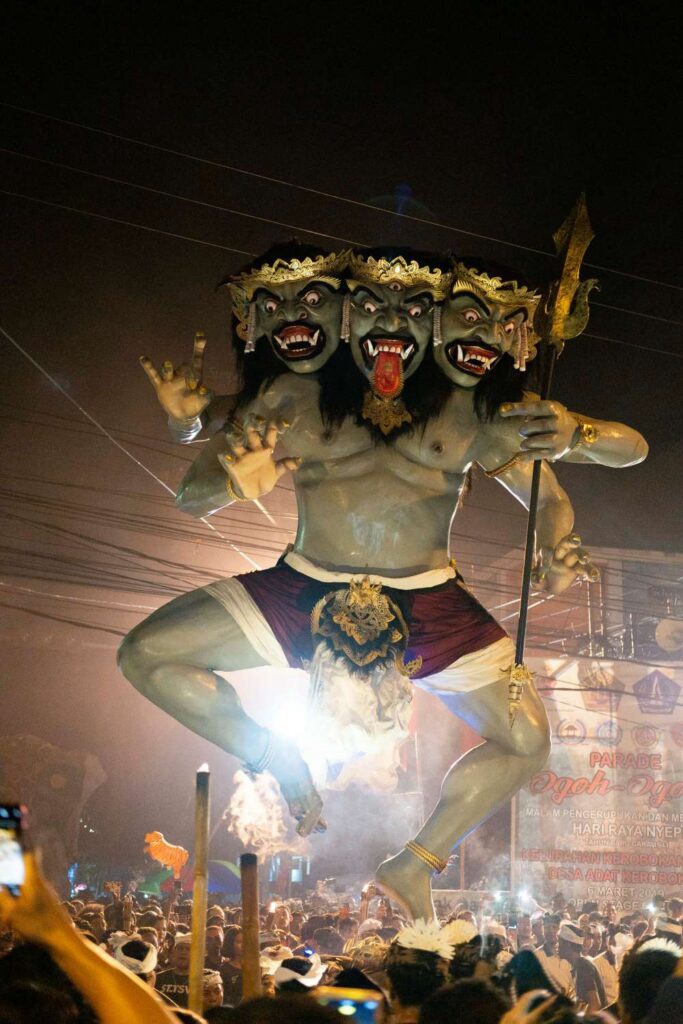
On Pengrupukan, the island erupts in a vibrant night of ogoh-ogoh processions, symbolising the banishment of negative forces.
This leads into Nyepi, a full day of silence, reflection, and meditation. The cycle concludes with Ngembak Geni, a time of renewal, forgiveness, and reconnection. These rituals embody the principles of somya (balance), sunya (silence), and ramya (joy).
There was an area of the museum that – we were pleased to see – spoke of the Balinese concept of Subak.
Subaks are self-governing, democratic organisations of Balinese farmers who manage the island’s rice terraces. This was something introduced in the Day 18 blog.
These two short videos, captured at the museum, summarise the Ancient Order of Subak perfectly. They both have sub-titles, and are highly informative.
This second video allows privileged access into the meeting of a Subak Council.
The upper two floors of the museum housed what can only be described as a series of magnificent art installations; representations of mythical characters of gargantuan proportions.
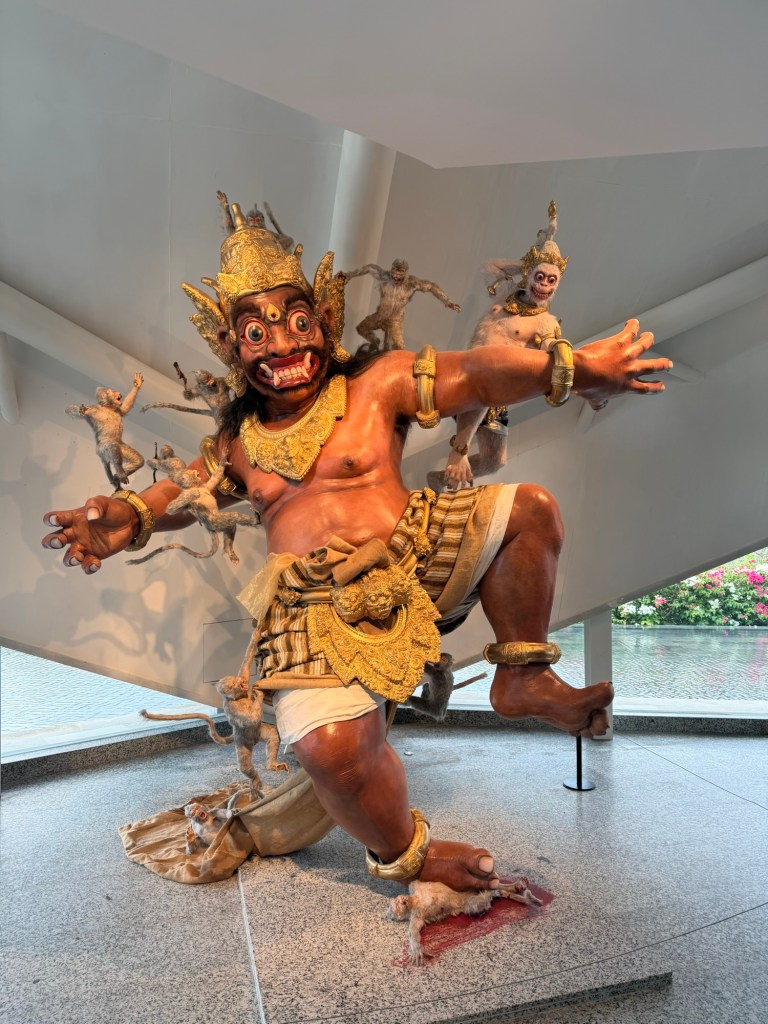
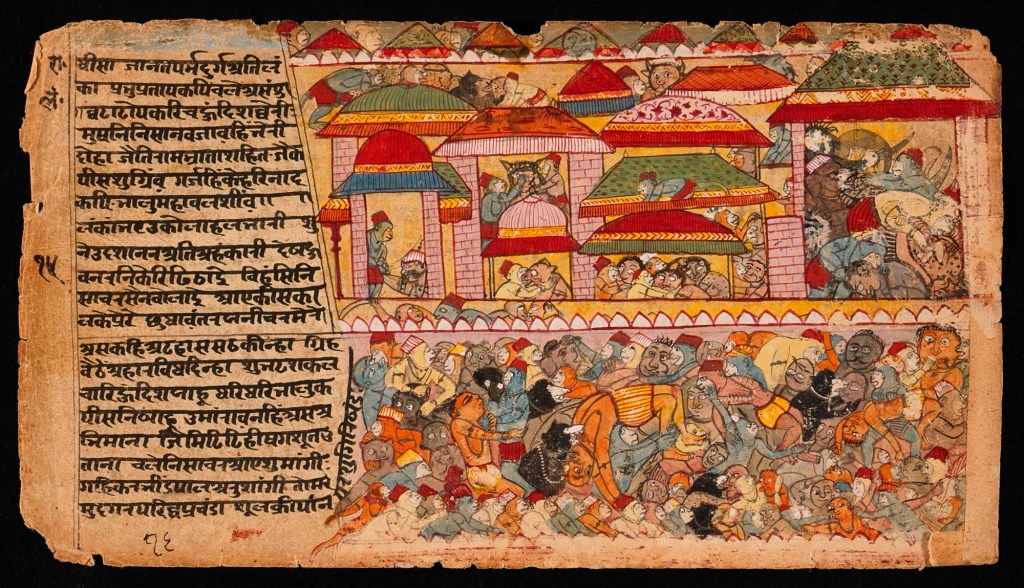
The above is Kumbharkana, a mighty and formidable giant, the second son of Rishi Vishrava and Goddess Sukeshi. When Rama’s army of apes from Kishkhinda invaded Lanka, Kumbharkana fought valiantly until death.
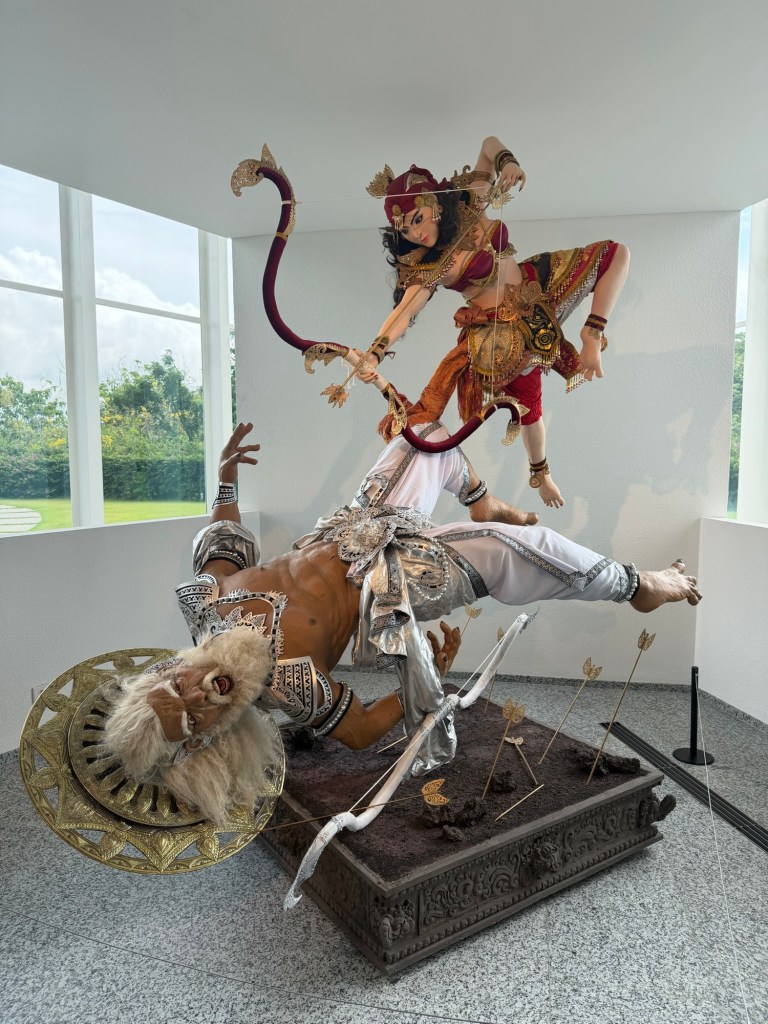
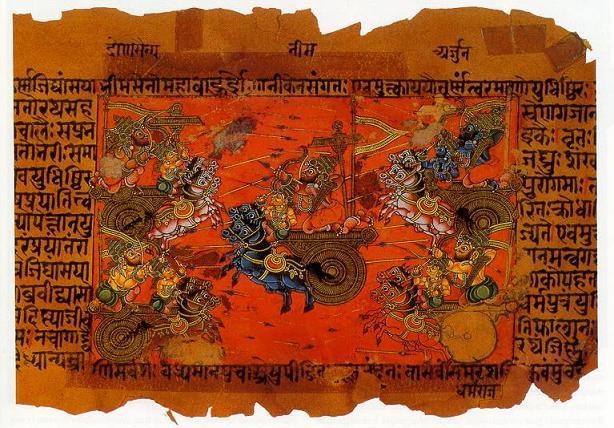
This is the mighty heroine Shikhandi. It depicts a scene from the tenth day of the Kurukshetra War, with the warrior Bhishma meeting his end.
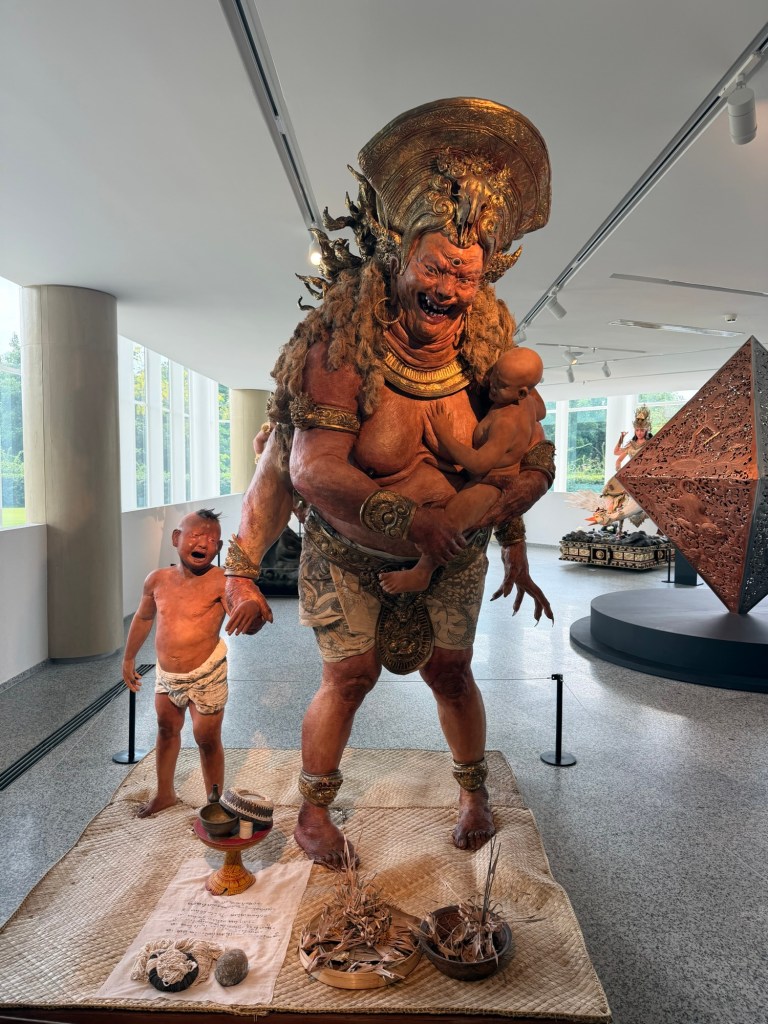
The birth of a child is a joyous occasion in Bali, marked by rituals for protection and well-being. At six months the baby celebrates its first otonan, a Balinese birthday in the Pawukon Calendar, with a head-shaving ritual symbolising purification. This otonan is then repeated every six months.
I must say, the youngsters depicted do not look impressed. It also begs the question, at what age does the six monthly routine end? I can think of a few teenagers in days of yore who would have rebelled at having their pride and joy tampered with.
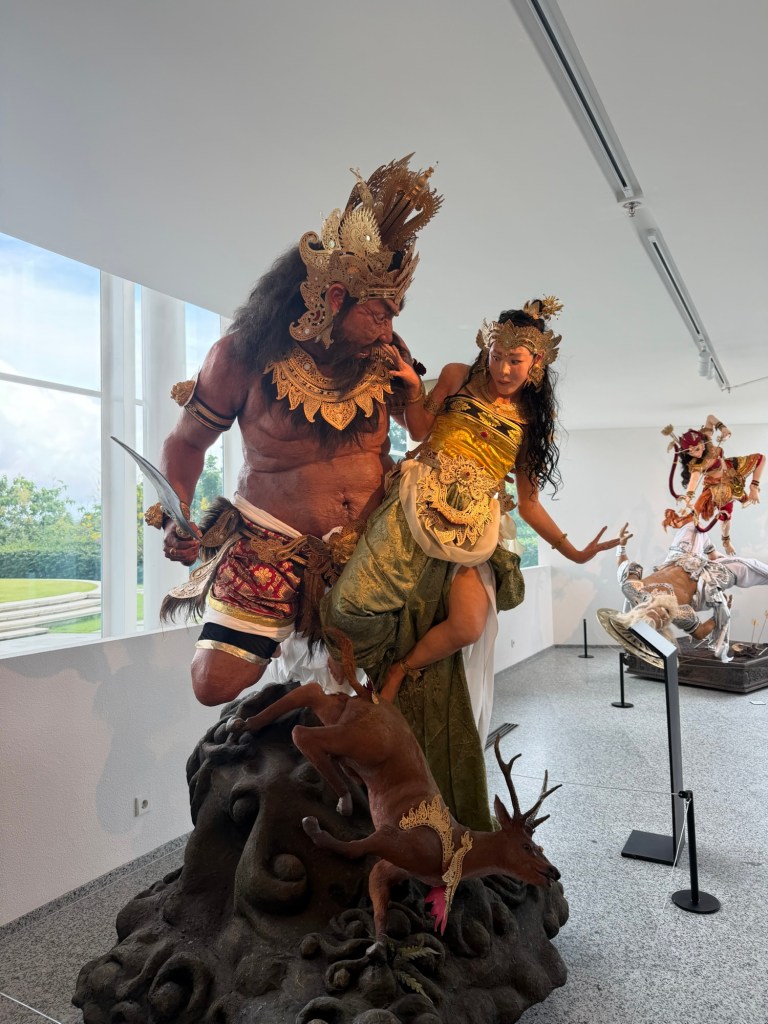
The next installation features Ravana, the demon king of Lavanka, disguised as a priest, ensnaring Sita. A tale from the third book of the Ramayana.
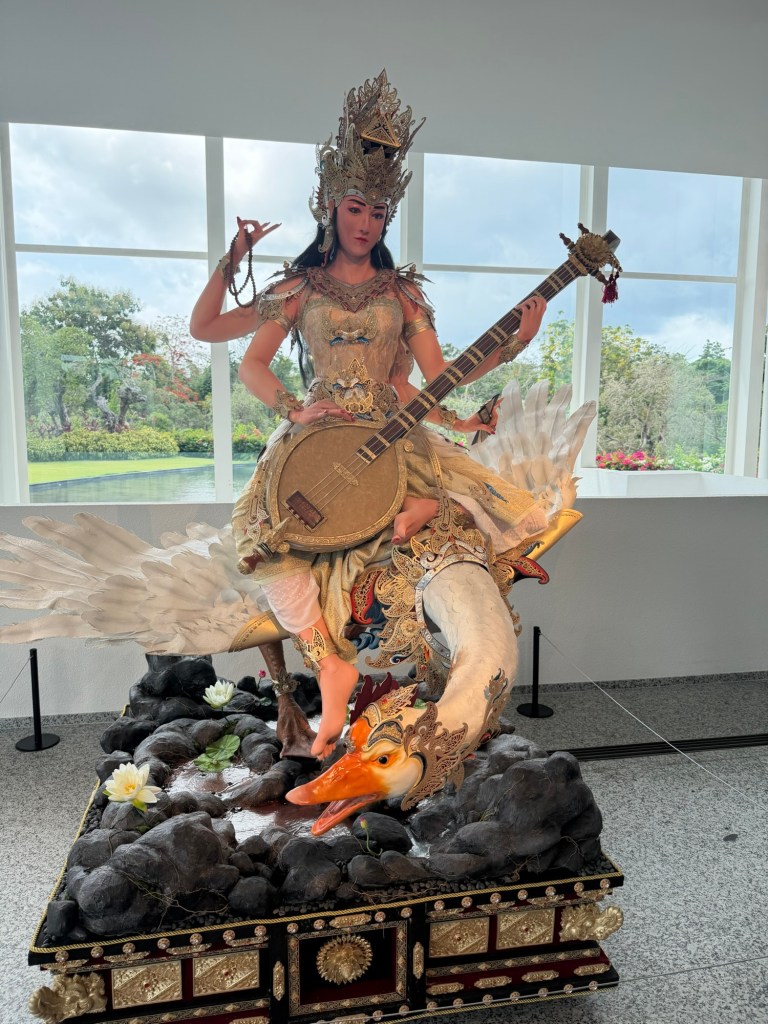
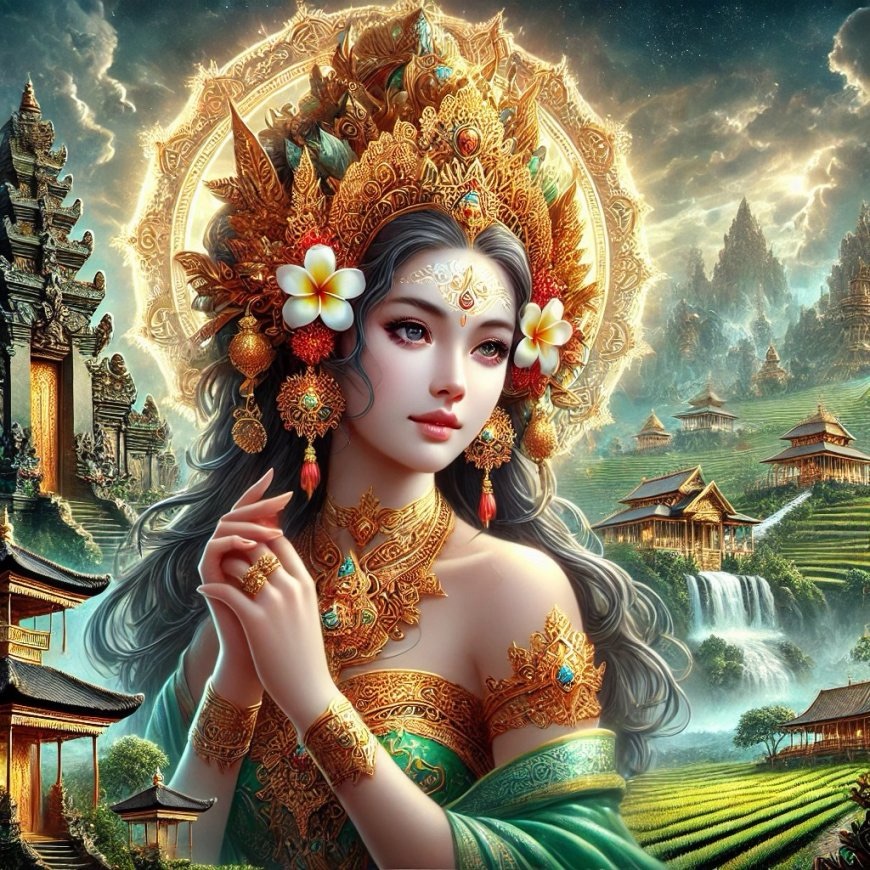
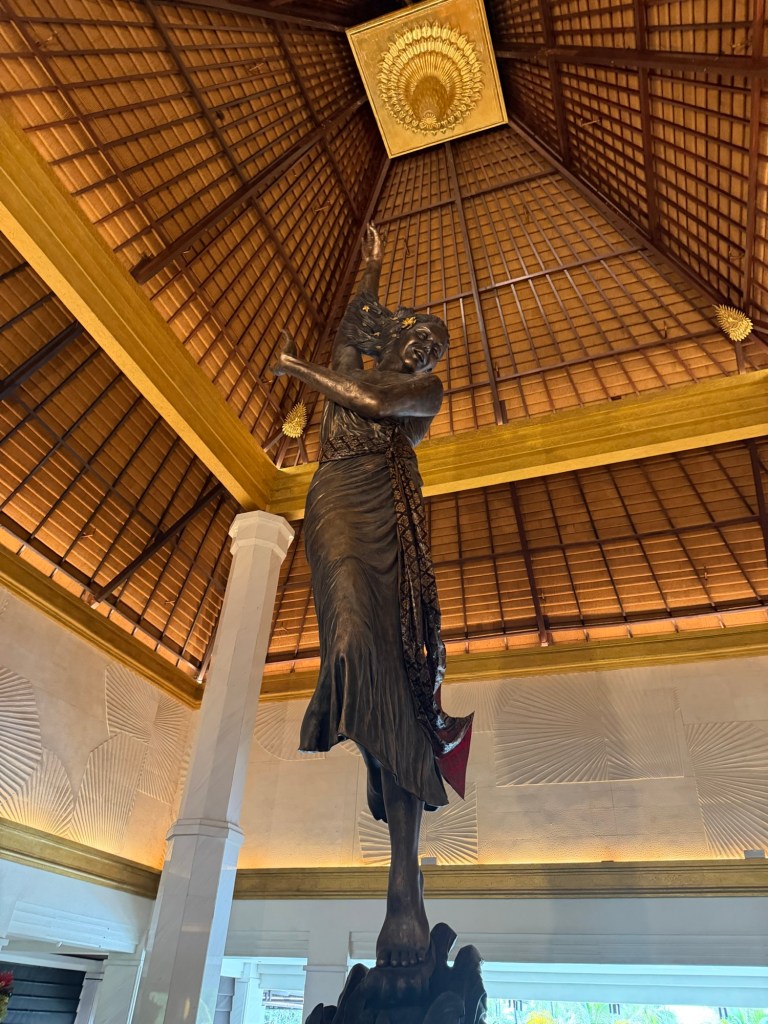
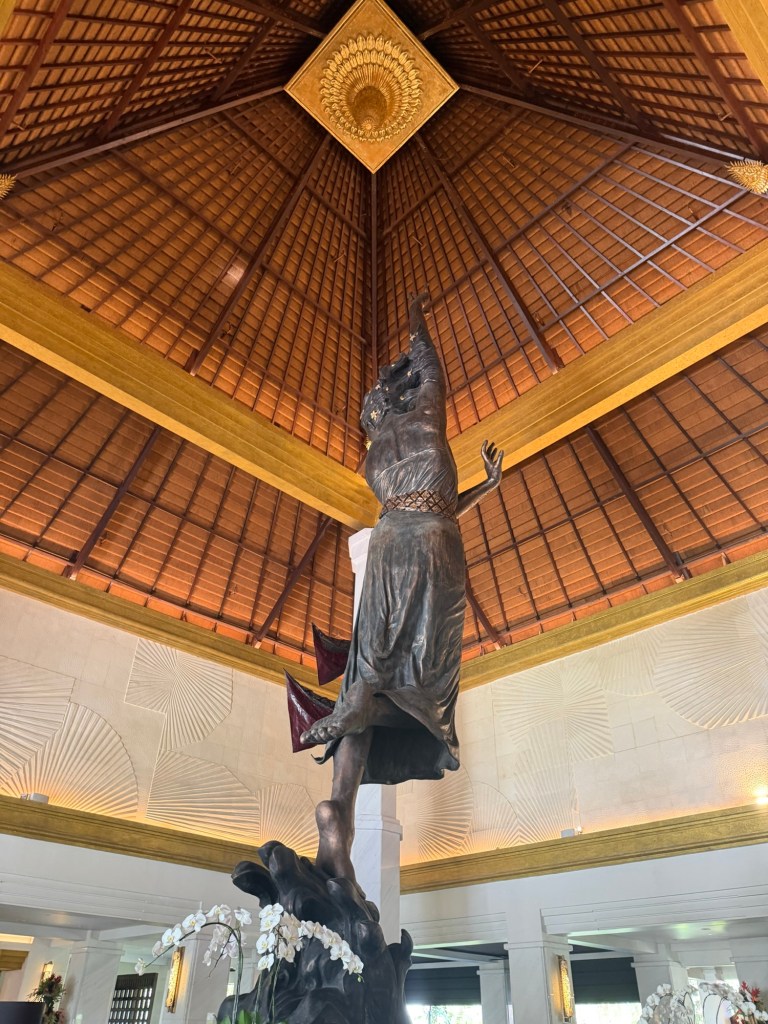
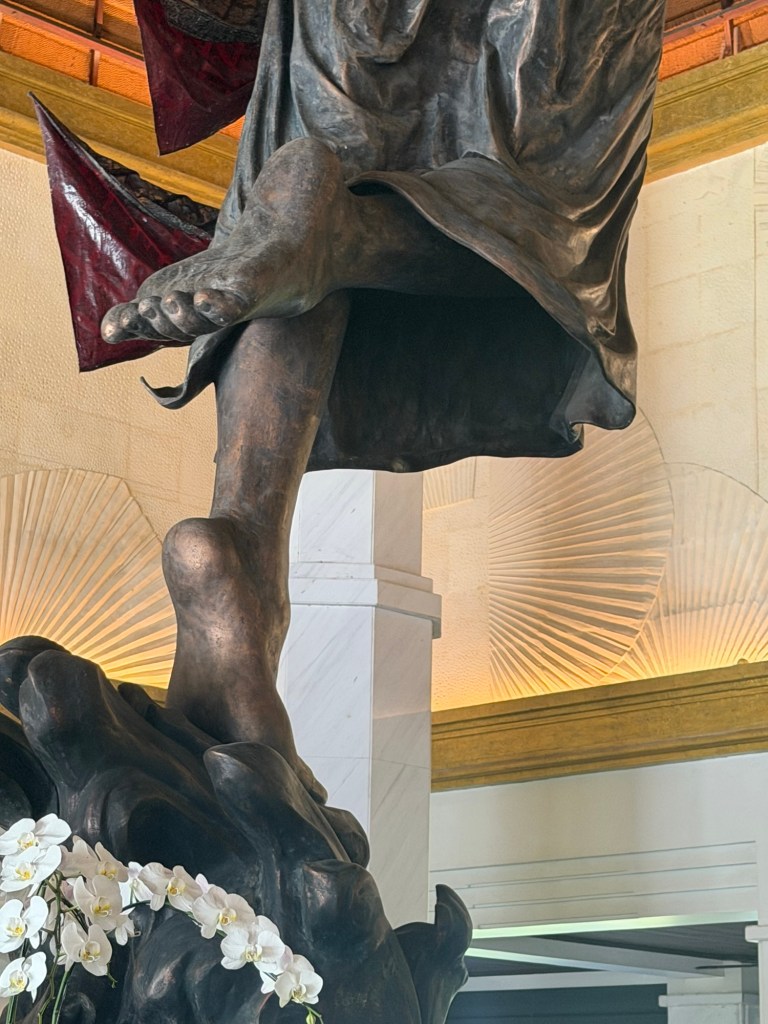
This is Dewi Sarasvati, the Goddess of Knowledge, revered in Balinese Hinduism as the shakti, the feminine creative energy of Brahma, the Creator of the Universe. She embodies wisdom and learning within the cosmic cycles of Tri Kona – Utpi (Creation), Stiti (Preservation), and Pralini (Dissolution) – which correspond to the trinity of Tri Murti: Brahma the Creator, Vishnu the Preserver, and Shiva the Destroyer.
Sarasvati holds a rebab, a stringed instrument that symbolises the harmony of wisdom manifested in the arts.
Let’s hear it for the arts!! 🎭 👏🏻
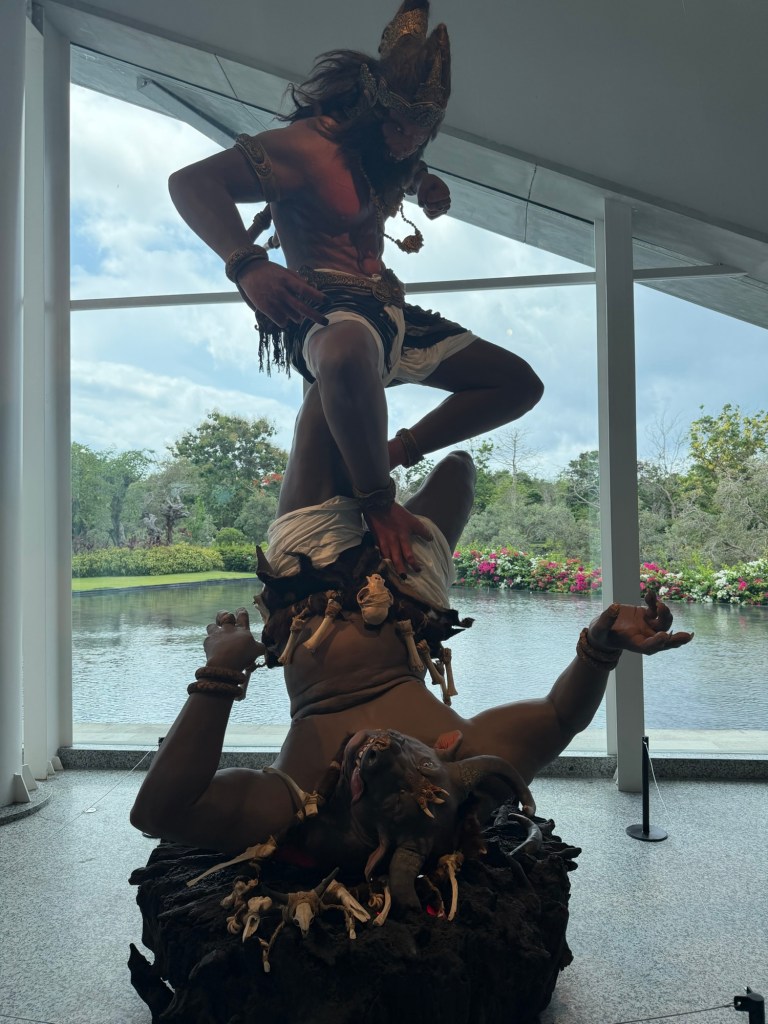
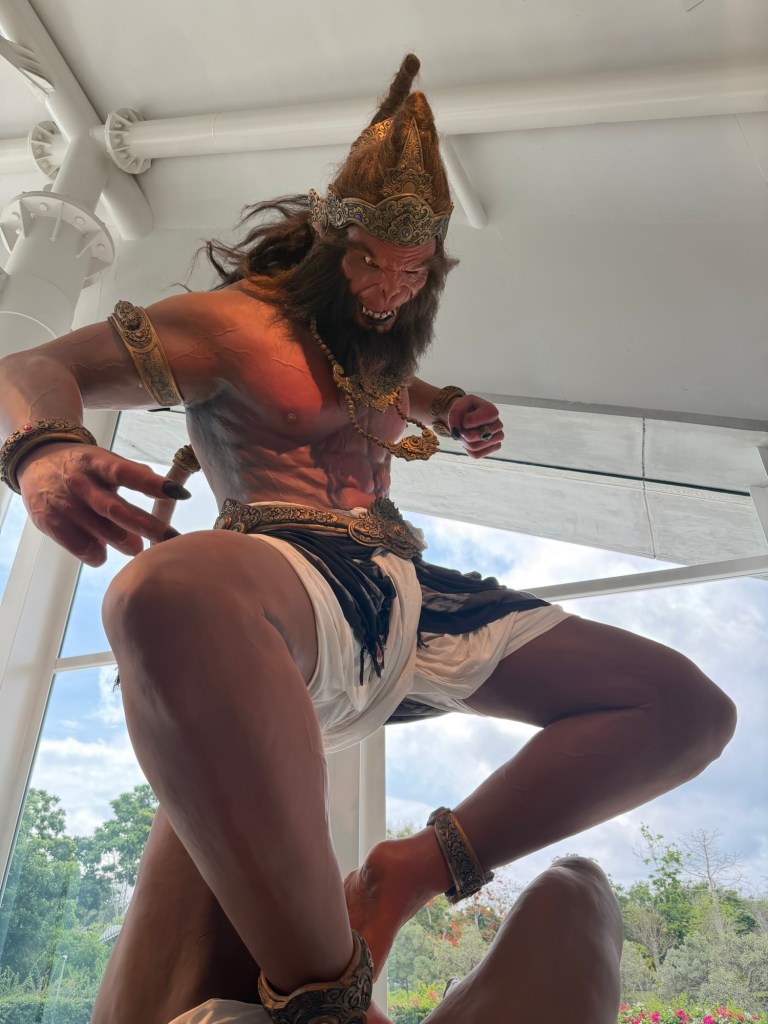
This installation represents a scene from the Kishkinda Kanda, one of the Saptakanda (seven chapters) of the Ramayana. It depicts Vali, one of the mighty vanara kings of Kishkindha defeating Mahishasura, the buffalo-headed-giant, after a plea from the gods for Vali to restore order and reclaim the honour of Kishkindha.
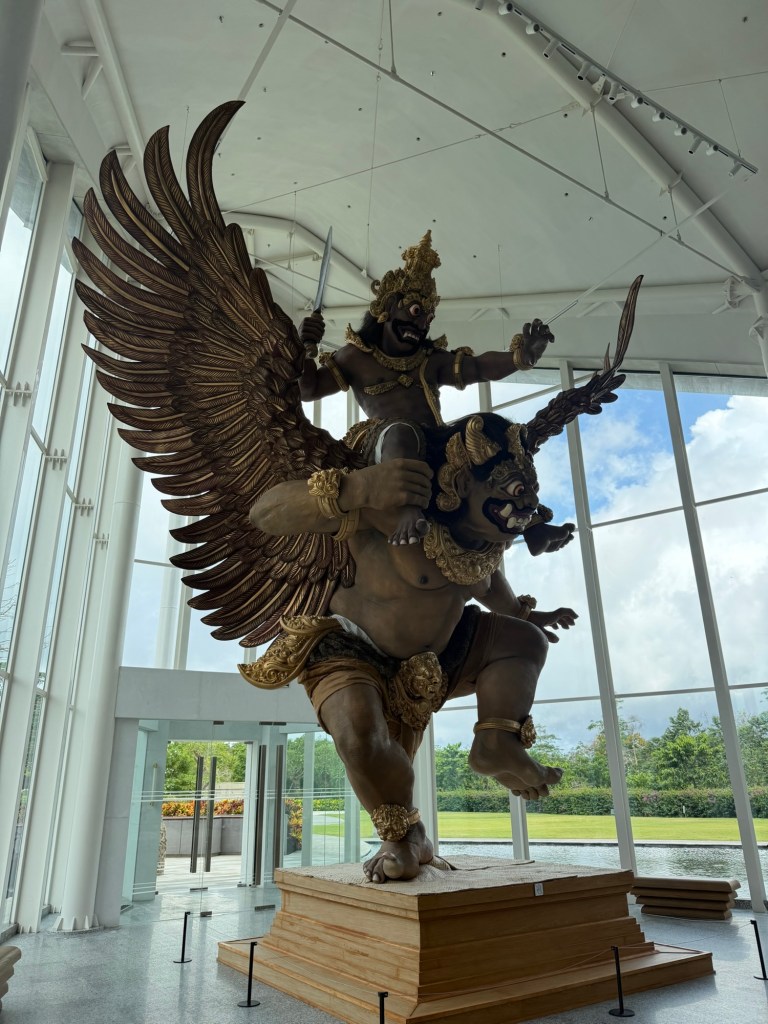
This was by far the largest of the museum’s installations. Ravana, the formidable giant king of Lanka, gained his immense power through years of meditation and devotion to Lord Shiva. Blessed with divine strength, his boundless ambitions led him to disregard norms and morality in pursuit of his desires. His obsession with Sita, the princess of Mithila and wife of Prince Rama of Ayodhya, consumed him, driving him to act dishonourably as a king.
During Rama and Sita’s exile, Ravana disguised himself as a starving ascetic, deceiving Sita and abducting her across the seas to Lanka.
As a ruler, Ravana commanded the vimana, a mighty winged creature that served as his royal chariot. Enraged and arrogant, he rode into battle atop his vimana, ready to confront Rama and his army of apes, a consequence of his reckless act of stealing another man’s wife.
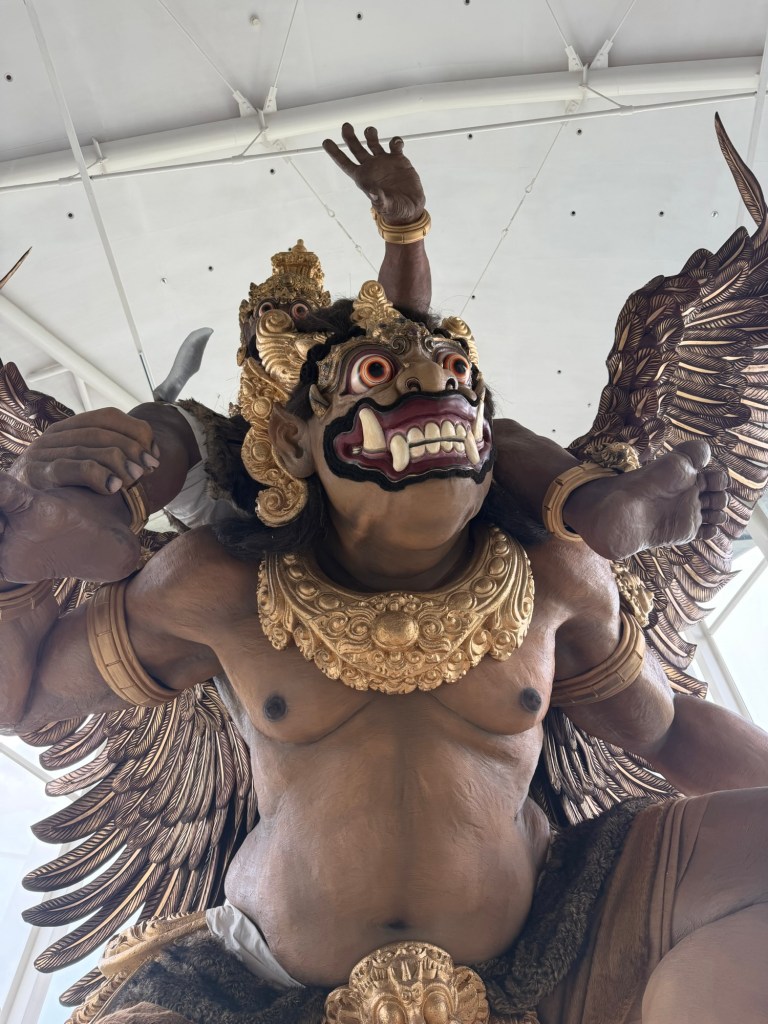
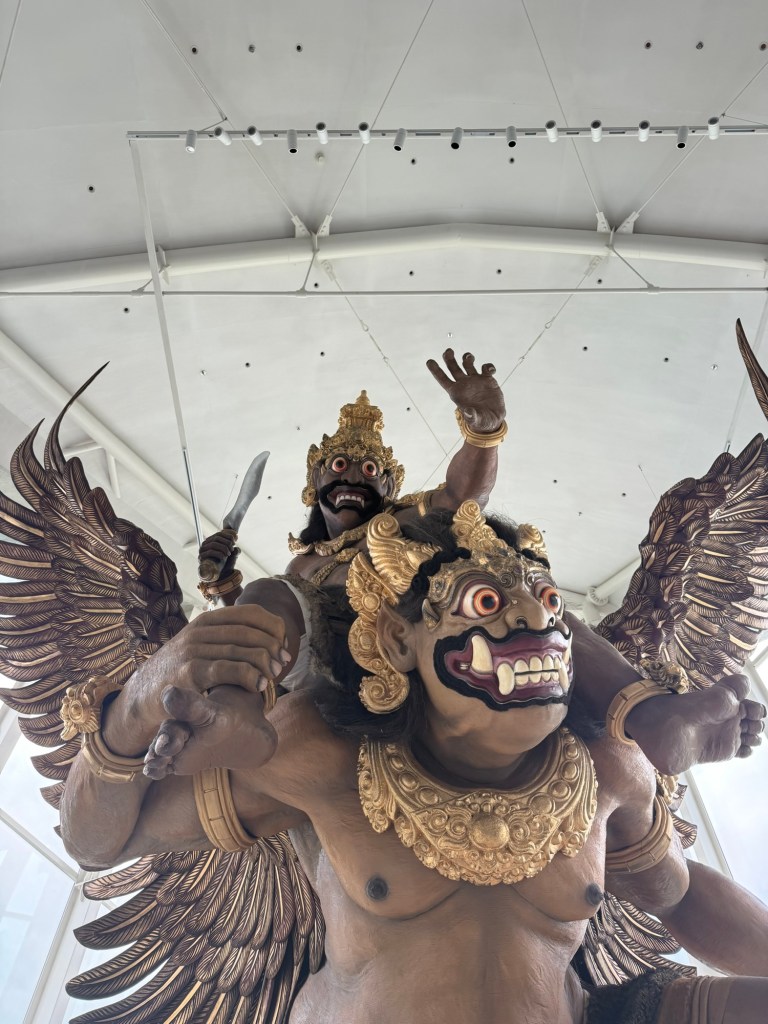
The art installation on the upper floors spoke of rage, battle, revenge, and glory. After the peaceful lower floor, speaking of silence and Nyepi, it was with some relief that we climbed into what can only be described as a loft space at the very top of the building. We were invited into a darkened tepee, sat on a large bean bag, and encouraged to relax into a movie projected onto the tepee walls telling of Nyepi as it happens across Bali, with accelerated timescale.
The SAKA Museum experience will long live with us.
From silence, sound is born,
emerging from a vast, quiet depth,
A multitude of melodies converging,
within a myriad of tones’ depth.
Sound gives birth to form,
amidst the harmonious specter,
Crafting a universe for humans,
a canvas for thought and wisdom.
“Sasi wimba haneng gata”
a tribute to the moon’s gentle trace,
Mirrored in tranquil waters,
a calm reflection finds its place.
Rising from silence,
A silhouette unique and bright,
Within the moon’s reflection,
Nyepi’s wisdom whispers in the night.
Silence is the mirror of your soul.
On a more pragmatic note, something else reveals itself, something pertinent to our collective, frankly half-hearted, attempts to conserve our planet…
SAKA museum reports that:
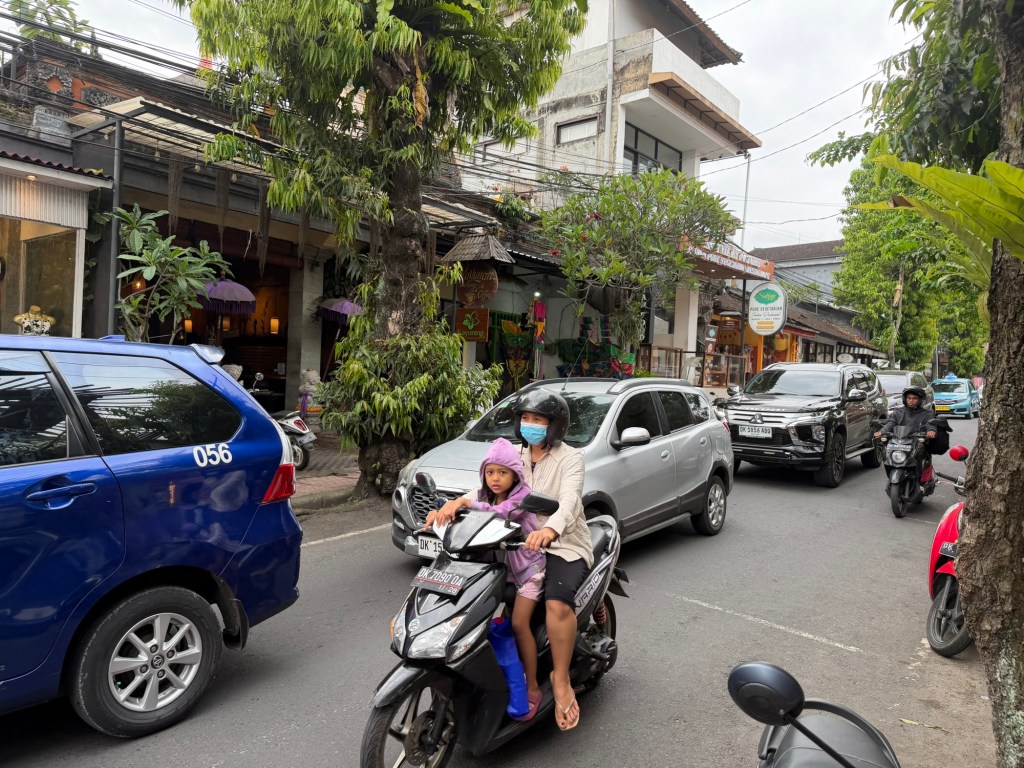
Bali is home to 4.3 million motorcycles, 524,619 cars, 11,584 buses, and 176,882 trucks (Bali Province Statistics Agency, 2023). On average, motorcycles consume 4 litres of gasoline per day, while cars use 10 litres.
During Nyepi, when the island comes to a complete standstill for 24 hours, CO2 emissions are reduced by nearly 54,000 tons.
That’s equivalent to:
Removing 11,700 cars from the road for an entire year;
Planting 900,000 trees, which absorb the same CO2 over 10 years;
Avoiding the burning of 26,000 tonnes of coal;
Saving six millions gallons of gasoline.
Now, if that doesn’t stun you into silence then nothing will!















 Sailing off to Sparta