One of the delights of travelling is the time it allows for truly immersive reading experiences, whether that be through the course of a lengthy flight, a railway journey, or simply relaxing before setting off on any given morning.
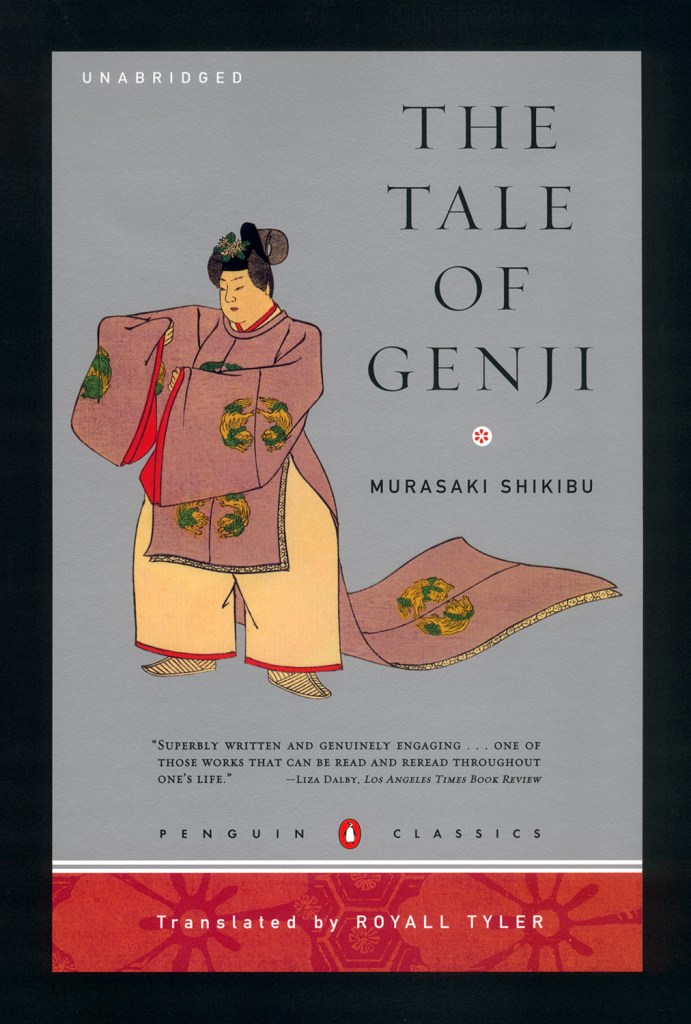
For me, the selection of literature should extend to that originating from the country being visited, for this offers valuable cultural insight. With that in mind I have been slowly working my way through Muraski Shikibu’s The Tale of Genjii (源氏物語), an 11th century novel of love, betrayal and death at the Imperial Court. It is a challenge and does require perseverance but it is said to be one of history’s first novels, the first by a woman to have won global recognition, and in Japan today has a stature like that of Shakespeare in England. I may not get through all of this work (1200 plus pages) but I do have the option of returning to it in the future.
Alex Kerr’s Lost Japan (美しき日本の残像): Last Glimpse of Beautiful Japan (a gift from my wife) tells of the author’s life in Japan, reflecting on aspects of Japanese culture that he was fascinated by. Kerr was the first foreigner to be awarded the Shincho Gakugei Literature Prize for the best work of non-fiction published in Japan. A collection of personal essays, it is a useful read, and includes a fascinating piece on Kyoto (one of the places we are to visit) where Kerr lived for eighteen years. Kerr, writing on a period that spanned the last two decades of the 20th century, speaks of a Kyoto that is losing its old ways, it degenerating into a place he does not recognise, lured by the siren call of tourism, sterilised, even. I suppose all we can do is visit such places with our eyes wide open and honey trap radars switched to maximum. All the while, bearing in mind Kerr’s useful pointers on those Kyotoites he saw as being authentic, those he described as being the guardians of Kyoto culture, an ‘endangered species’. Take this, to demonstrate the point:
Kyoto is full of little danger signs that the uninitiated can easily miss. Everyone in Japan has heard the legendary story of bubuzuke (‘tea on rice’). ‘Won’t you stay and have some bubuzuke? asks your Kyoto host, and this means that it is time to go. When you become attuned to Kyoto, a comment like this sets off an alarm system. On the surface, you are smiling, but inside your brain, red lights start flashing, horns blare Aaooga, aaooga! and people dash for cover. The old Mother Goddess of Oomoto, Naohi Deguchi, once described how you should accept tea in Kyoto. ‘Do not drink the whole cup’, she said. ‘After you leave, your hosts will say, “They practically drunk us out of house and home!” But, don’t leave it undrunk, either. Then they will say, “How unfriendly not to drink our tea!” Drink just half a cup.’
I am already confused! The thing is, we are really looking forward to trying out the teas over there. I never believed that having a cup of tea could be so fraught with danger! And if you are ever around ours and we offer you ‘tea on rice’, just remember where you left your shoes.

Visiting Japan, it is difficult not to think of the horror that was visited upon the cities of Hiroshima and Nagasaki in August 1945. We are visiting Hiroshima and feel that it would be helpful to at least attempt to gain some understanding of the magnitude of the cataclysmic event that was visited upon the city by a lone Boeing B-29 Superfortress bomber on August 6, 1945. The B-29 was named Enola Gay, after Enola Gay Tibbets, the mother of the pilot, Colonel Paul Tibbets. Ironically, the bomb it dropped was named ‘Little Boy’, the world’s first atomic bomb. There was nothing little about its effect!
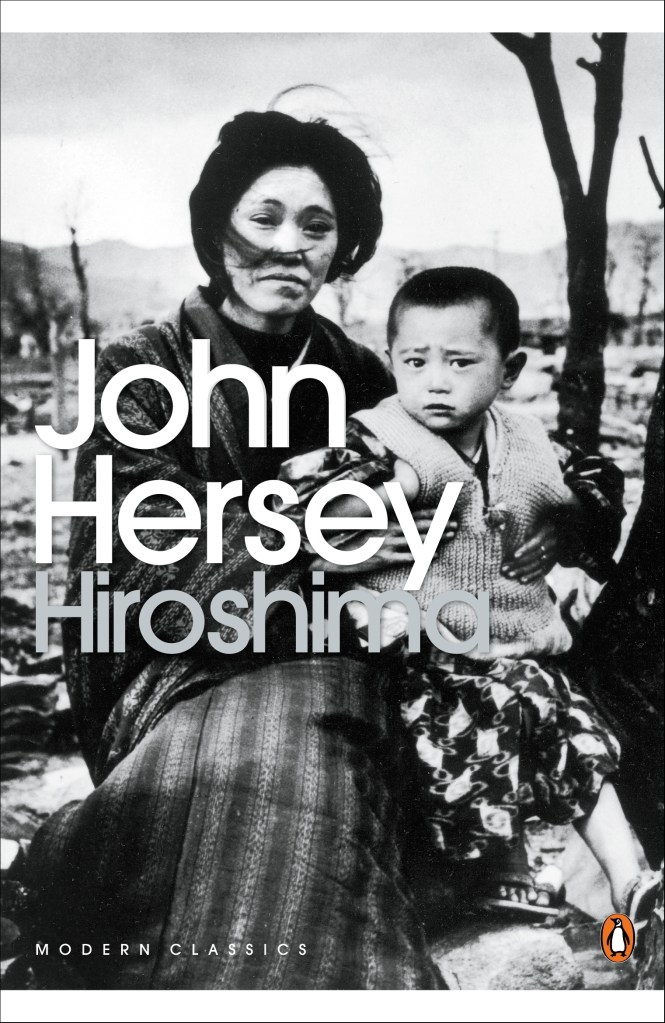
Hiroshima is a 1946 book by American writer and journalist John Hersey. It tells the stories of six survivors of the atomic bomb dropped on the city. The work was originally published in The New Yorker which had planned to run it over four issues but instead dedicated the entire edition of August 31, 1946, to a single article. Less than two months later, the article was printed as the book, Hiroshima. There is no hiding from the fact that it is a truly harrowing read but not to do so would, I suggest, lead to a falling short in one’s understanding of this world-changing event.
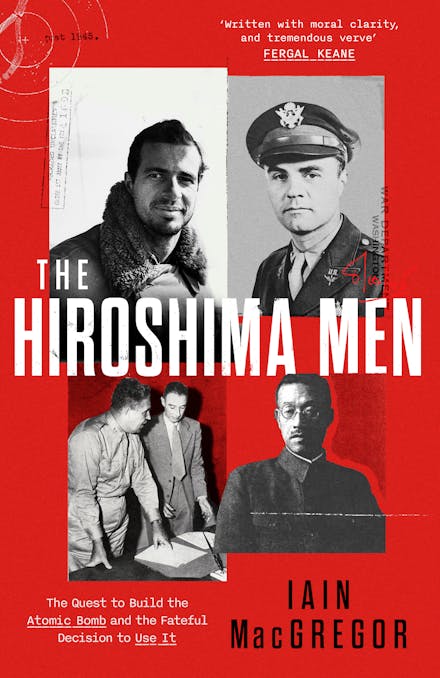
I found useful a more in depth background to the ‘project’ in Iain MacGregor’s The Hiroshima Men – published this year, recognising the 80th anniversary of the event. The book recounts the decade-long process that led up to the world’s first atomic attack, charting the race for nuclear technology. MacGregor’s work is also available as an audio book. Despite my preference for a hard copy, I also accessed it through Audible, where it is well narrated by Stephen McGann.
The brilliant movie, Oppenheimer, written and directed by Stephen Nolan, is also well worth returning to.
Chapter Seven of MacGregor’s Hiroshima’s Men introduces Oppenheimer, the man. The chapter is headed by a quote that brought me up short:
To me [the task at hand] is primarily the development in time of war of a military weapon of some consequence.
J. Robert Oppenheimer
The ‘Manhattan Project’ visited a consequence upon the people of Hiroshima, Nagasaki, and Japan, generally, that changed the world forever.
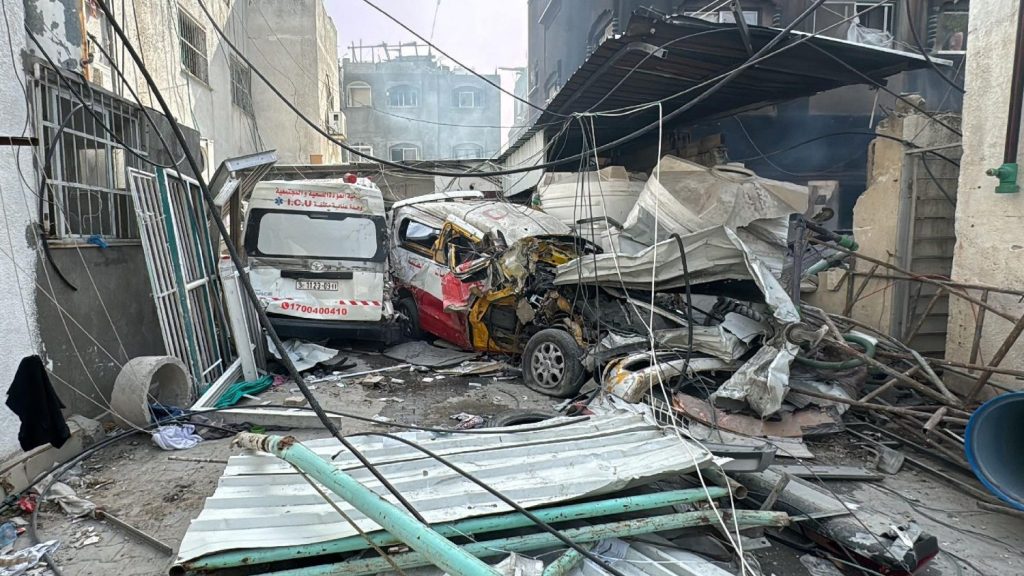
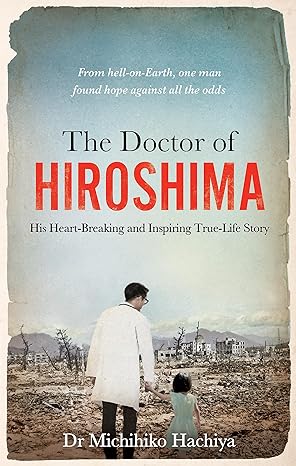
Throughout the history of mankind, even the very worst of times throw up examples of extraordinary kindness and bravery. Such is the case of Dr Michihiko Hachiya whose hospital was less than a mile from the centre of the atomic bomb that hit Hiroshima. Dr Hachiya’s immensely human and moving story is told in his own words in The Doctor of Hiroshima (received as a gift to us from a kind family member). Essentially, The Doctor of Hiroshima is a story of survival, yes, but it also tells of the efforts of a committed team of hospital workers continuing their vocation in the face of unthinkable destruction and loss. It is certainly not lost on us that the work of such dedicated professionals continues to feature across time. For one, take the ongoing horror story that is Gaza…
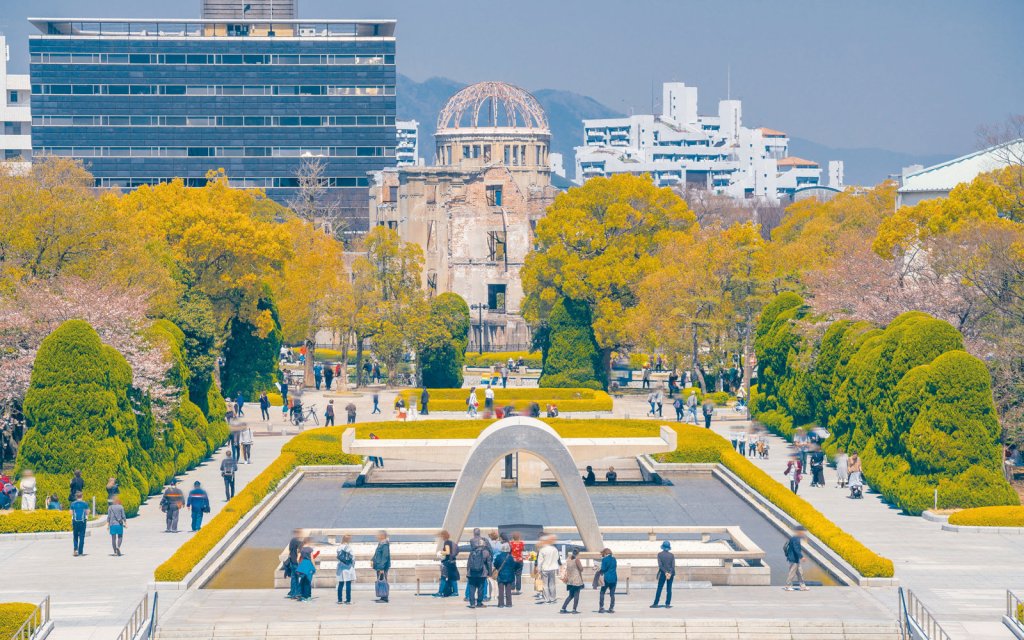
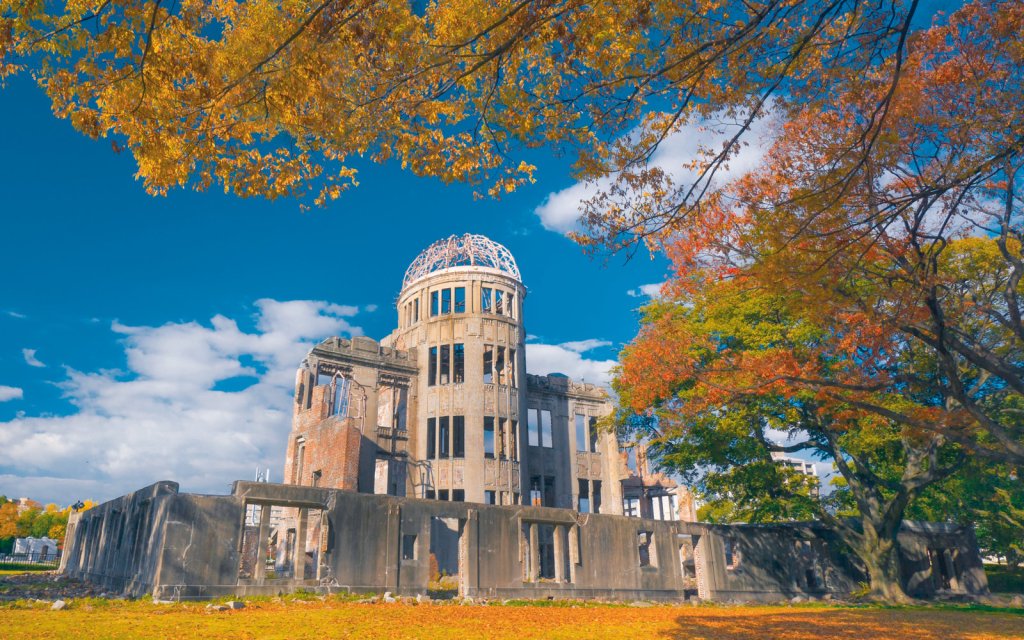
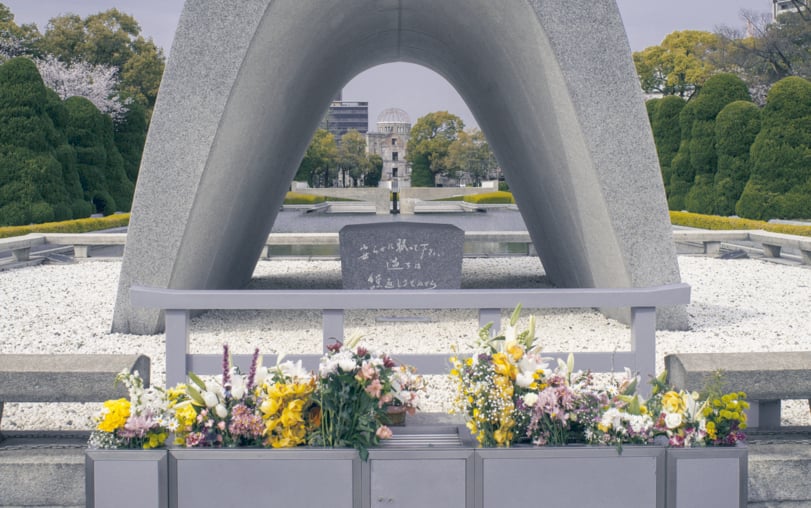
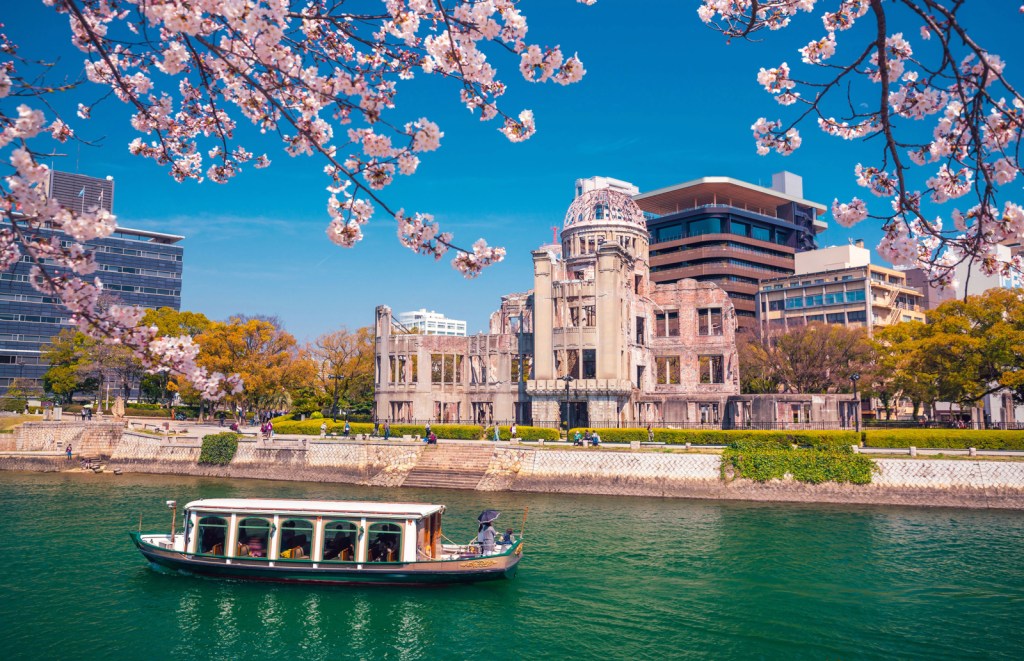
It will be with due reverence that we visit the site of the Peace Park in Hiroshima. Better informed than we were, we look forward to learning more.
 Sailing off to Sparta