
The Balinese believe that burning incense can purify the environment, attract positive energy, and connect them with the divine. You will notice the swastika carved into the platform. The original swastika is the oldest religious symbol in existence and is found in many cultures and religions. In Balinese Hinduism, it represents good fortune. Like a lucky charm, this Bali symbol is used to ward off negative forces. This is why you will find it carved into doorways and thresholds. So far removed from its infamous use by Nazis in the 20th Century.
Bali’s recorded history is believed to go back to the 8th century with the arrival of the first Hindus, led by a holy man named Rsi Markandaya. The nomadic Indian priest first arrived in Java, before he embarked on a journey towards the east with some 200 followers until he reached the eastern tip of Java. There, from the slopes of Mount Raung, he viewed the island of Bali, an unexplored wilderness beyond the straits.
Along with 800 followers, Rsi Markandaya crossed over to Bali, three kilometres away, and made his way to the mountain on the easternmost edge called To Langkir, now known as Mount Agung. Struck by plague and other disasters, the group retreated to Mount Raung, where Rsi Markandayah meditated for 35 days and nights. It is believed that during his meditation, a heavenly voice spoke to him, imparting wisdom that would protect him and his followers from the island’s evils. He was instructed to make offerings to purify the land, offerings to the gods and offerings to his ancestors.
Following this instruction, Rsi Markandayah carried out a purification ritual before clearing the forest. Since then, the purification tradition, which includes burying symbols of the five cosmic elements – water, fire, air, water and void – before any construction of houses and temples has been continued. Rsi Markandaya realised that all human actions must encompass rites addressed to the three cosmic components of the world (TriLoka), namely Bhur Loka, the underworld; Bwah Loka, the human realm; and Swah Loka, the divine realm. When these offerings are carried out, only then can humans find their place in the greater cosmos.
It is believed that Rsi Markandaya was drawn to place called Taro, where he and his followers cleared the forest surrounding that area, and then southwards to Ubud. Taro is one of the oldest villages in Bali and is 17km north of modern day Ubud.
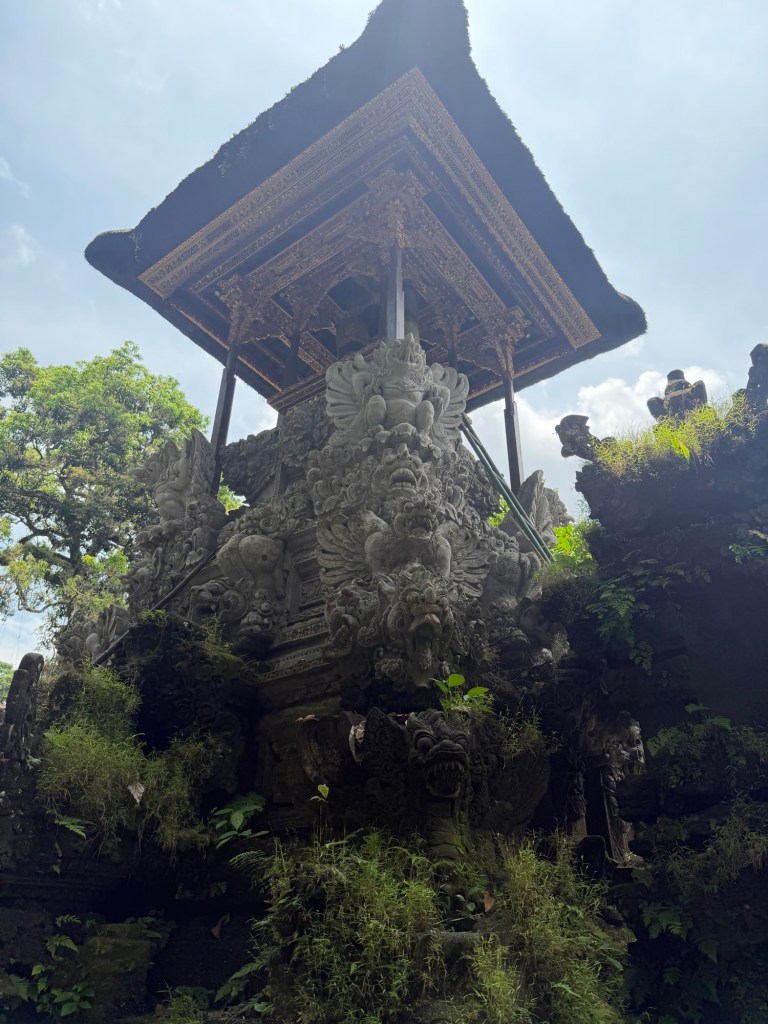
During his expedition spreading Hinduism in Bali, Rsi Markandaya was responsible for the construction of many sacred sites. One of these is Payogan Agung Gunung Lebah Temple in Ubud, where the holy man is commemorated.
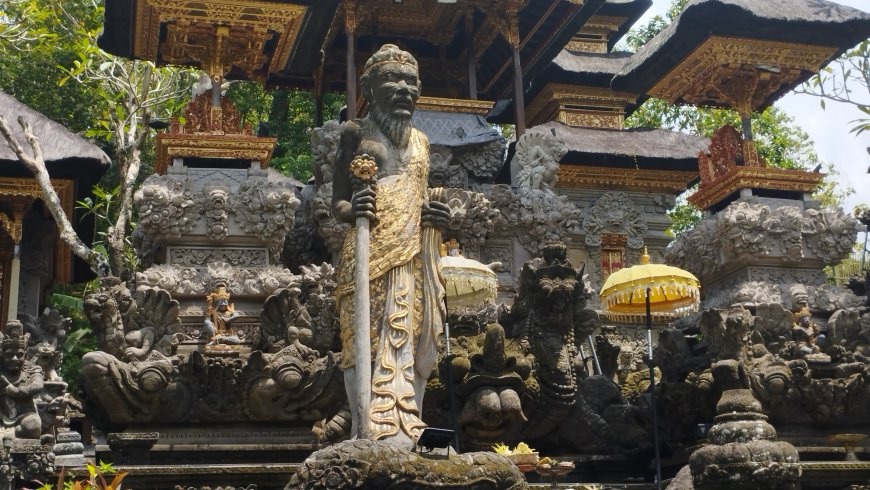
It would appear, then, that we have Rsi Markandaya and his followers to thank, in great part, for the sort of setting we found ourselves in. On first experience (this is our second but in no way diminished by that fact), the vista feels somewhat surreal. Residing in a place of considerable comfort, one that projects itself into the surrounding jungle, is really quite special. Photographs themselves fail to do the place absolute justice but these I took from the pool area where we stayed.
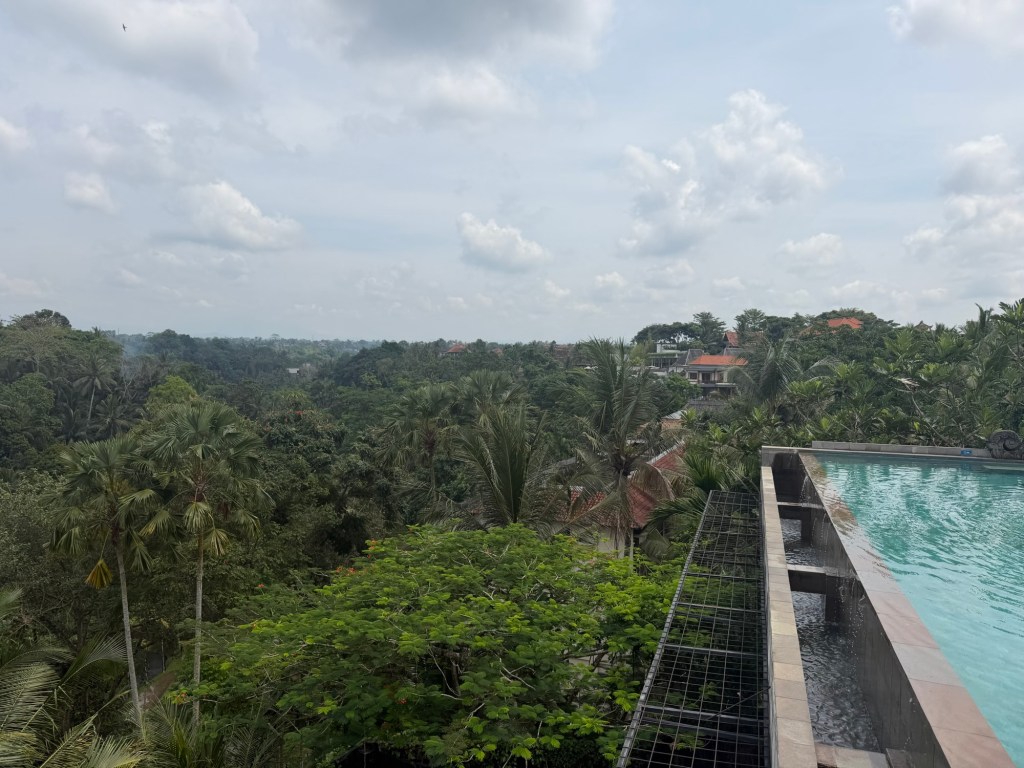
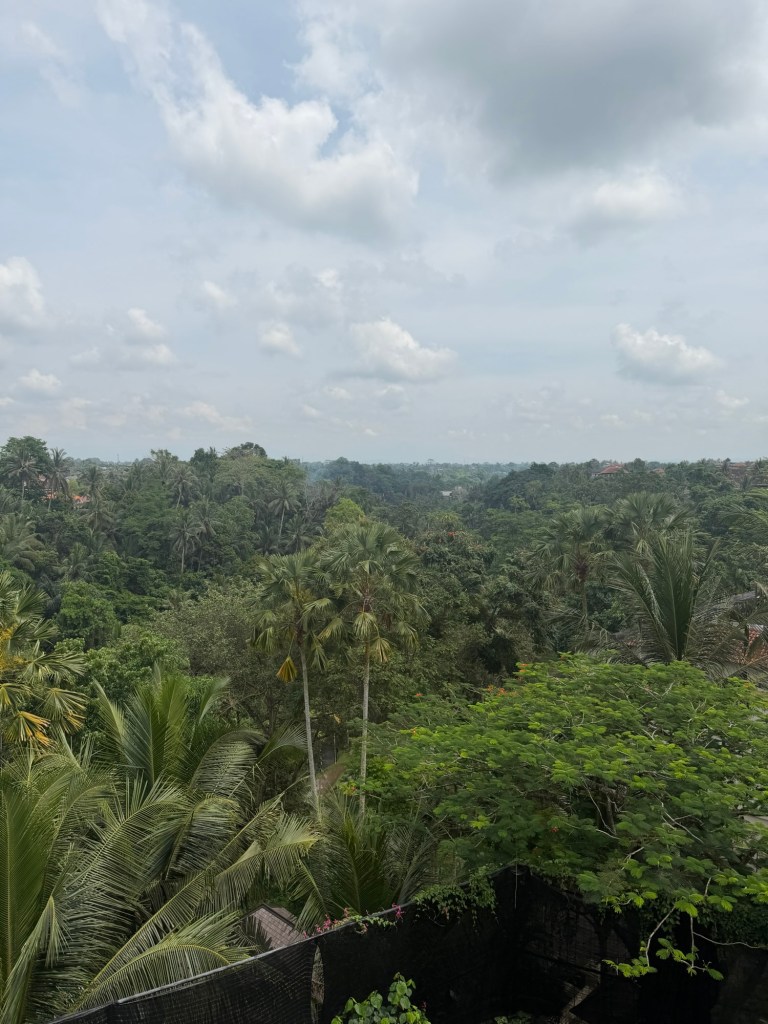
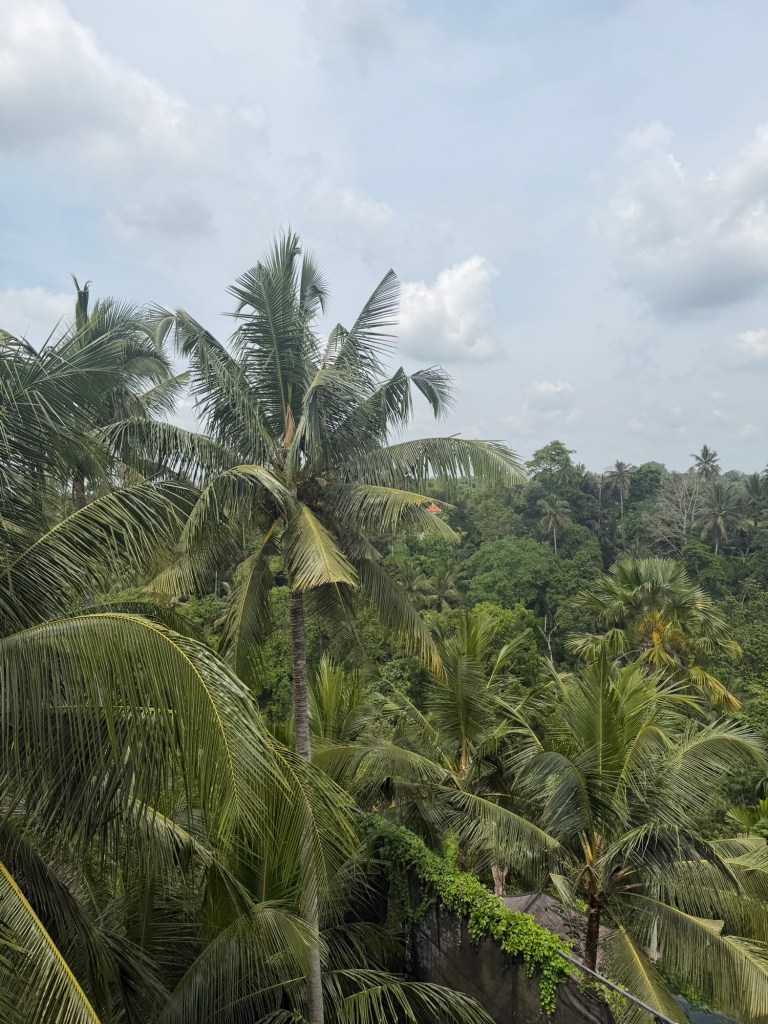
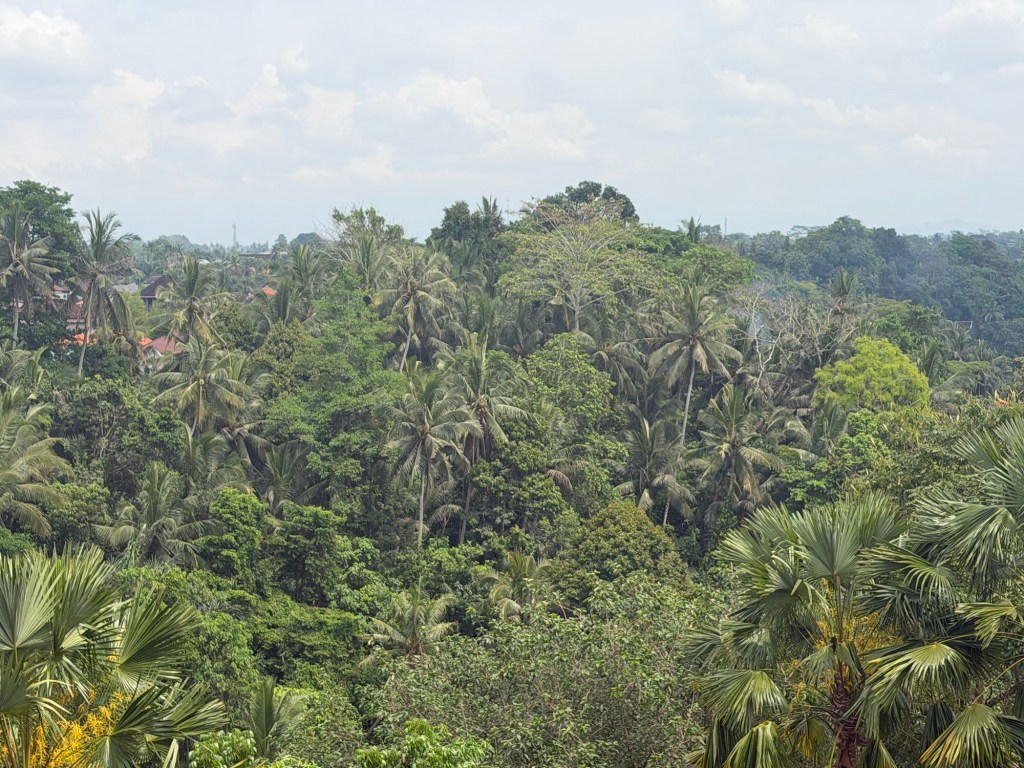
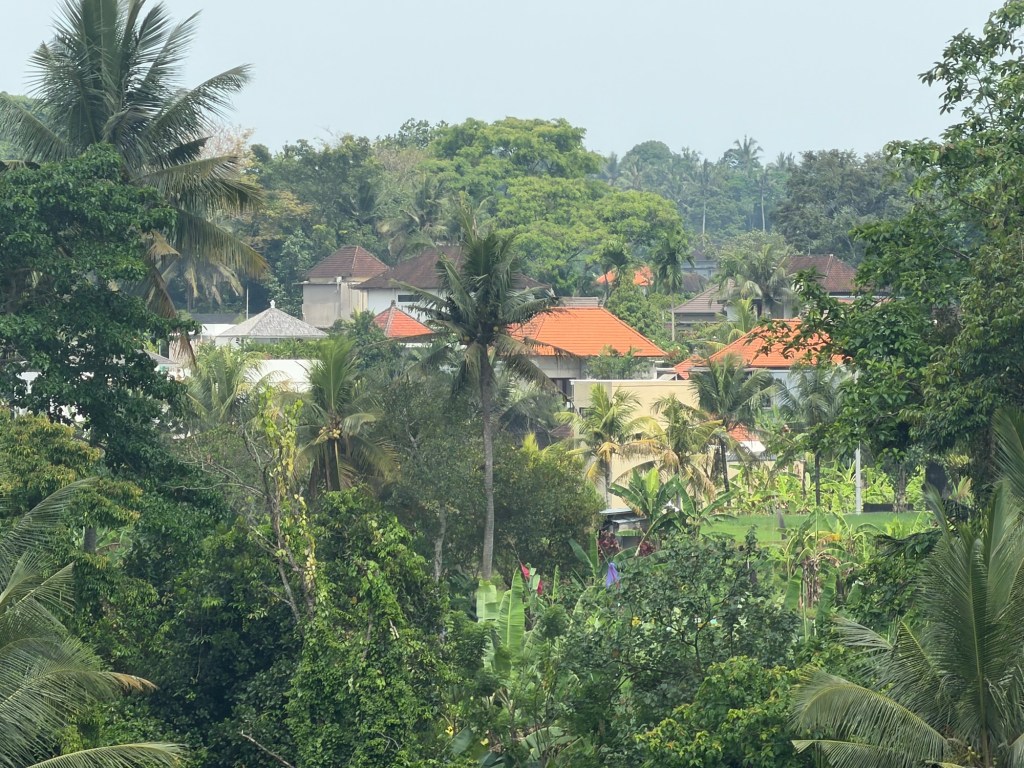
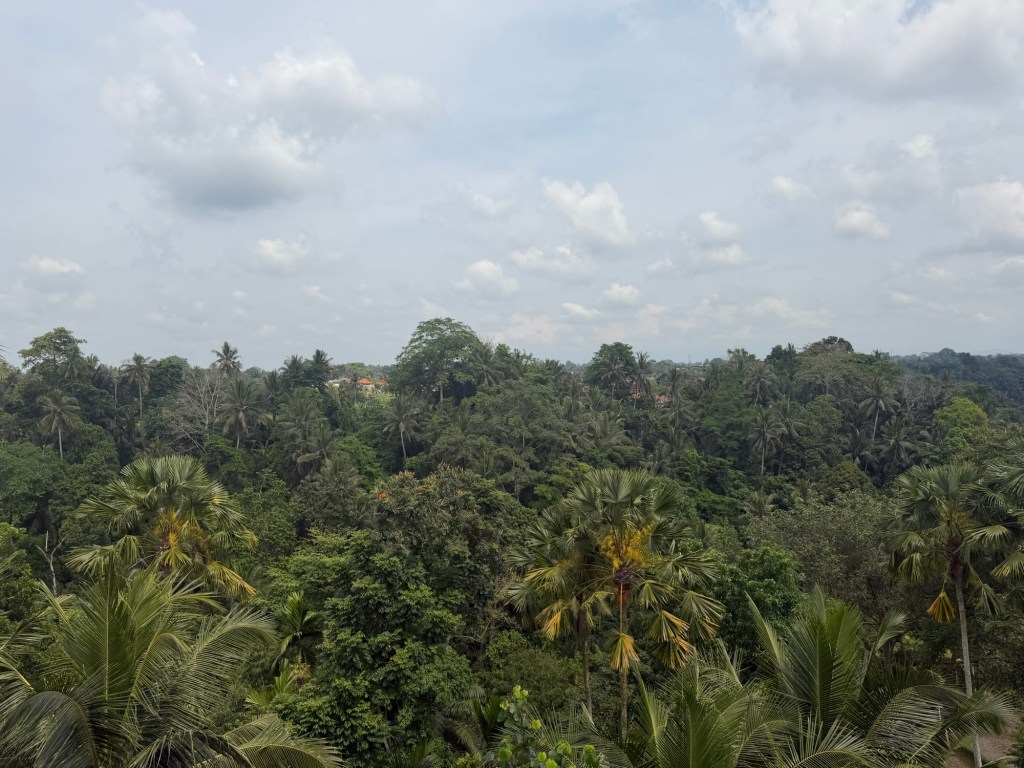
And this is the view from the restaurant area, taken at breakfast.
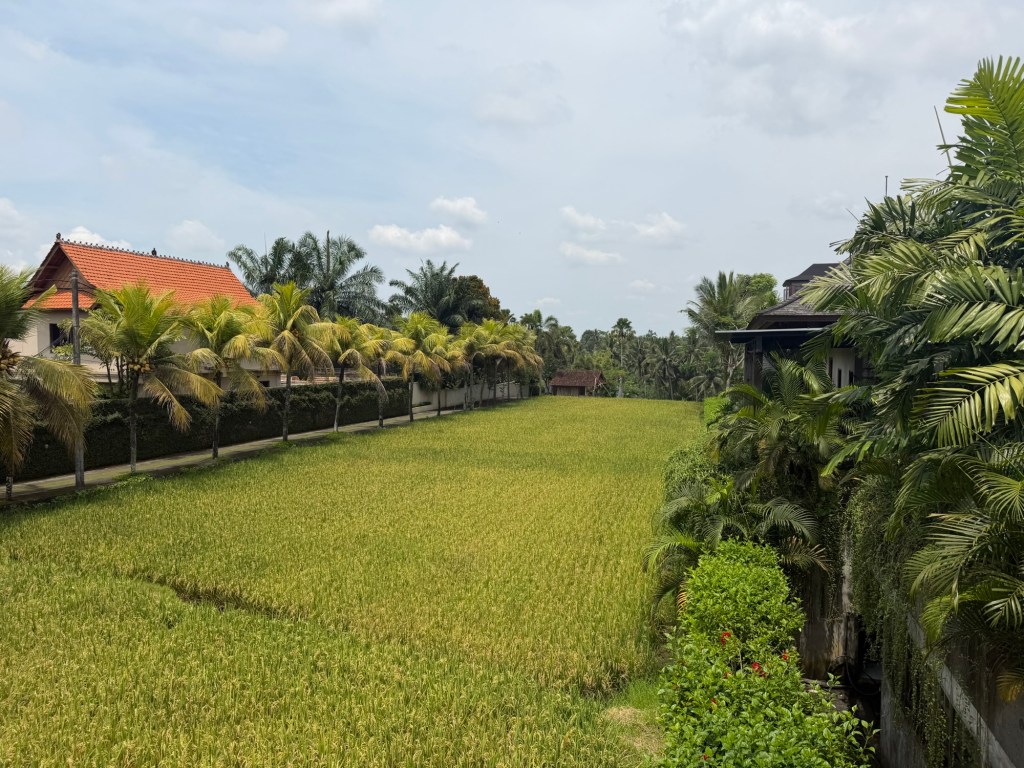
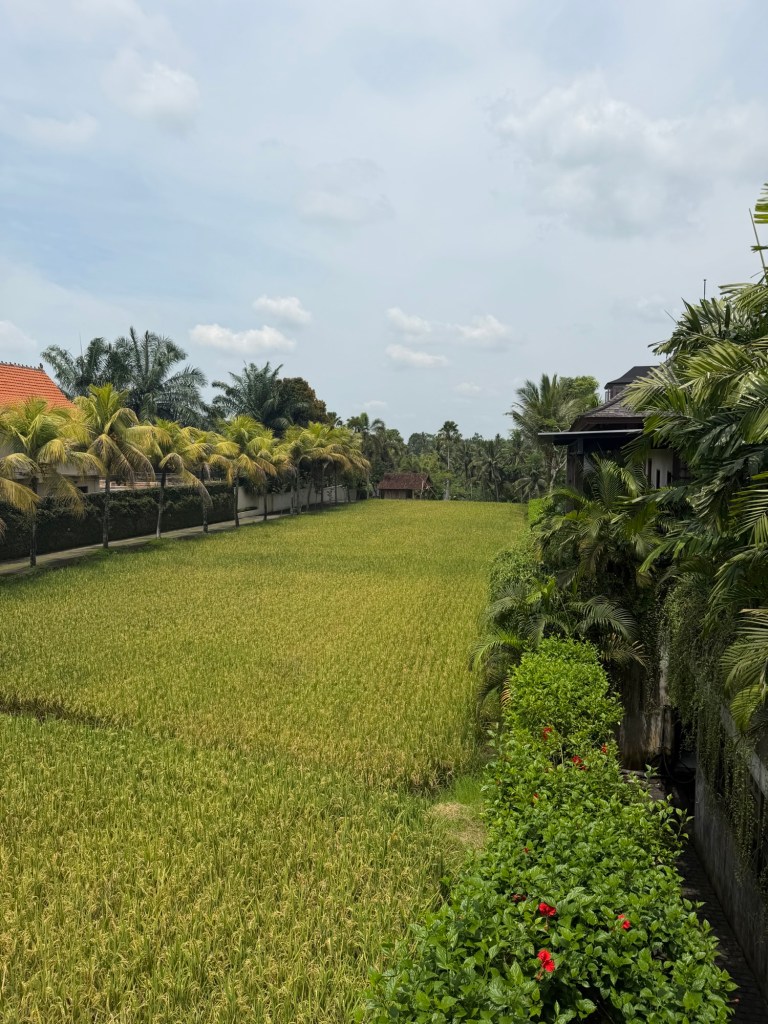
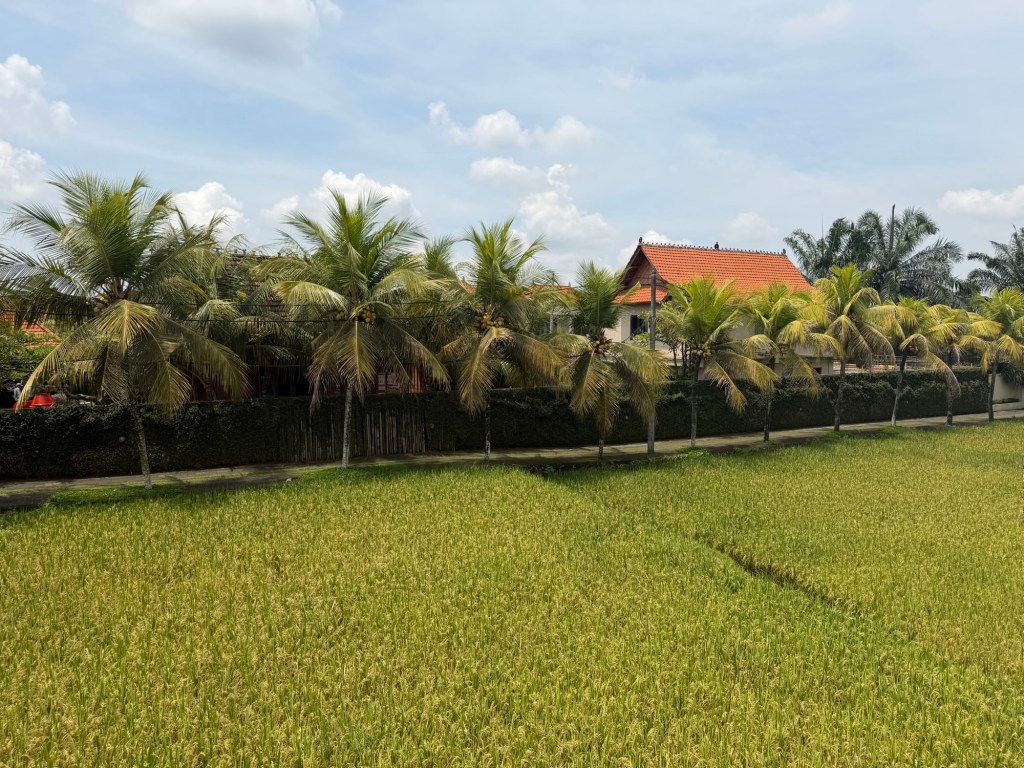
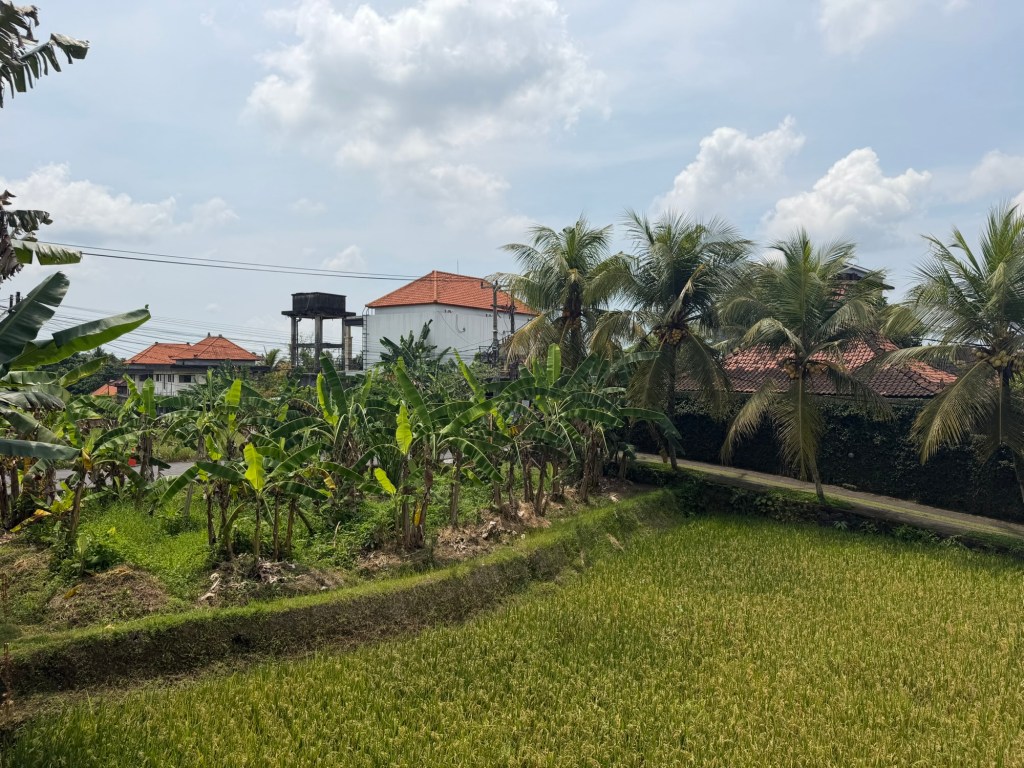
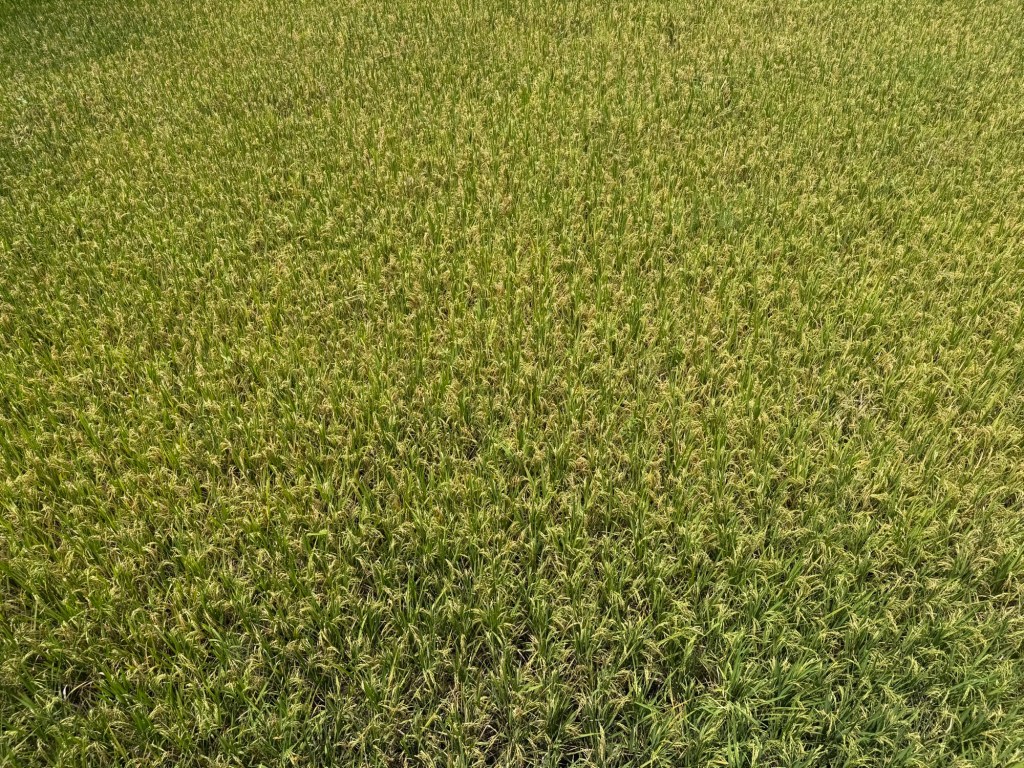
Rice fields are very much a feature of Ubud, scattered throughout the town. Always dense, and clearly very productive.
And this the balcony in our room.
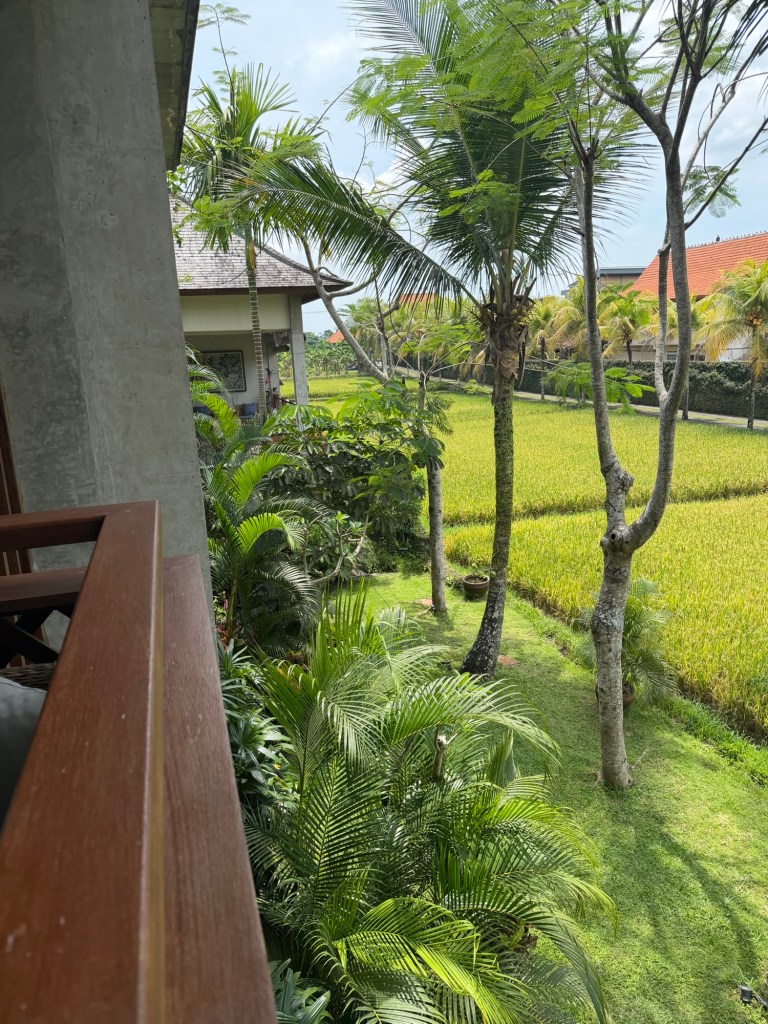
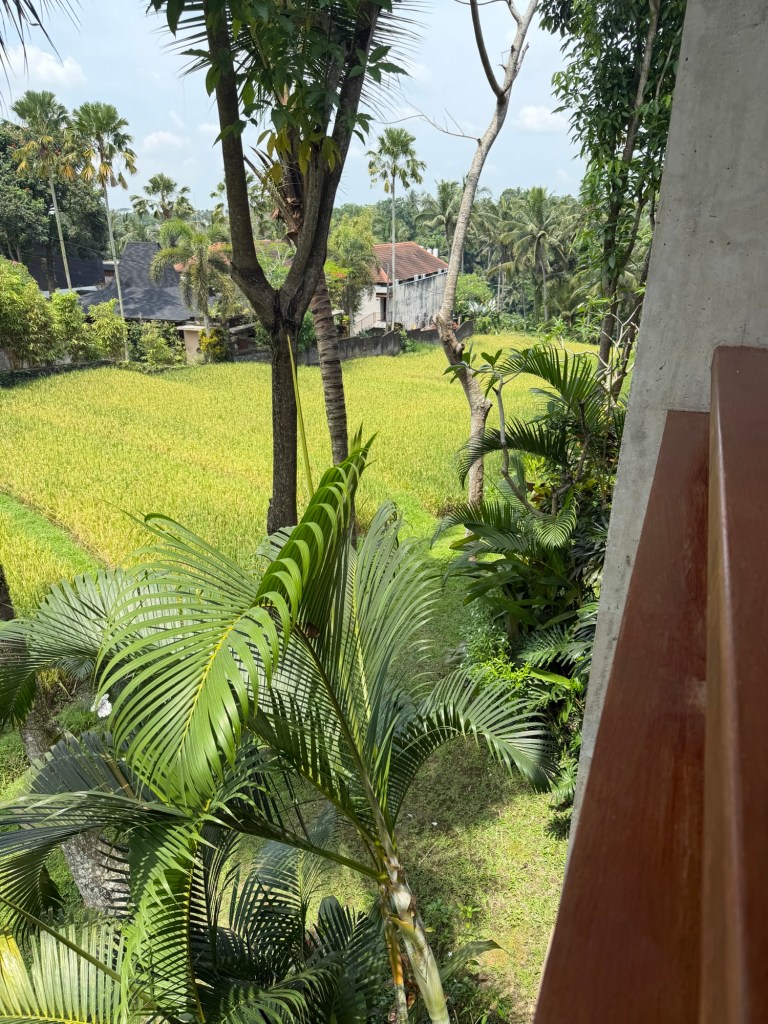
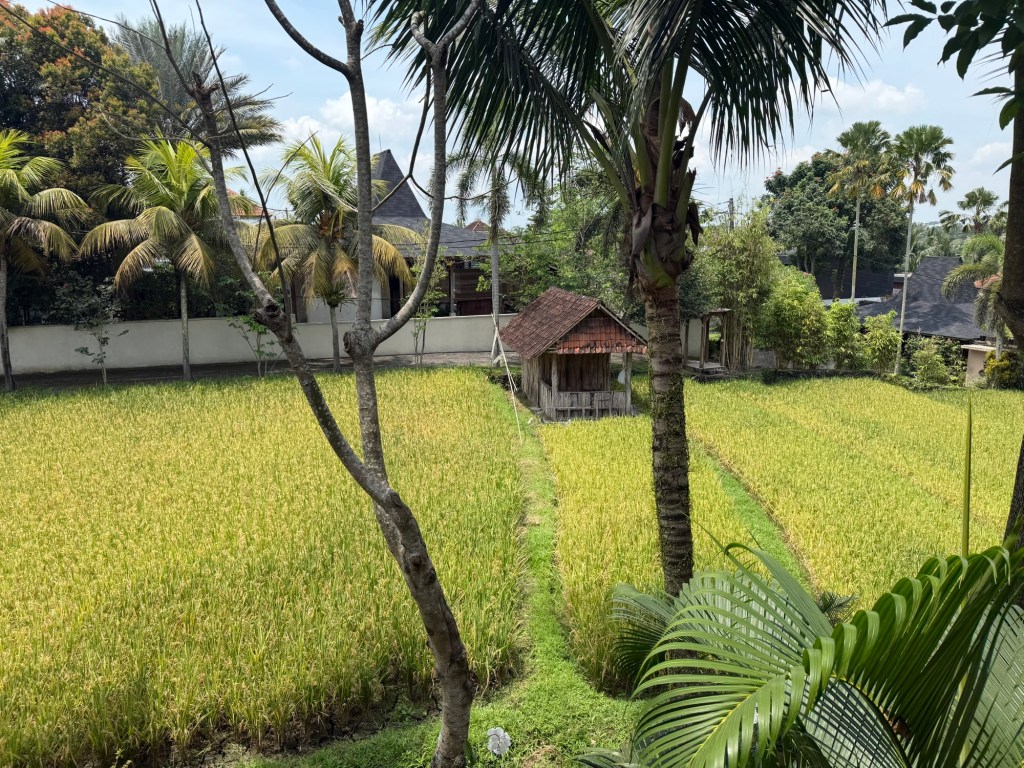
We headed back up to…
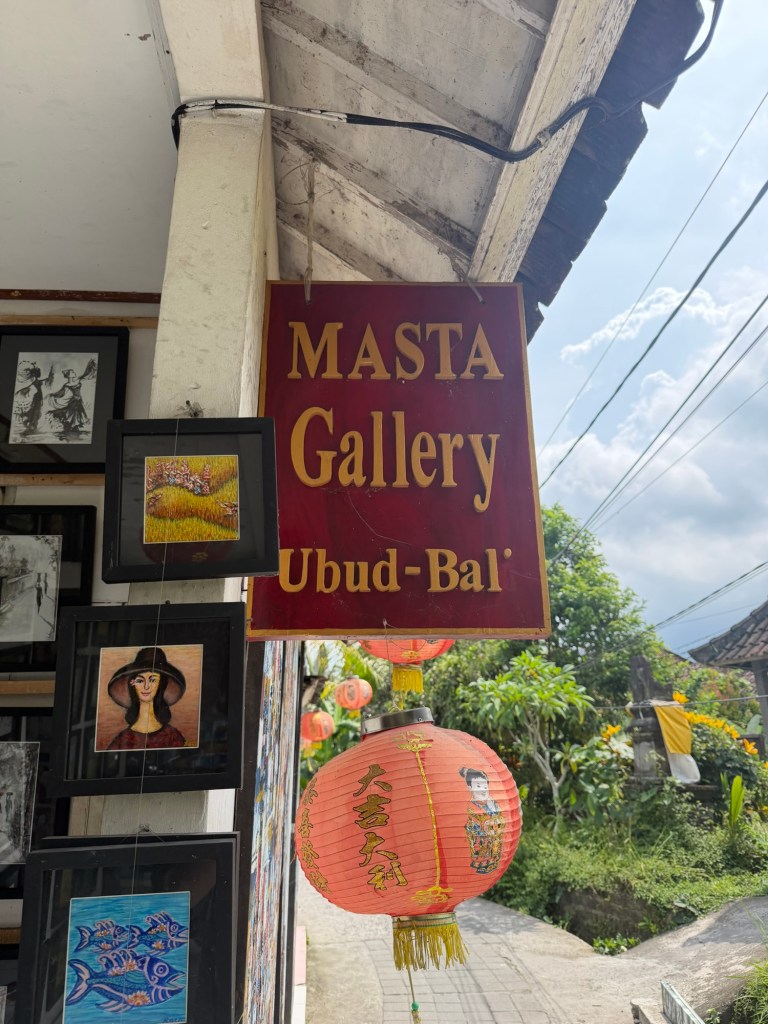
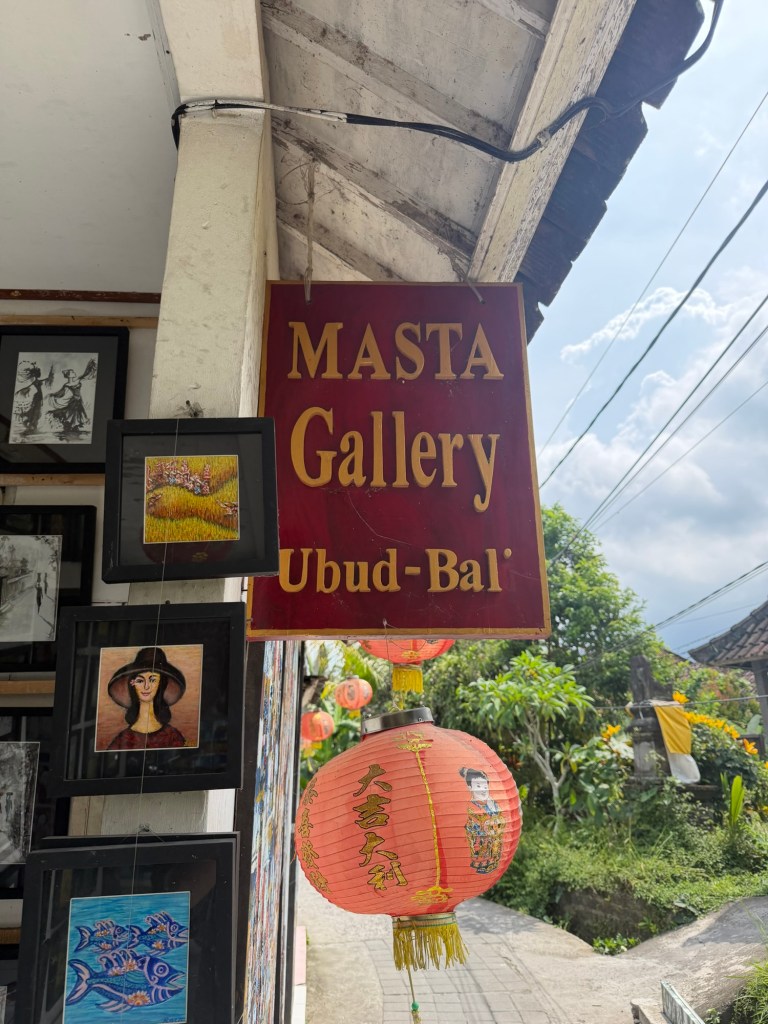
Such a pleasant walk, if terrifically humid. We were grateful that the lady in the gallery handed us both not one but two bottles of water each out of her fridge.
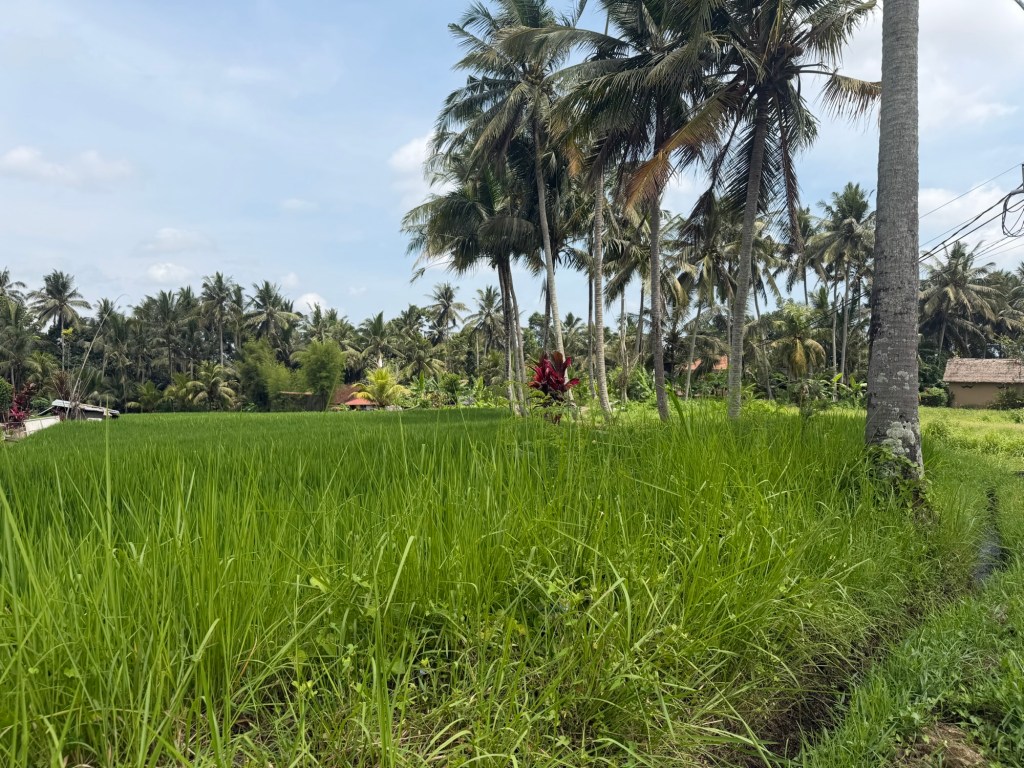
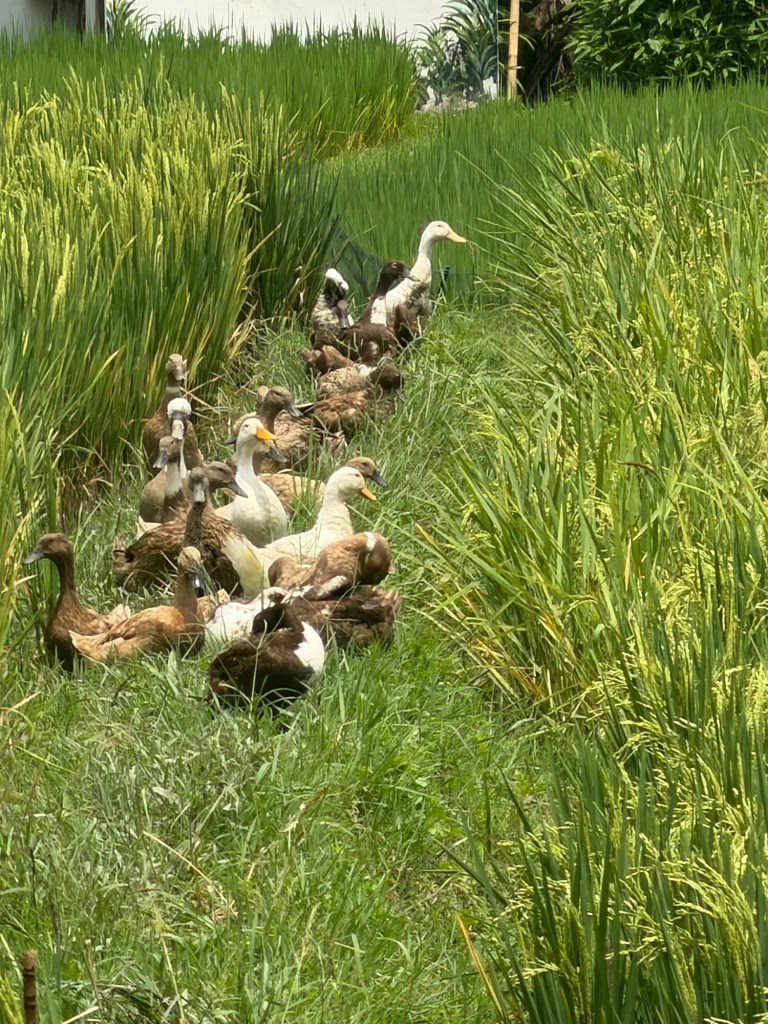
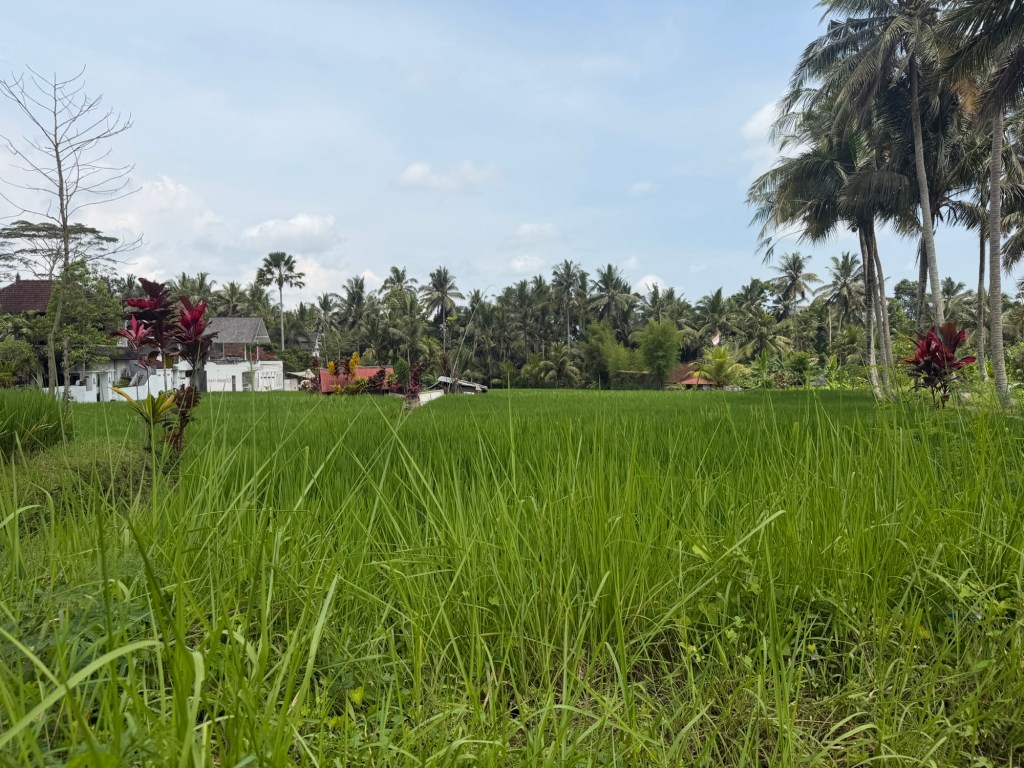
You are never far away from the sound of water in Ubud, often at the foot of a sudden drop, so staying alert is advisable.
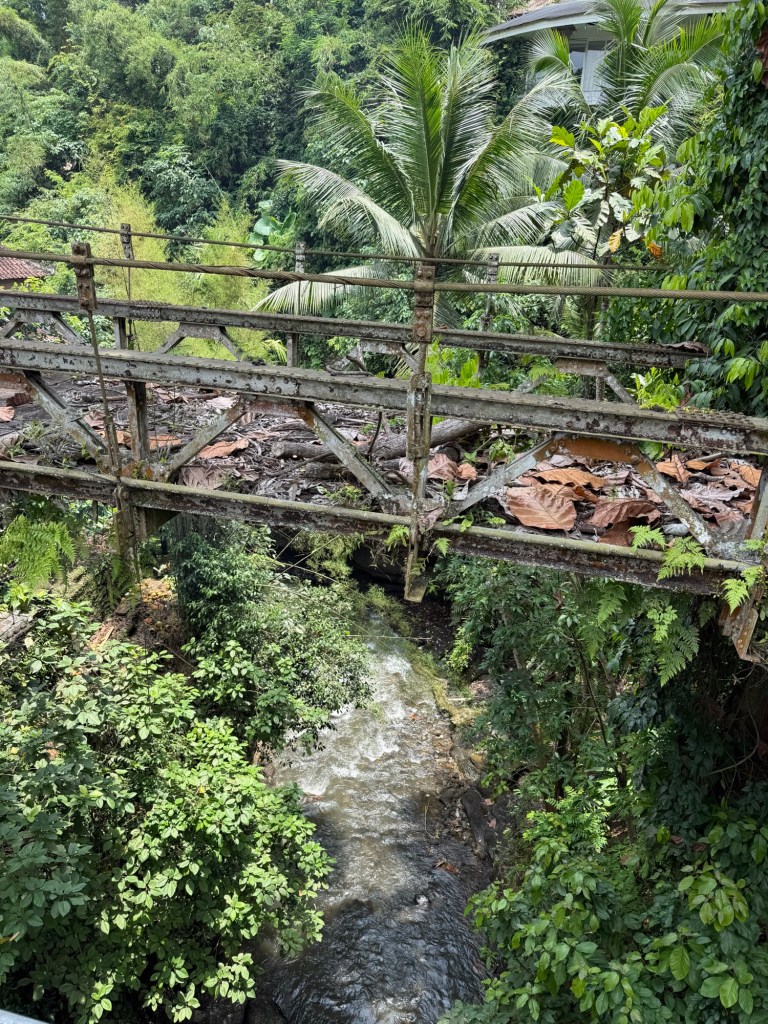
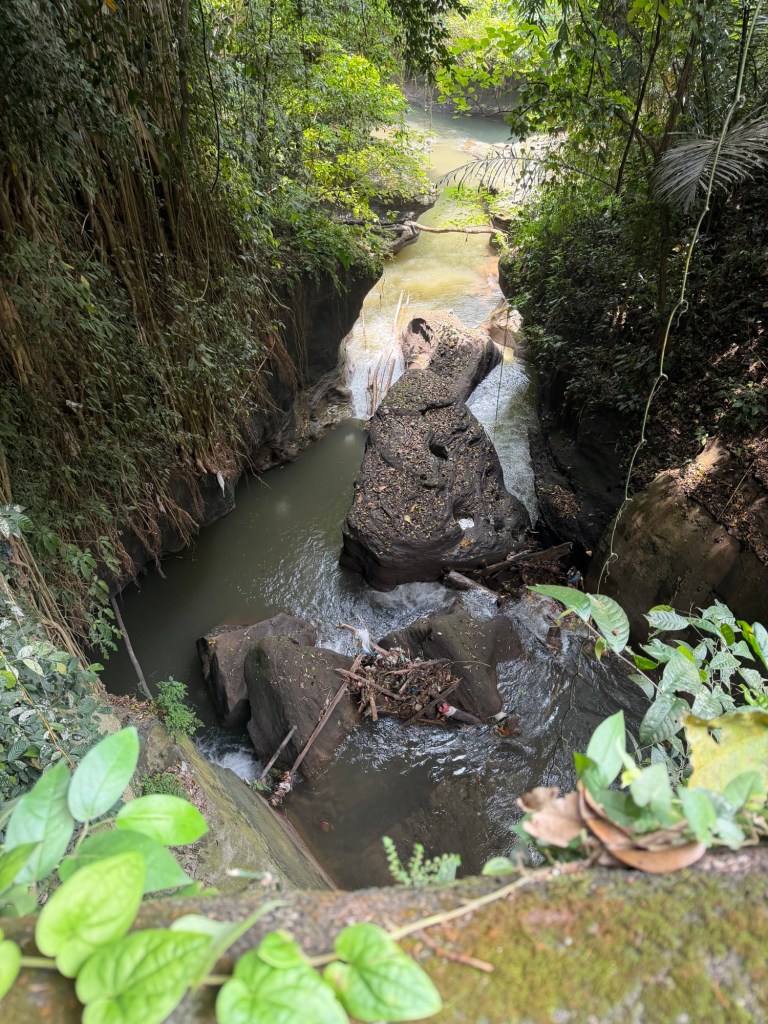
The two images above were taken by the Sacred Campuhan River, the meeting point of two rivers. The point is seen as representative of masculine and feminine balance, a holy river for meditation and purification.
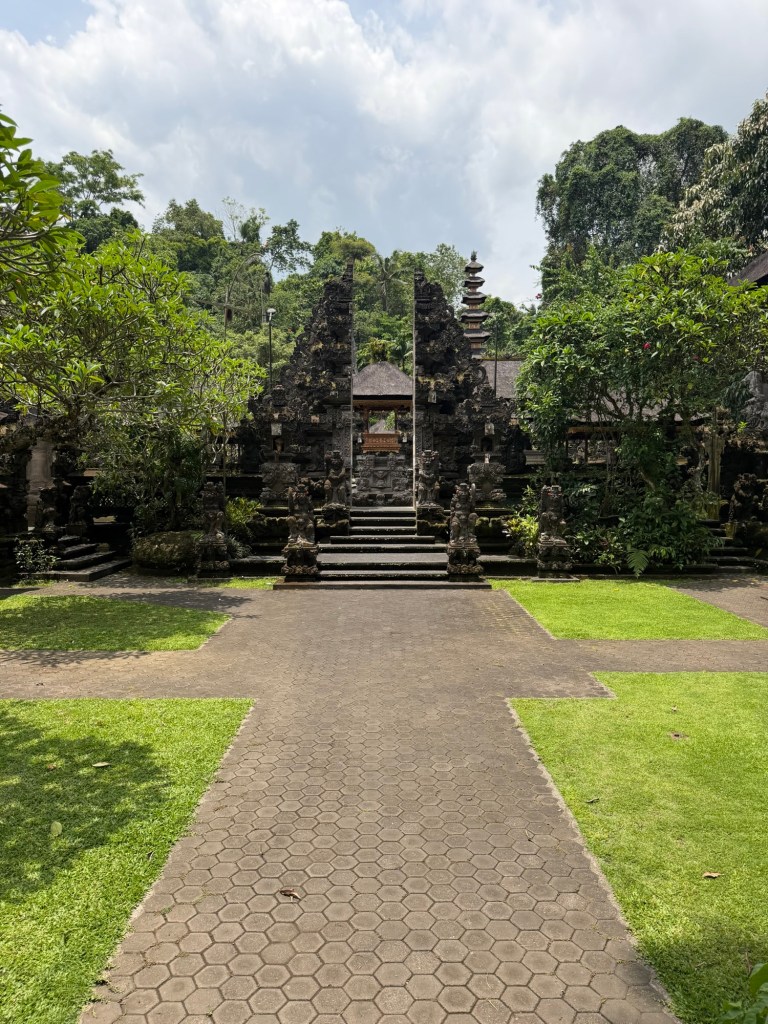
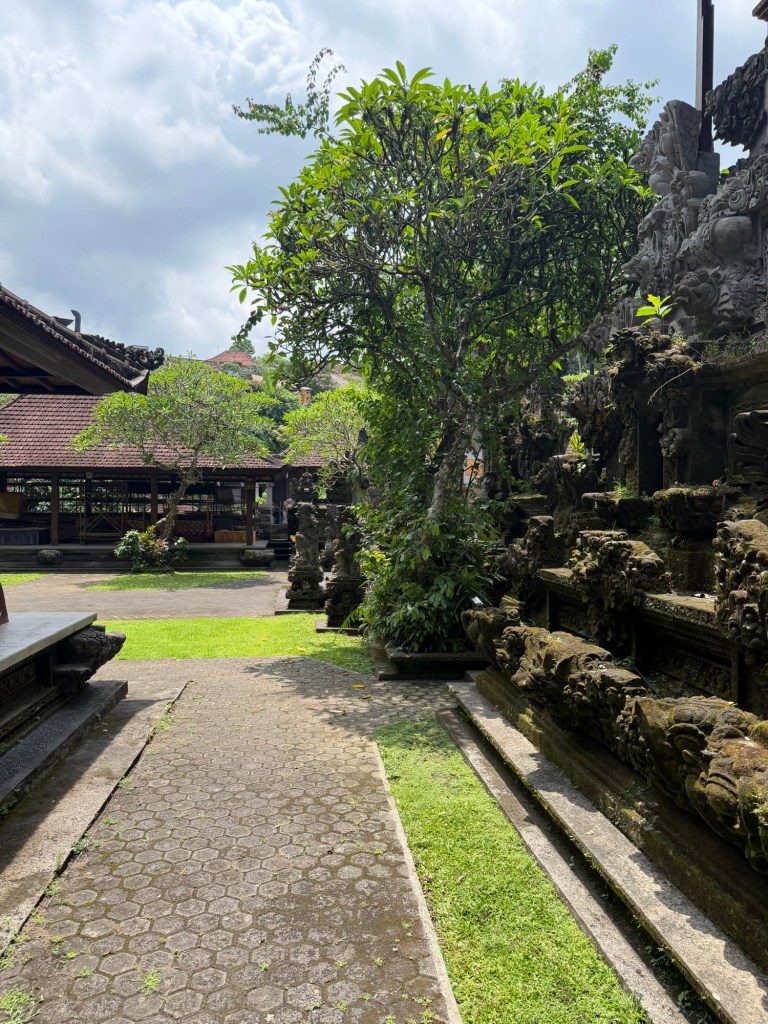
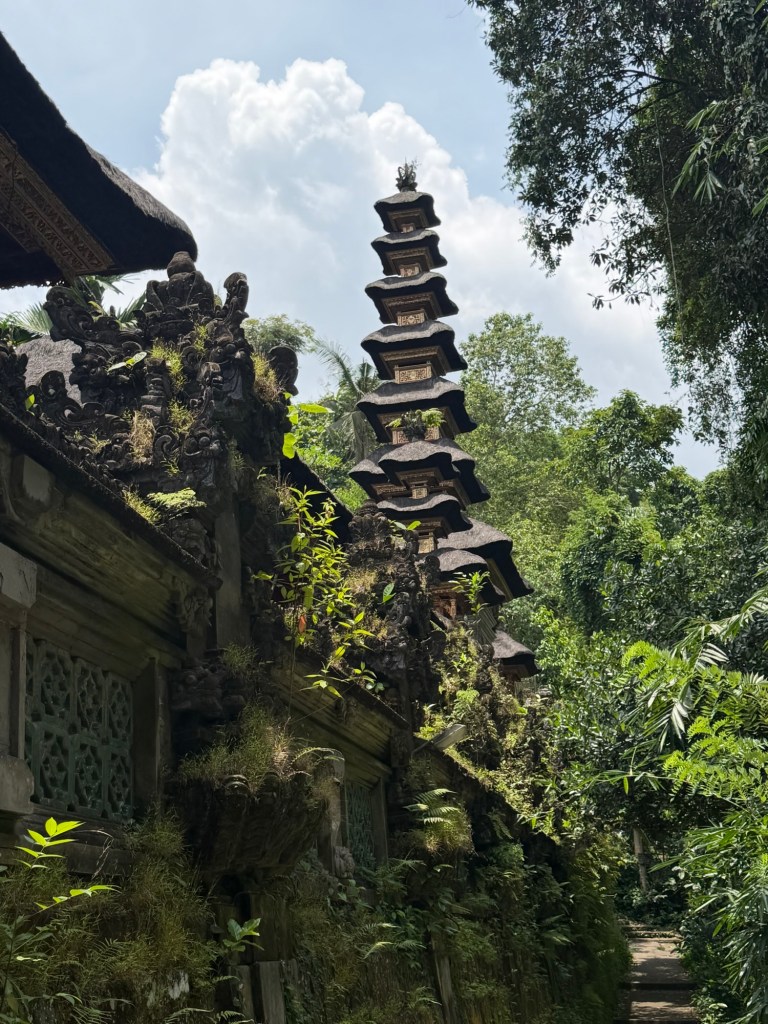
The reason for being in this spot? We were searching for the Payogan Agung Gunung Lebah Temple, the construction of which is believed to have been initiated by Rsi Markandaya (see above), inspired by the magical power he drew from the Campuhan Ubud river valley.
We were frustrated to find the temple closed on the day so were restricted to peering over the gates and marvelling at the setting.
A well earned coffee on Ubud main drag…
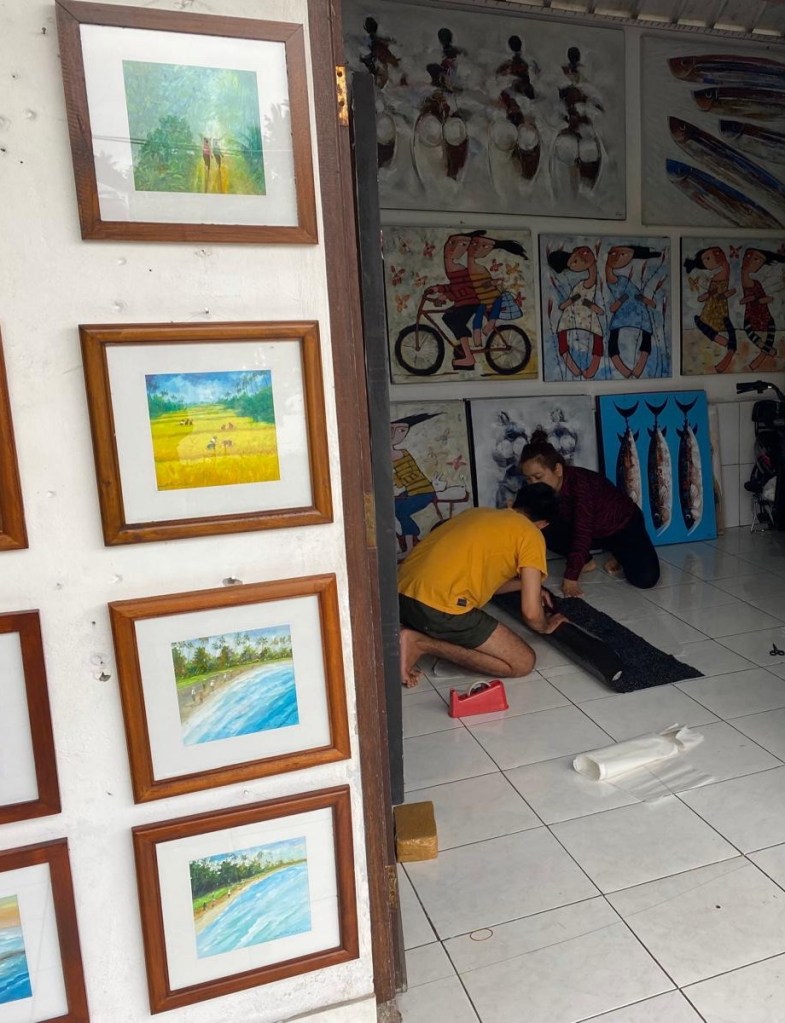
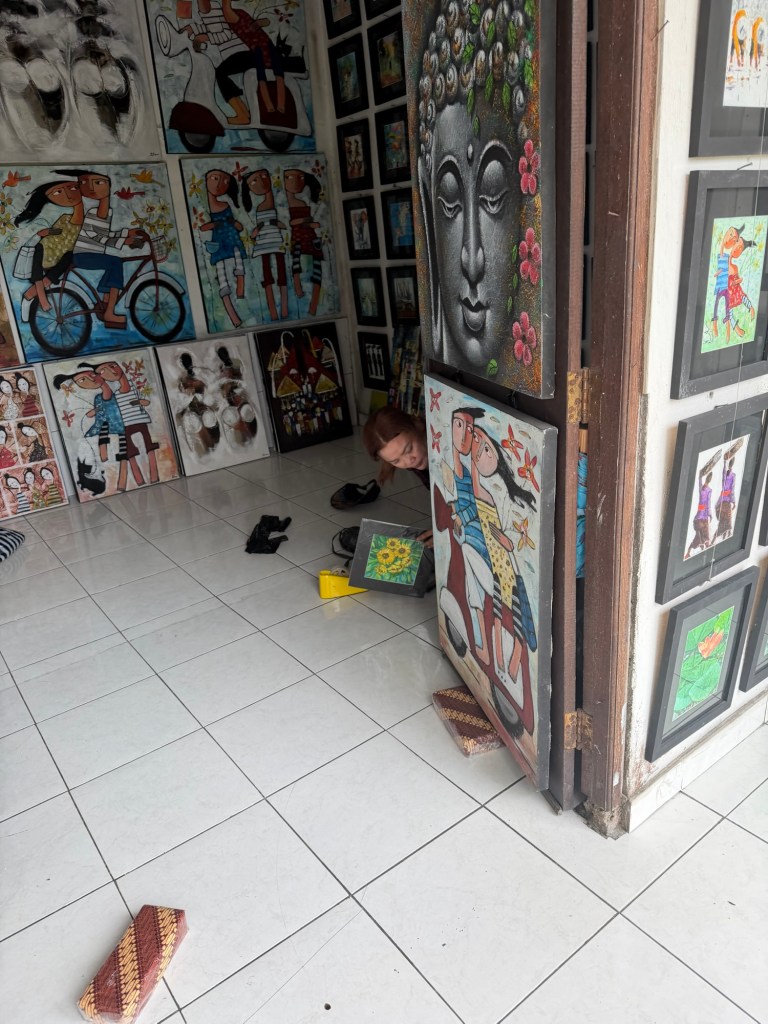
Oh, if you were wondering, we did. Two more pieces of art wending their long way back to our home. Wrapped in the same thorough way by the same lady, three years on from our first purchase.
 Sailing off to Sparta
Leave a comment