The name Bali comes from the Sanskrit word bali (बलि), meaning ‘offering’, or ‘tribute’, or ‘sacrifice’. This led to the name Bali-dwipa, which translates to ‘Island of sacrifice’.
The name was first used in the 10th century by King Sri Kesari Warmadewa, and it reflects the island’s religious heritage, particularly its Hindu traditions.
However, before the Hindu faith arrived in the region, along with Buddhism, some 1000 years ago, the practice of ancient animism prevailed. Animism is a form of ancestor worship, it allows the believer to feel connected to all living things and all things that have come before them through ‘ancestor spirits’.
This belief would have completely infused everyday life and in the villages of the Bali Aga, those villages where the original Balinese people still dwell, it still does. It is Bali’s animist roots that sees places such as Mount Agung and Mount Batur as sacred.
The tradition of temple building is still abundantly evident, hence Bali’s reputation for being the ‘Island of the Gods’. The fact that animist traditions have been absorbed into the ‘new’ religions makes for added interest, in every corner of the island. You can find traces of animism everywhere.
The temples on the Island of the Gods were built to serve a purpose. They weren’t just for worship, as with the original animist faith – Gods in Bali were meant to assist their loyal followers in their quest for a better life.
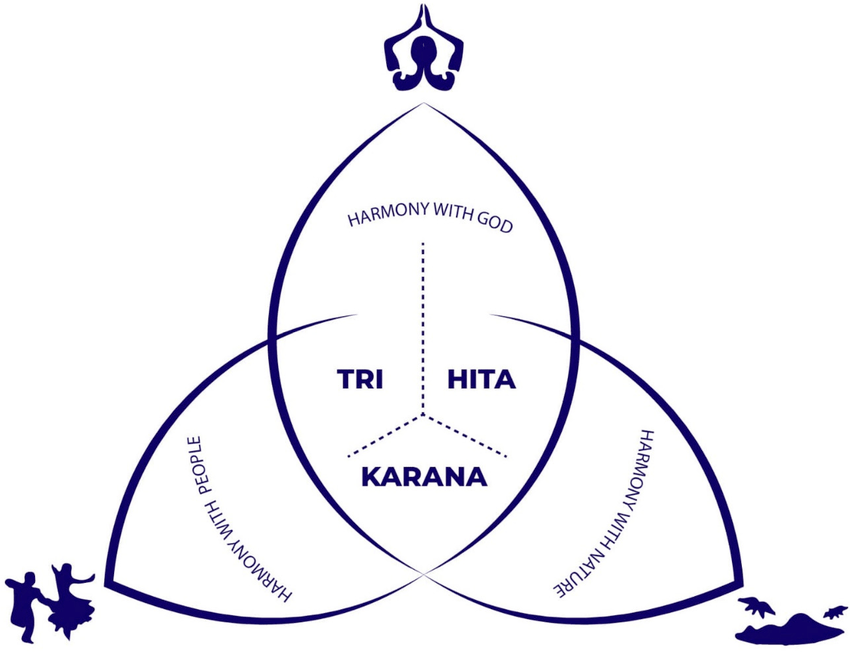
The Balinese concept of Tri Hita Karana is a central philosophy in Balinese culture that underpins their approach to life, spirituality, and community well-being. Translating roughly to the ‘Three Causes of Prosperity’ or ‘Three Sources of Happiness’, this concept focuses on harmonious relationships that sustain balance across different dimensions of existence:
1. Harmony with the Divine.
2. Harmony among people.
3. Harmony with nature and the environment.
A fascinating study of the concept, conducted by UNESCO, can be found here (click on the link below). It outlines just how deep the idea permeates and governs the Balinese way of life. The study focuses on a cooperative water management system of canals and weirs, known as subak, that dates back to the 9th century. The subak system of democratic and egalitarian farming practices has enabled the Balinese to become the most prolific rice growers in the archipelago despite the challenge of supporting a dense population.
Essentially, the subak principle rests on egalitarianism and the belief that water is a gift from the Gods.
To think that we in the UK, for one, face ever-increasing water bills in a country where annual rainfall continues to increase (see State of the UK Climate in 2024, Journal of Climatology, July 2025) Whilst farmers suffer devastating losses from regular flood events. How can we get it so wrong while Bali gets is so very right?
Placing offerings is part of everyday practice. They are not just for temples; they are placed everywhere from homes and shops to vehicles and public spaces to ensure balance is maintained throughout the day.
Offerings are made to both the gods (in heaven) and the demons (in hell) to ensure a balance between good and evil, preventing negative forces from entering the human world.
Streets, intersections, and other public spaces are considered important because they are places where the realms of humans, gods, and demons intersect.
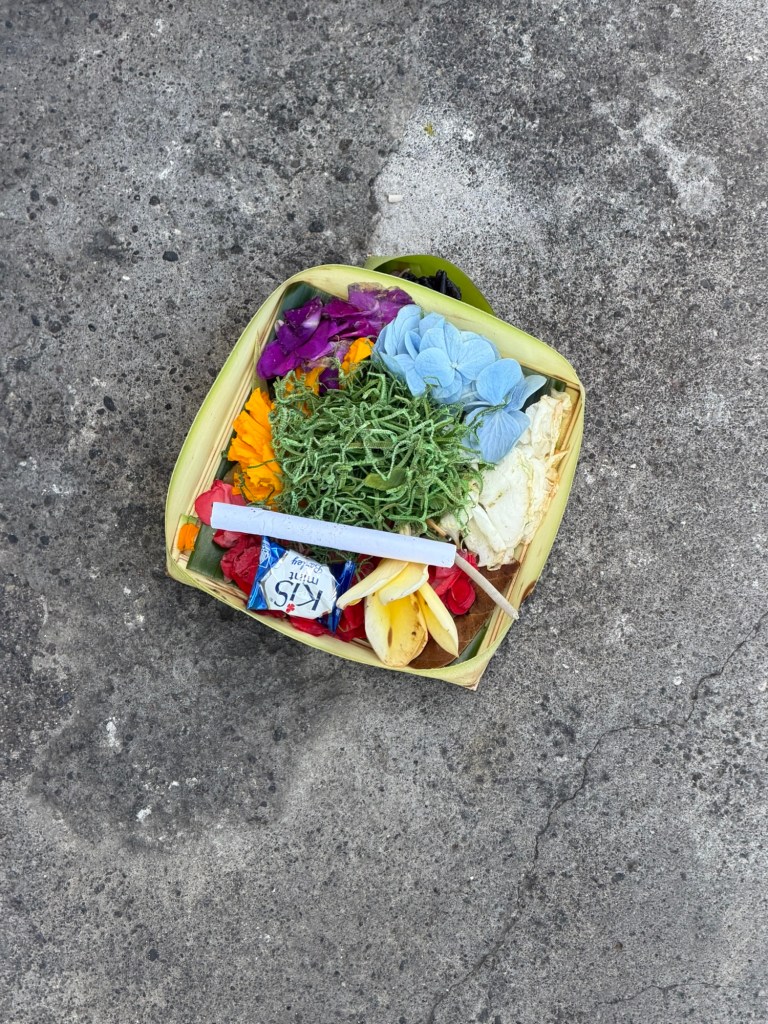
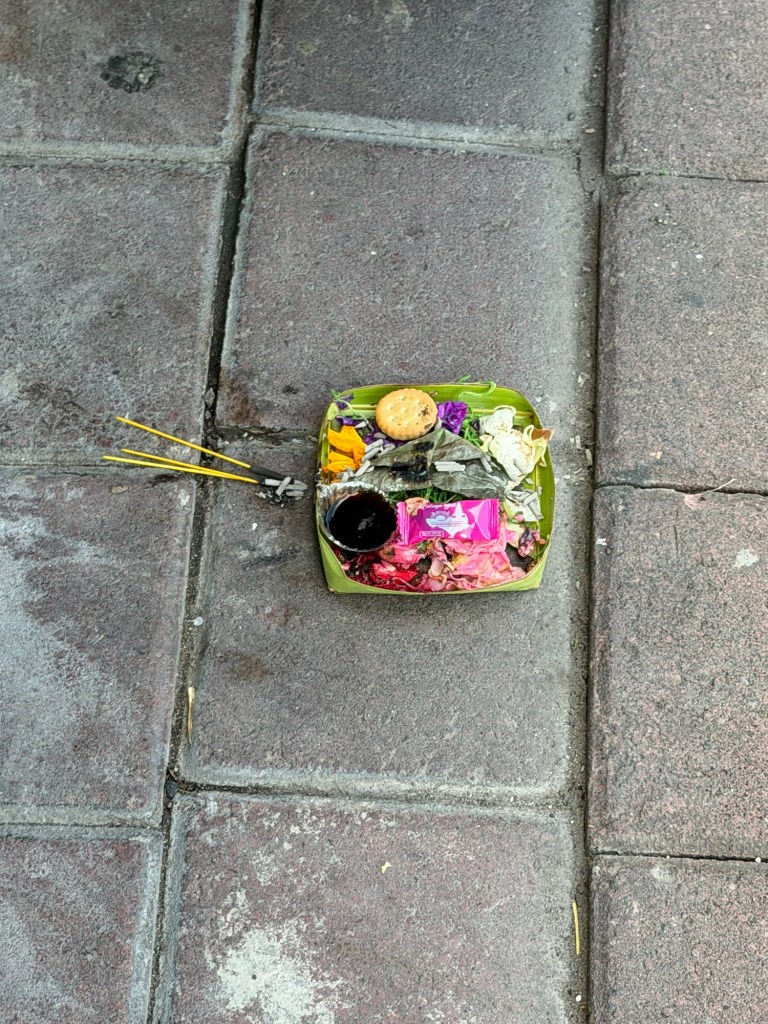
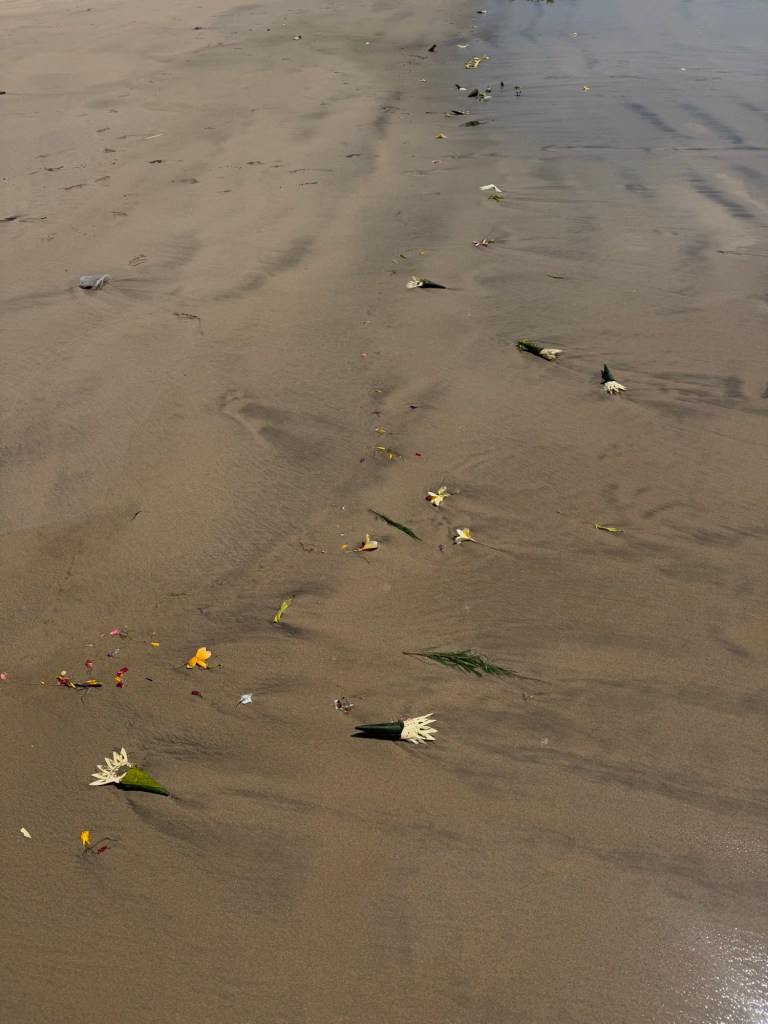
Beaches are seen as a junction between land and sea, which are both spiritual realms. Placing offerings there honours the spirits of the ocean and the gods who reside there.

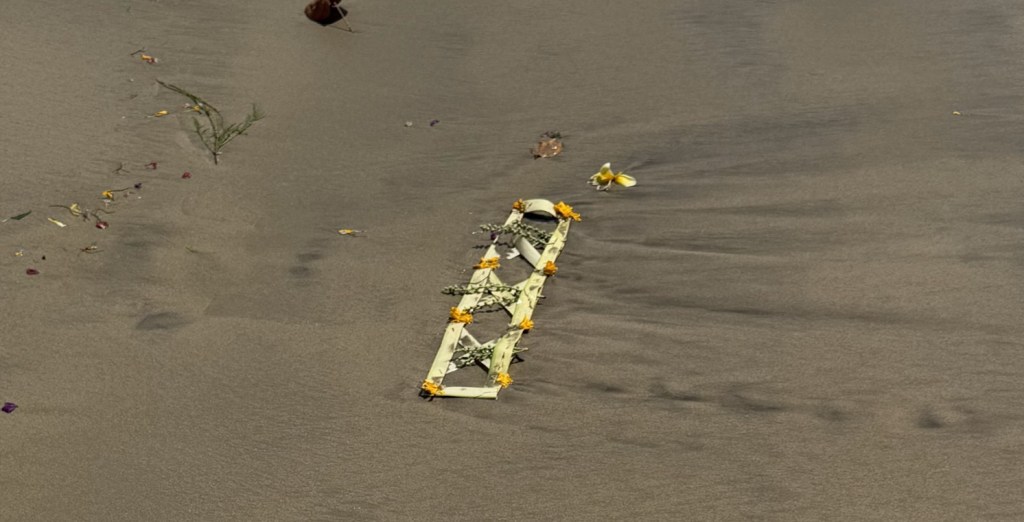
A parting shot for today:
In the main reception area of our resort there is a monumental installation.
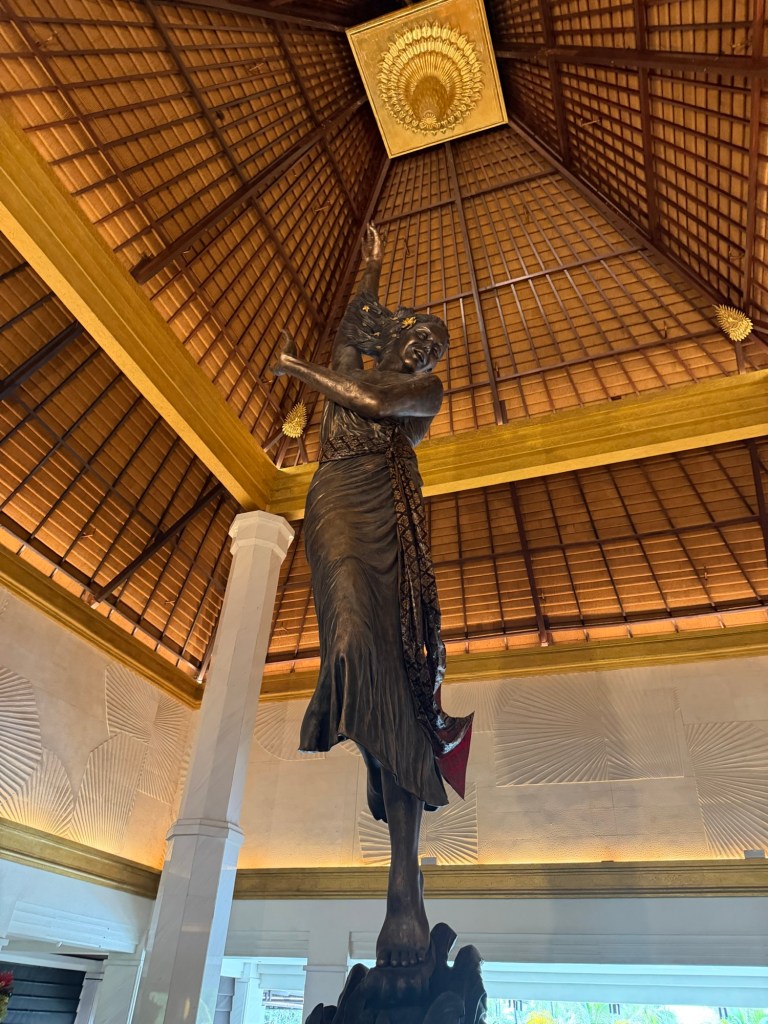
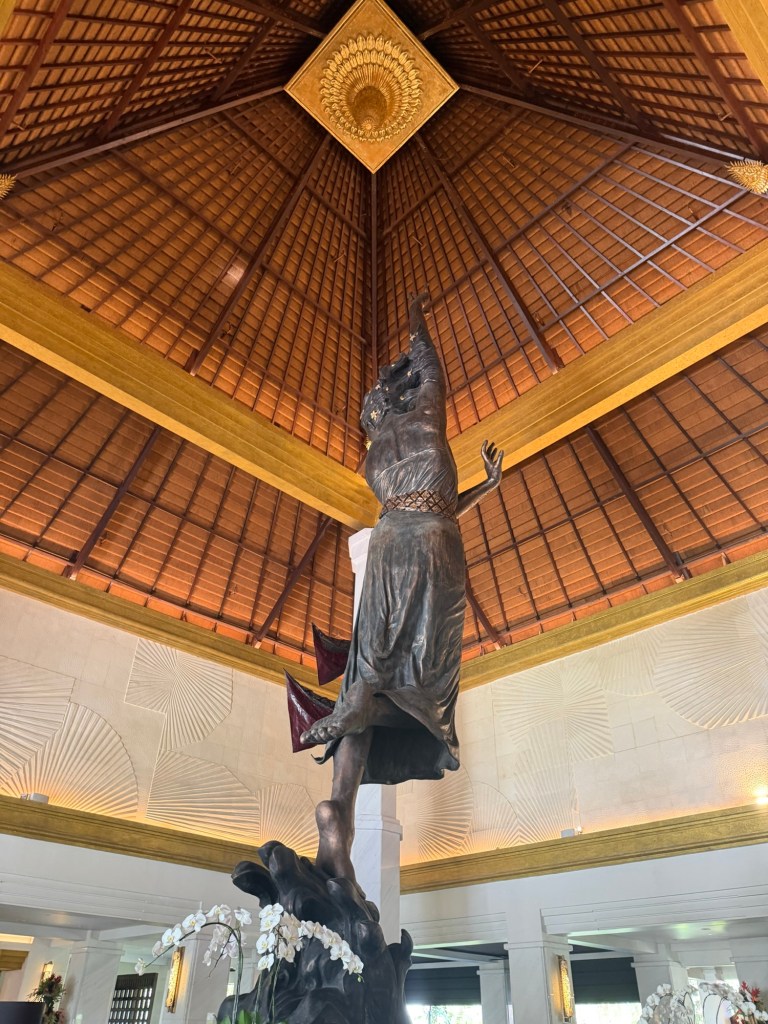
Although, as you pass on by – if you are of a certain generation…

… it does beg the question, who inspired who?

And then, bottom left of the Tri Hita Karana conceptual diagram…
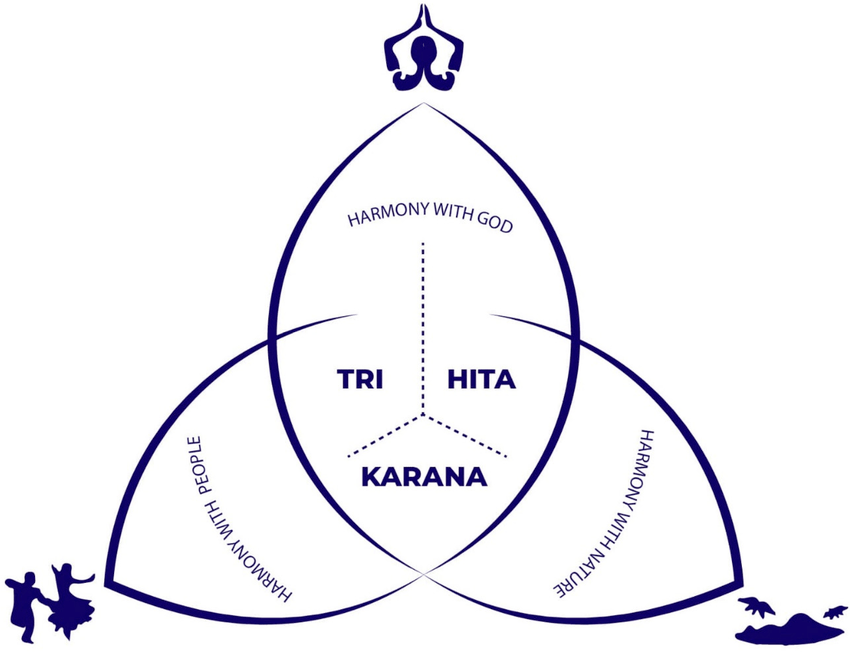
Maybe Eric, Ernie and the lady in Reception inspired one another in their expressing of a little joie de vivre? Fitting that such joy finds its imagery on the diagram. The people of Bali we have met are great ambassadors for the Tri Hita Karana way. We look forward to learning more from them and their way of life.
In the Korean language, “Bali Bali” (빨리 빨리) is a phrase that means “hurry, hurry”. There is nothing rushed or forced about the Balinese manner, the way they interact with one another, and the way they have interacted with us.
 Sailing off to Sparta
Leave a comment