“At 80 years old, I am still a child. When I come to see you at 90, send me away to wait until I’m 100. Let us keep going strong as we get older and not depend too much on our children in old age.”
Recognised for having the highest proportion of elderly persons in Japan, the village of Igimi issued a “Greatest Longevity in Japan” declaration in 1993. The declaration included the above quoted passage.
Having explored the heavily American-influenced part of Okinawa, we felt strongly that we really must see the ‘real’ Okinawa that features so strongly in the ‘Blue Zone’ literature. The said area is in the far north of the island. We decided to focus on three villages that feature strongly in Dan Buettner’s groundbreaking work: Ogimi Village (大宜味村), Kunigami Village (国頭村), and Higashi Village (東村).
In 2016 a large swathe of northern Okinawa bordered by the villages of Kunigami, Higashi and Ogimi was designated Yanbaru National Park by the Japanese government.
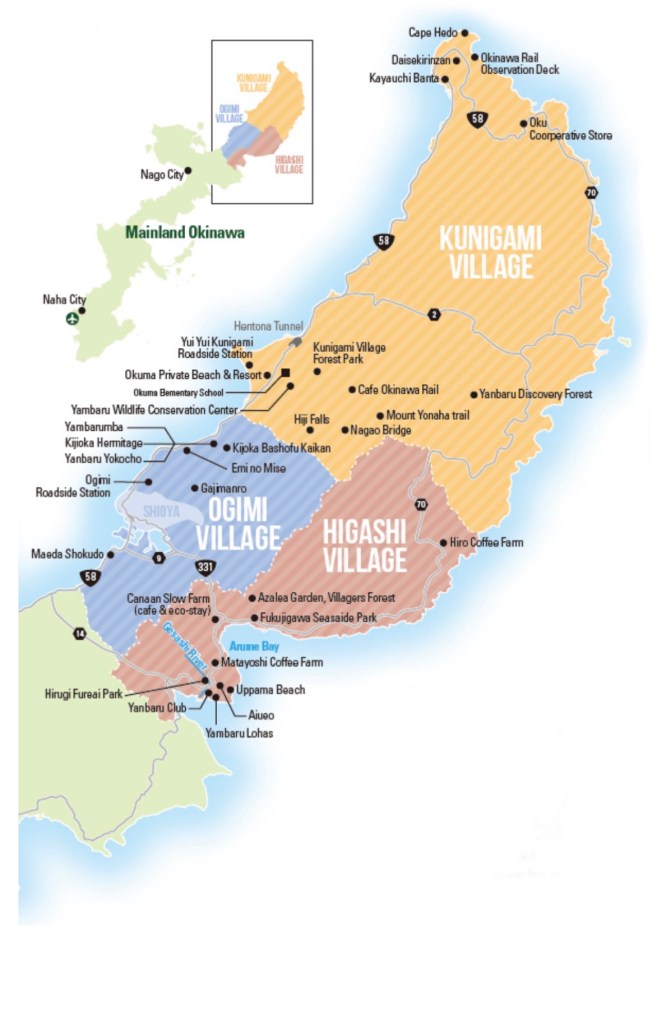
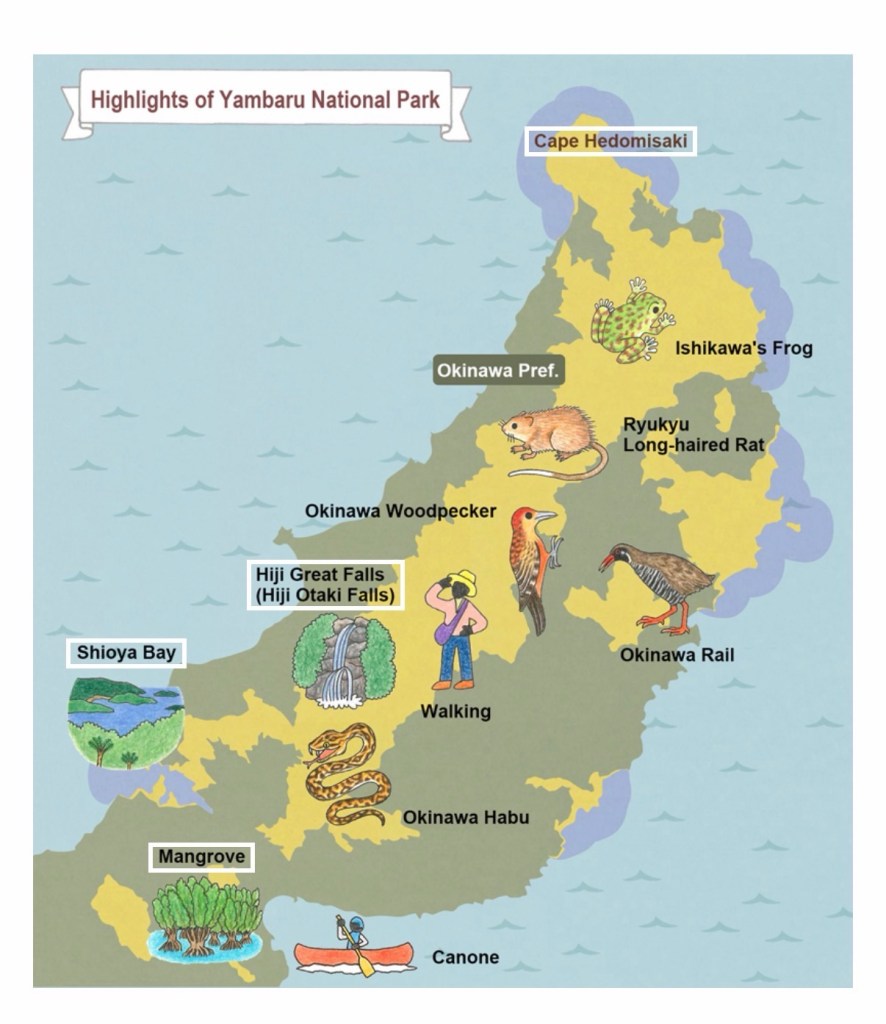
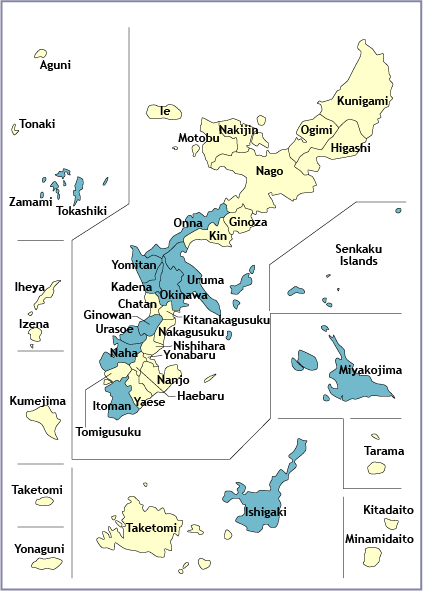
We discovered it to be simply impractical to do all this by public transport so we hired a taxi for the day. We set out anticipating a memorable day, sure to keep an eye out for Fumiyasu, Zen-ei, and Yasu, introduced in Day 12 blog
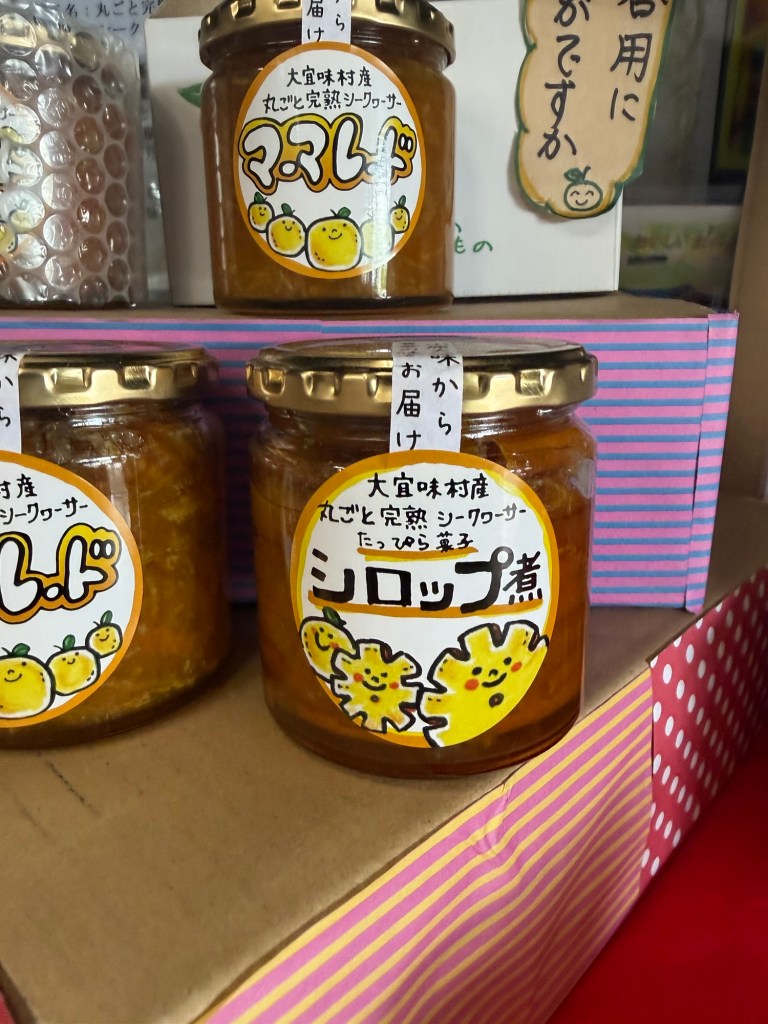
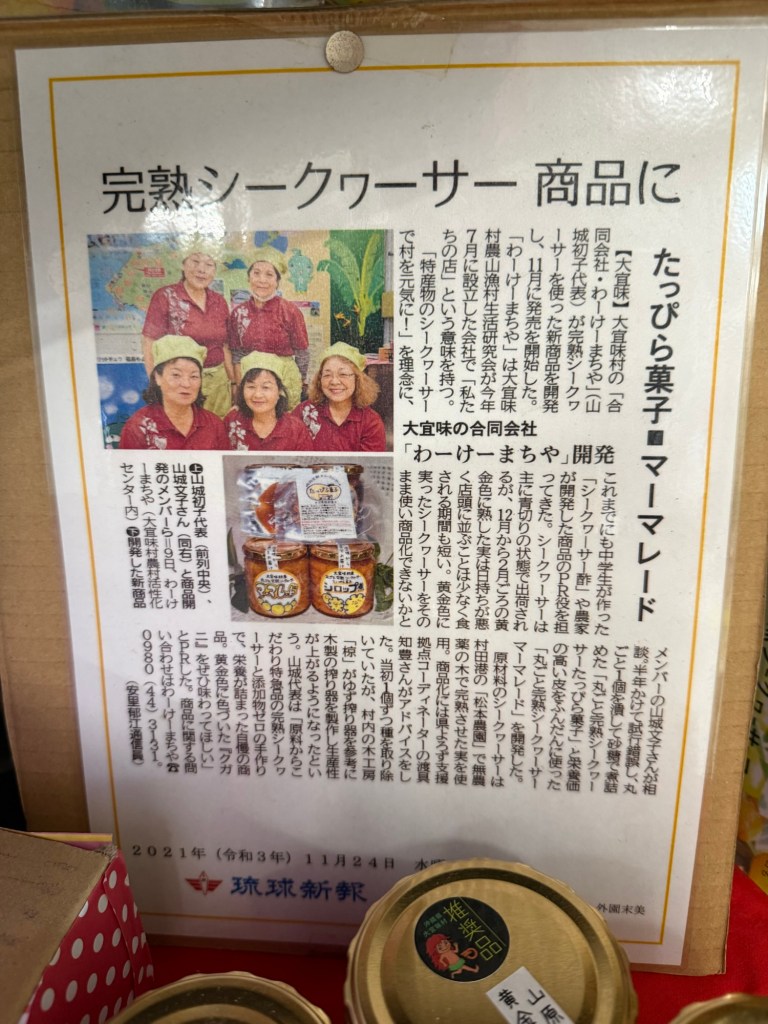
We made a first stop at the Ogimi Farm Revitalisation Centre. Ogimi Village is renowned for its growing and use of the Shikuwasa, a small, sour citrus fruit, known for its tart flavour when unripe and a sweeter taste when ripe and yellow. The name derives from the Okinawan dialect and is a combination of the two words “Shii” and “kwaasaa”, which mean “sour” and “food” respectively. It is a key ingredient in many Okinawan dishes, juices, and alcoholic beverages, and is sometimes called the “longevity fruit” due to its high concentration of beneficial compounds like nobiletin. The fruit can be eaten fresh, used as a substitute for vinegar, or made into jams, dressings, and refreshing drinks. Having a predilection for marmalade, we made our first purchase. Because the whole fruit is processed, including the skin and seeds, only fully ripe, pesticide free, Shikuwasa is used.
We stopped at Okuma Beach. Not a lot to see, other than an extensive beach, fine sand, and a calm East China sea.
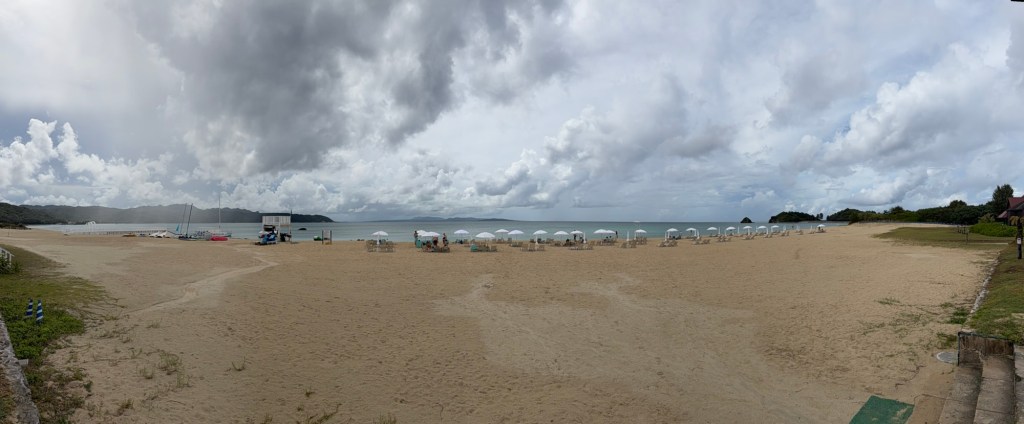
Having said that, come in late December, through to April and, apparently, you can sit and watch humpback whales with their calves.
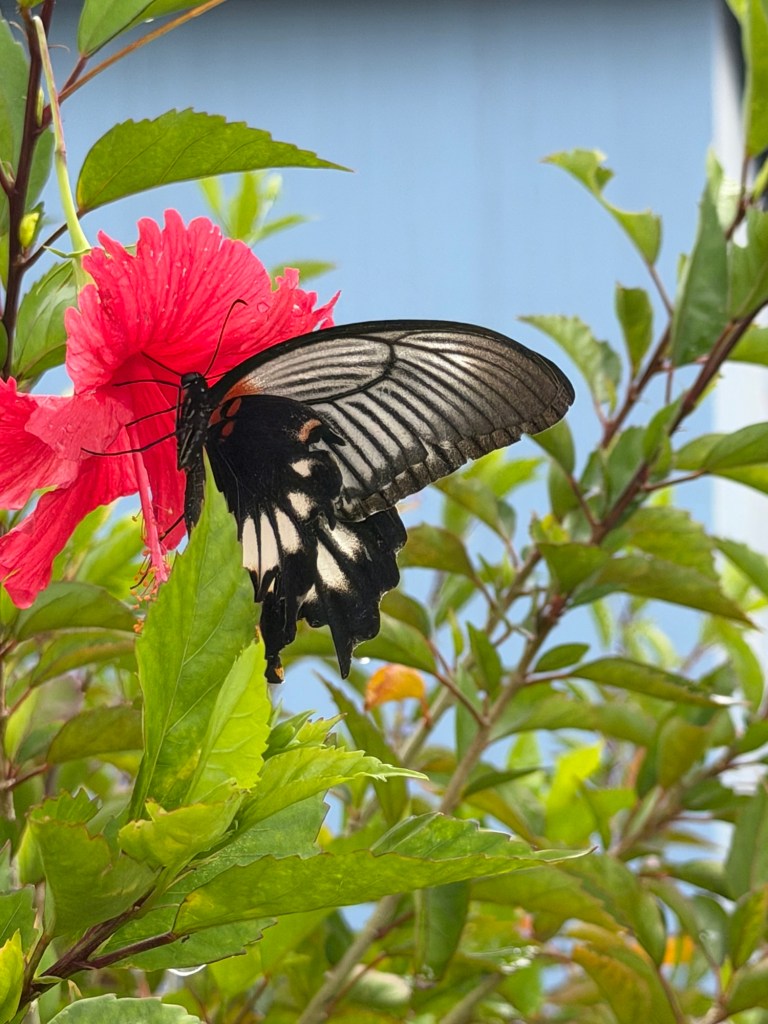
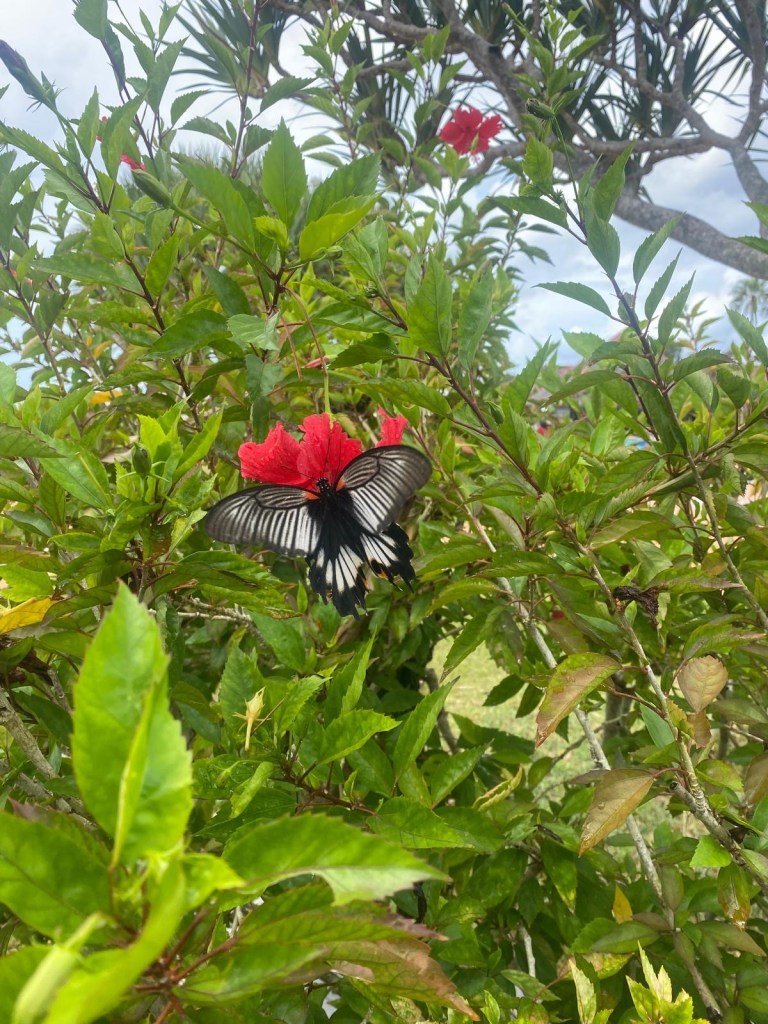
And then, the butterflies. It is difficult to get a sense of perspective from the photographs but the flower is a large one and the butterfly has a wing span of approximately 15cms.
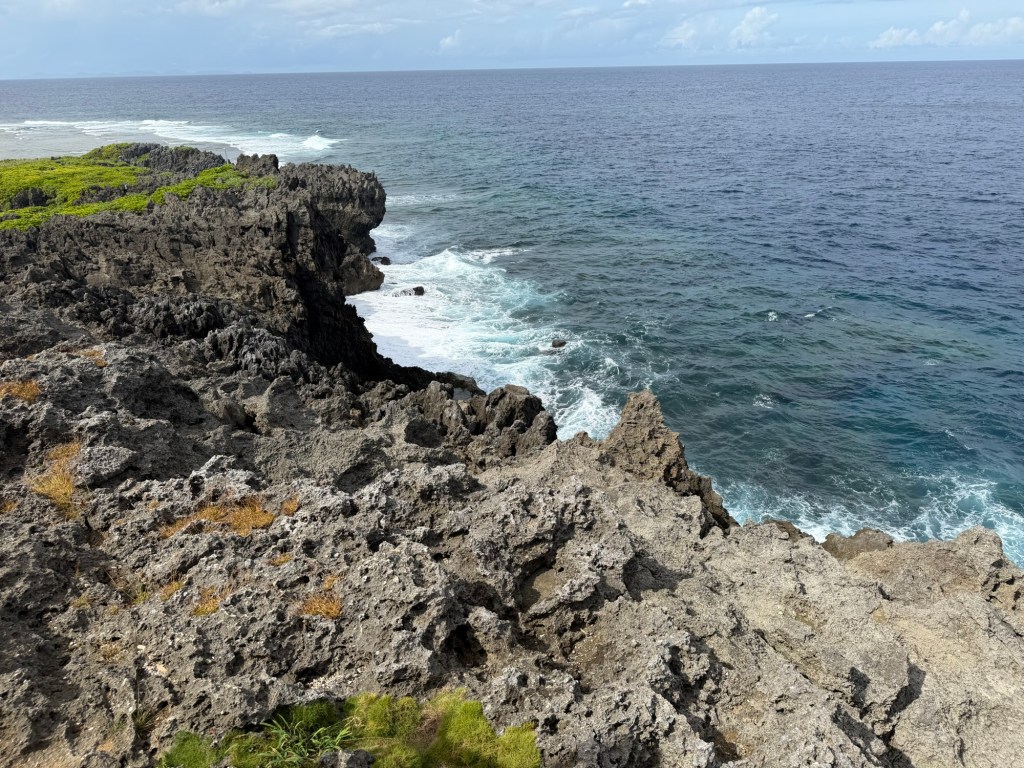
Next stop, Cape Hedo (辺戸岬, Hedo Misaki), the island’s northernmost tip. With sensational views…
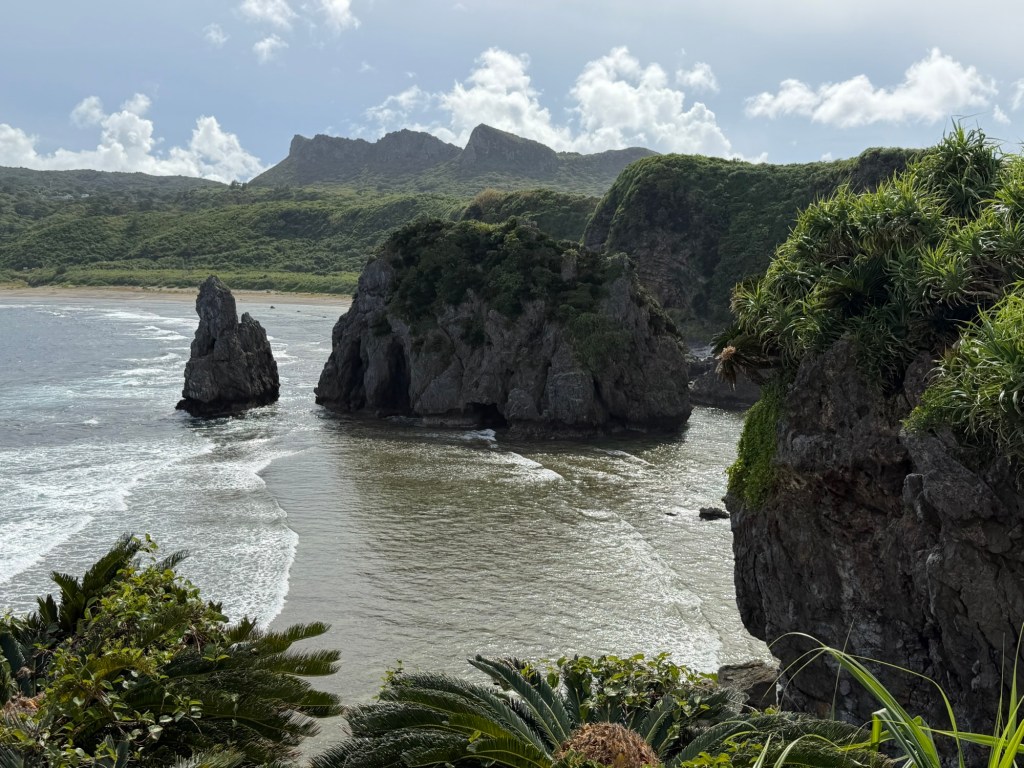
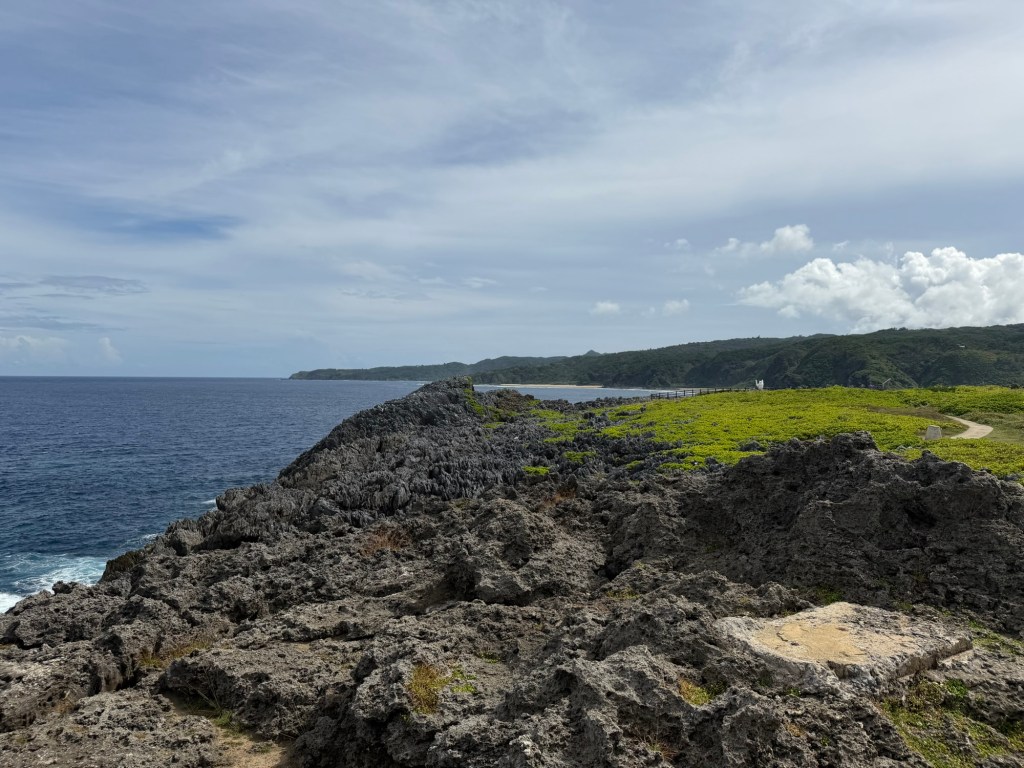

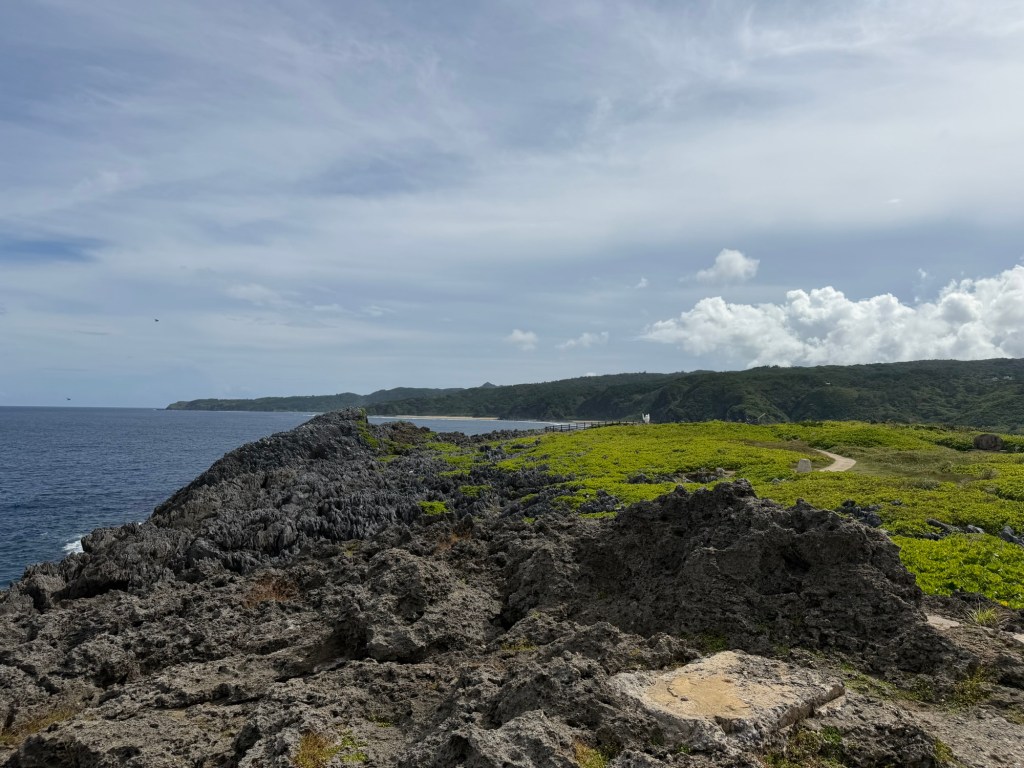
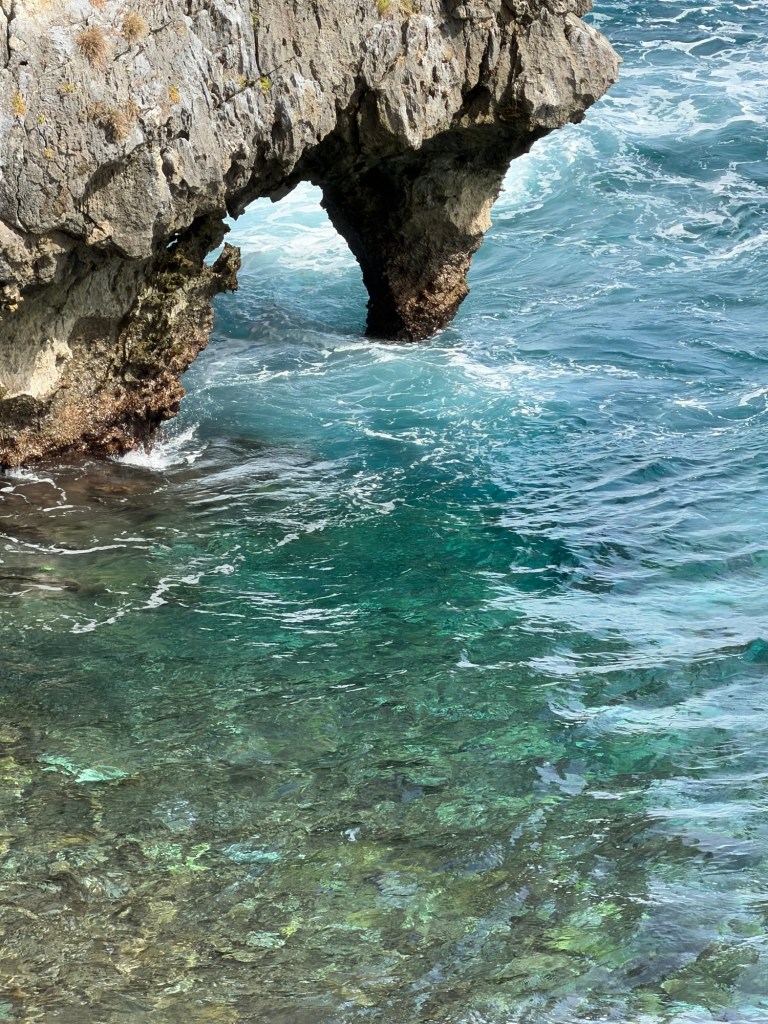
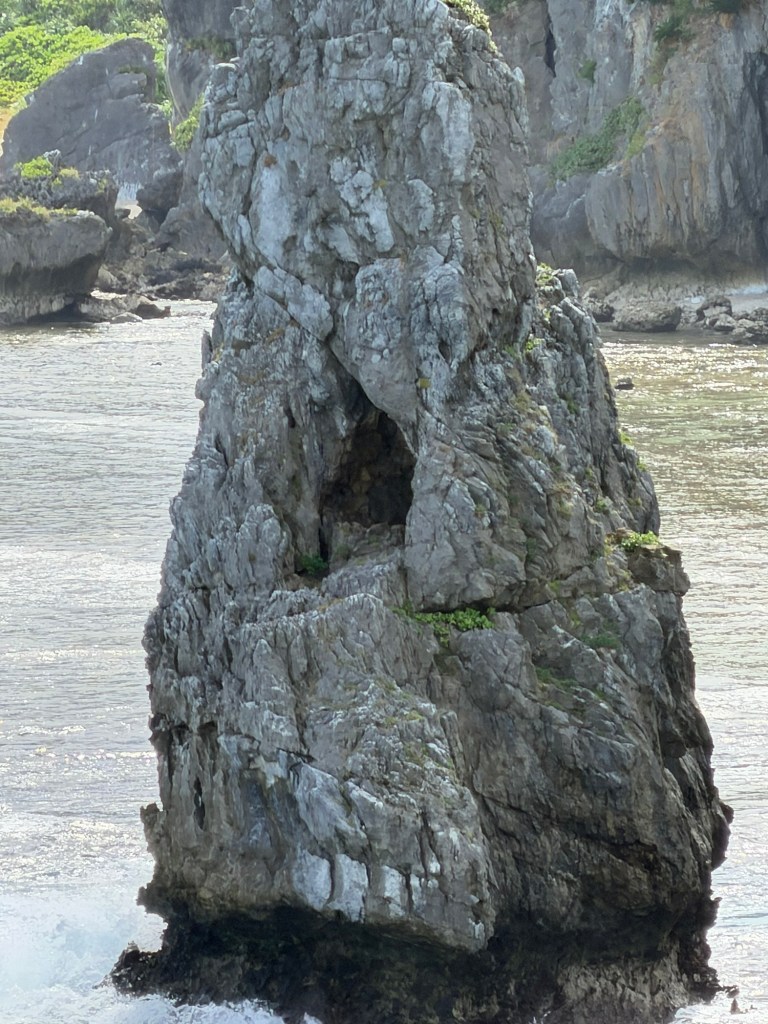
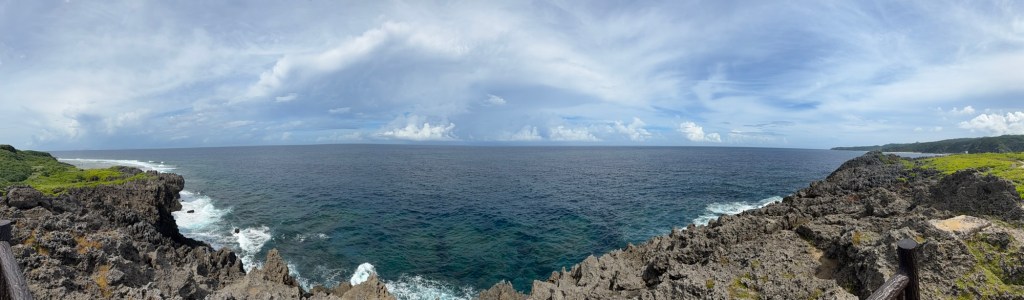
Cape Hedo faces the East China Sea on the west, and the Pacific Ocean on the east.

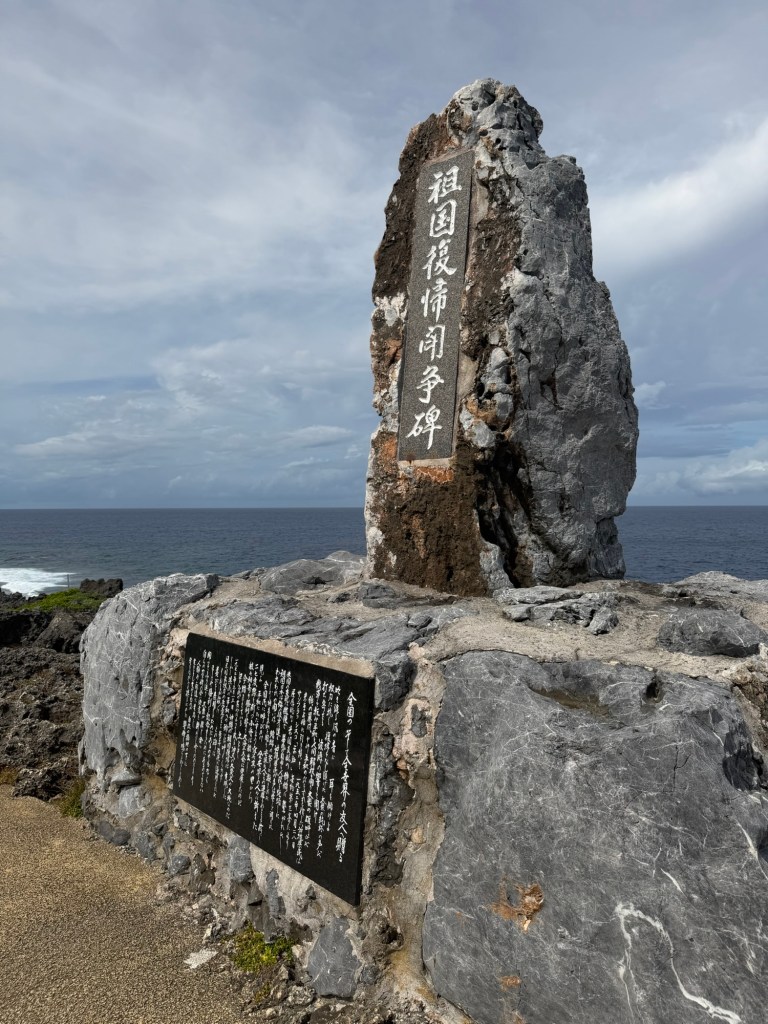
This monument was erected in 1972 to commemorate the end of US occupation and return of Okinawa to Japanese sovereignty.

Cape Hedo is a place revered by locals, and is the place where they gather to watch the New Year’s sunrise and pray for peace. Our experience in Japan has taught us that the Japanese appear to hold a steadfast and transparent desire for World Peace.
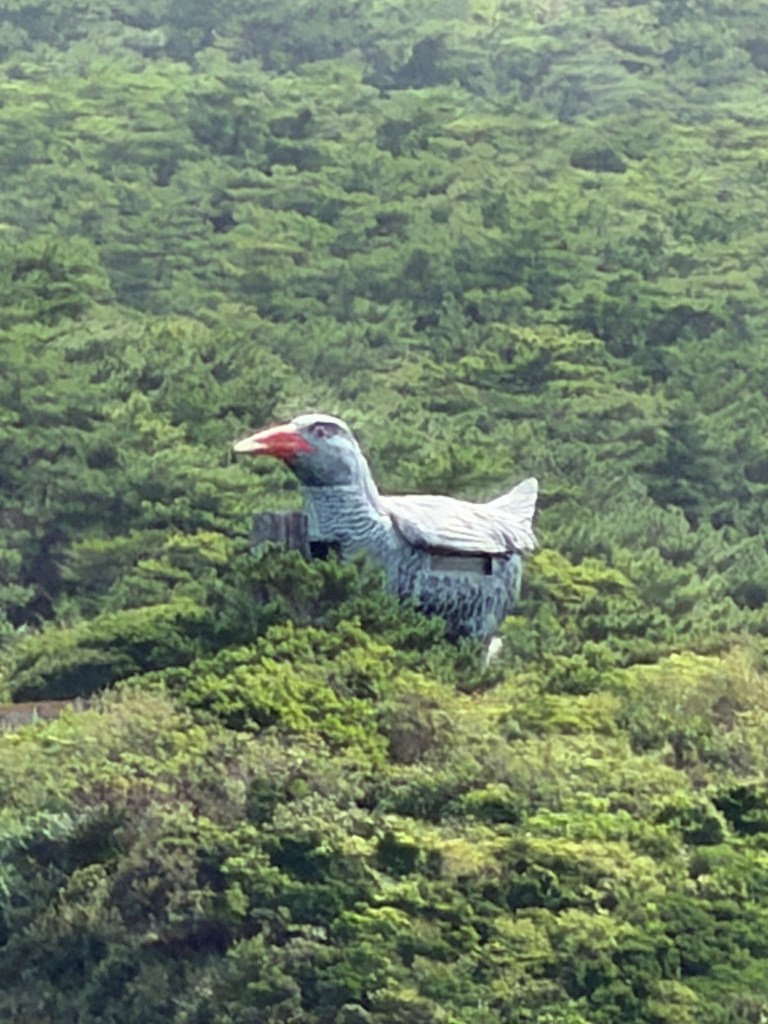
We espied this oddity across the water, to discover that it is actually an observatory, the Yanbaru-Kuina Observatory. It is the shape of a giant bird (our eyes did not deceive us!), modelled on the Okinawa rail, an endangered species of Okinawan bird.
Another monument on Cape Hedo is the “Kariyushi”, a big white bird in honor of Friendship between Kunigami Village and Yoronjima, one of the Amami Islands. It is a local legendary animal with a head of a bird and a body of a fish.

It has proved difficult today to penetrate the real world and lives of the people of Ogimi Village, Kunigami Village and Higashi Village. The closest we got after the Ogimi Farm Revitalisation Centre was limited to similar cooperatives situated at roadside stopping points, where you can peruse and buy, if you choose to do so, food stuffs (such as the marmalade), products and craft items indigenous to the island. The marmalade, for example, is produced in a greenhouse in Matsumoto Farm Ogimi Murati Port.
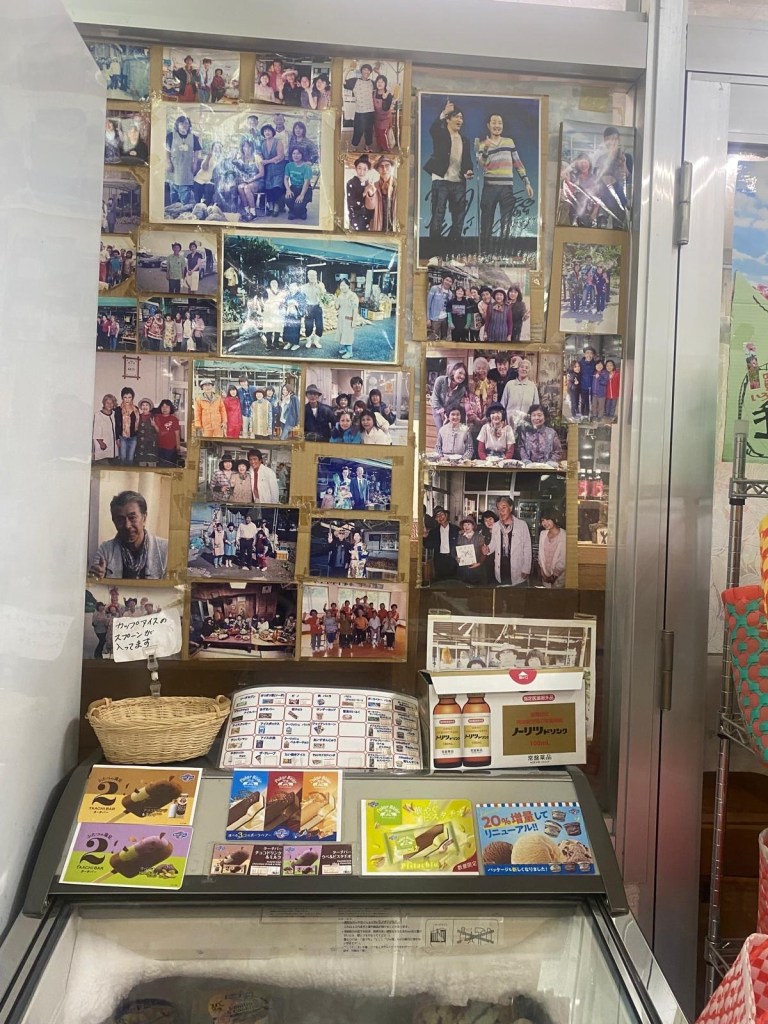
The cooperative members do proudly exhibit photograph collections alongside their products. We were served by a delightful lady when buying the marmalade. When we pointed out that she featured in the collection (centre-front in the image below) she laughed heartily and acknowledged that was indeed her.
I suppose it was a little bit fanciful to think that we could get up close to Fumiyasu, Zen-ei, Yasu, and their fellow ‘Blue Zone’ Okinawans. We did, however, get a strong sense of the place, travelling up the coast, across the top of the island, and then winding up, down, and through the mountains. At least we can imagine the ‘Blue Zone’ ideal all the better for today’s road trip.
“At 80 years old, I am still a child. When I come to see you at 90, send me away to wait until I’m 100. Let us keep going strong as we get older and not depend too much on our children in old age.”
 Sailing off to Sparta
Leave a comment