We decided to visit Naha (那覇) the capital city of Okinawa, today. Now being big fans of the Japanese public transport system, we shied away from the easy, many times more costly, taxi option, and jumped on a local bus. Doing so is made really quite straightforward, by using Google maps. Again, coming prepared, having uploaded a reliable e-sim, is essential. Connectivity has never been an issue wherever we have been in Japan. Once on the route (bus) it even keeps count of the number of stops, allowing you to jump when your destination point arrives.
Journeying down to Naha, we spotted a very large military base, Camp Foster, with signs up declaring it to be United States property.
Following World War II, Okinawa was a U.S. territory before being returned to Japanese control in 1972, with the agreement allowing the U.S. to maintain its military presence.
Approximately 30,000 active-duty service members, along with thousands of civilian employees and their families, live and work in Okinawa.
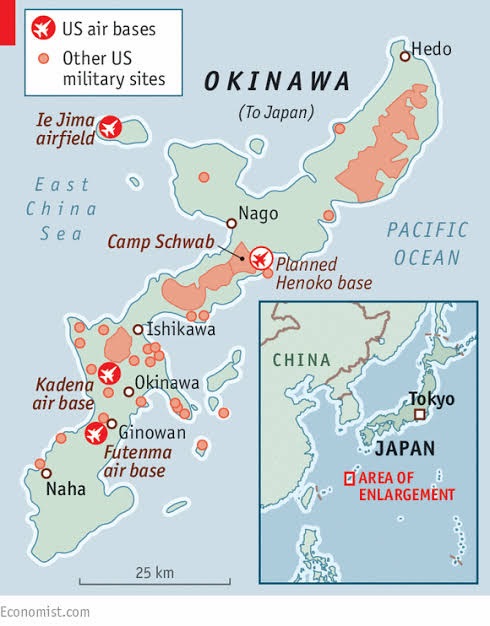
The U.S. views the bases as crucial for regional security and the alliance with Japan, as outlined in the Treaty of Mutual Cooperation and Security. The presence is a source of debate and ongoing protest among some Okinawans.
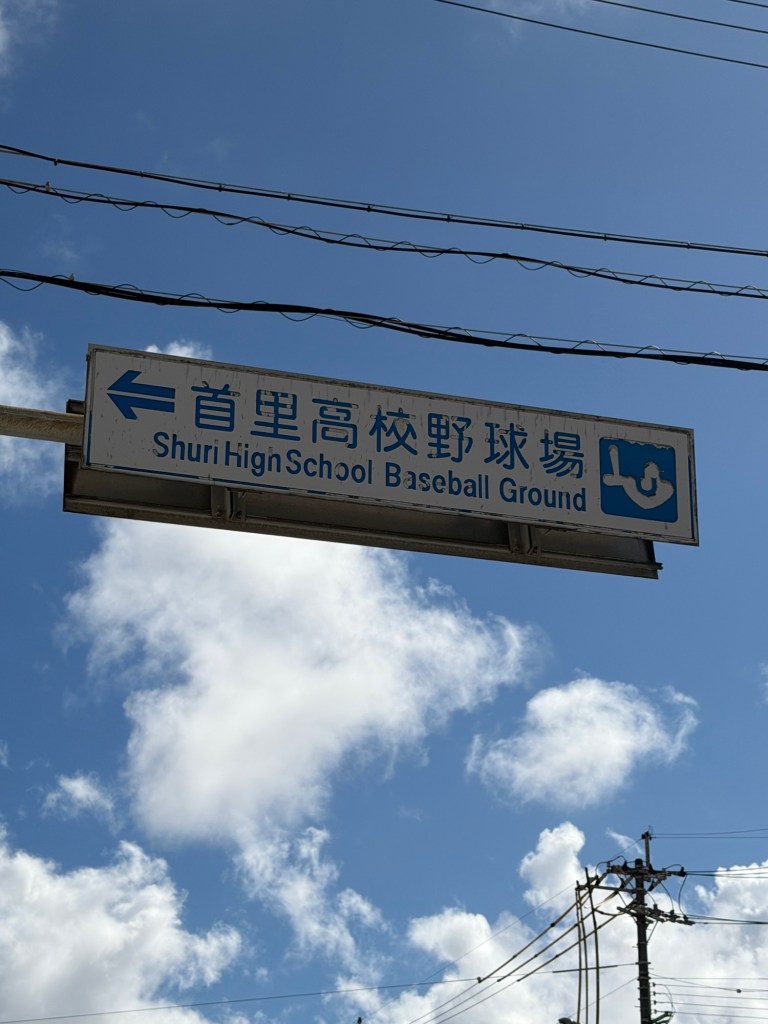
The presence of America Village now made more sense. As did this sign
Near the end of World War II, Okinawa became the site of one of the war’s bloodiest battles, when the US forces invaded and occupied the island. An estimated 200,000 people, including more than 100,000 civilians and 12,500 Americans were killed in the battle, which lasted from April to June 1945.
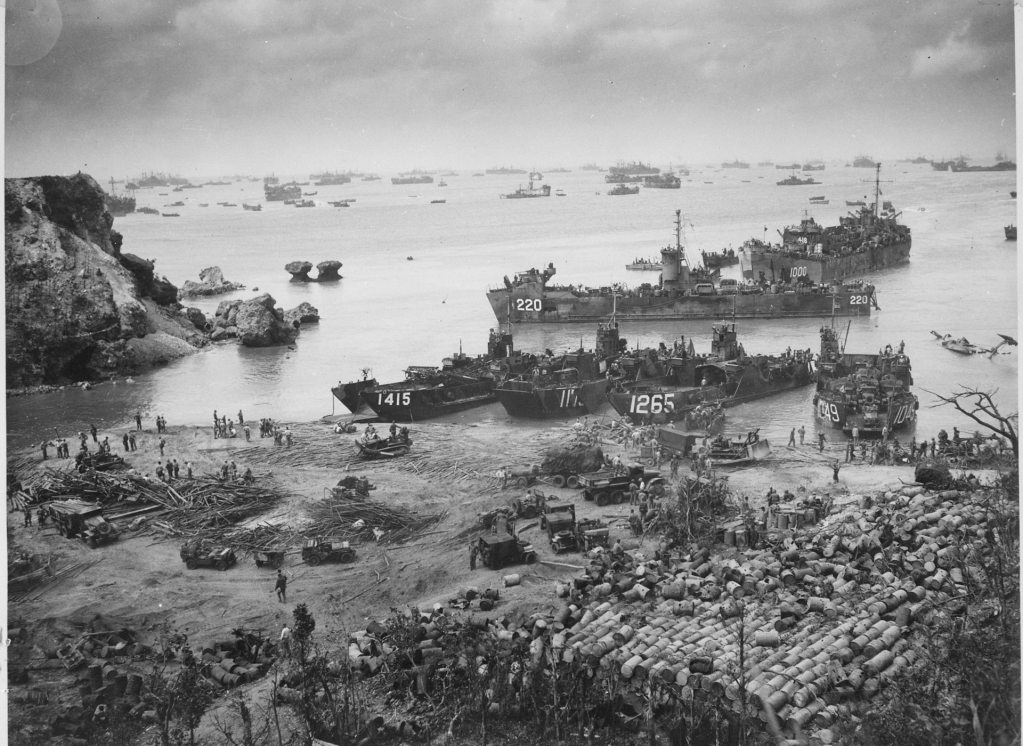
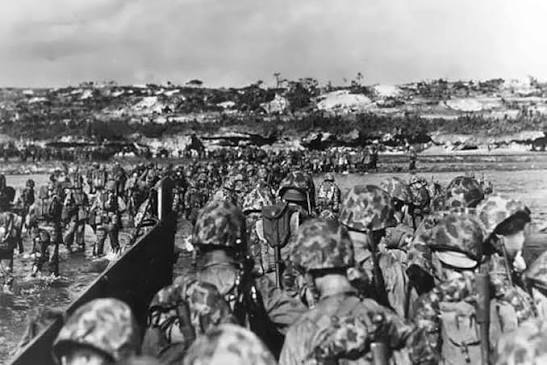
Since Naha was almost completely destroyed in the Battle of Okinawa, only a few of the city’s buildings predate the war. The former capital of the Ryukyu Kingdom around Shuri Castle, Naha’s most famous landmark, was located within the borders of today’s Naha City
We were not particularly enamoured with the central district in Naha, and sought to move on. We decided to head for Shuri Castle. To get to Shuri Castle we travelled on the Yui line. All very smooth and efficient, of course.
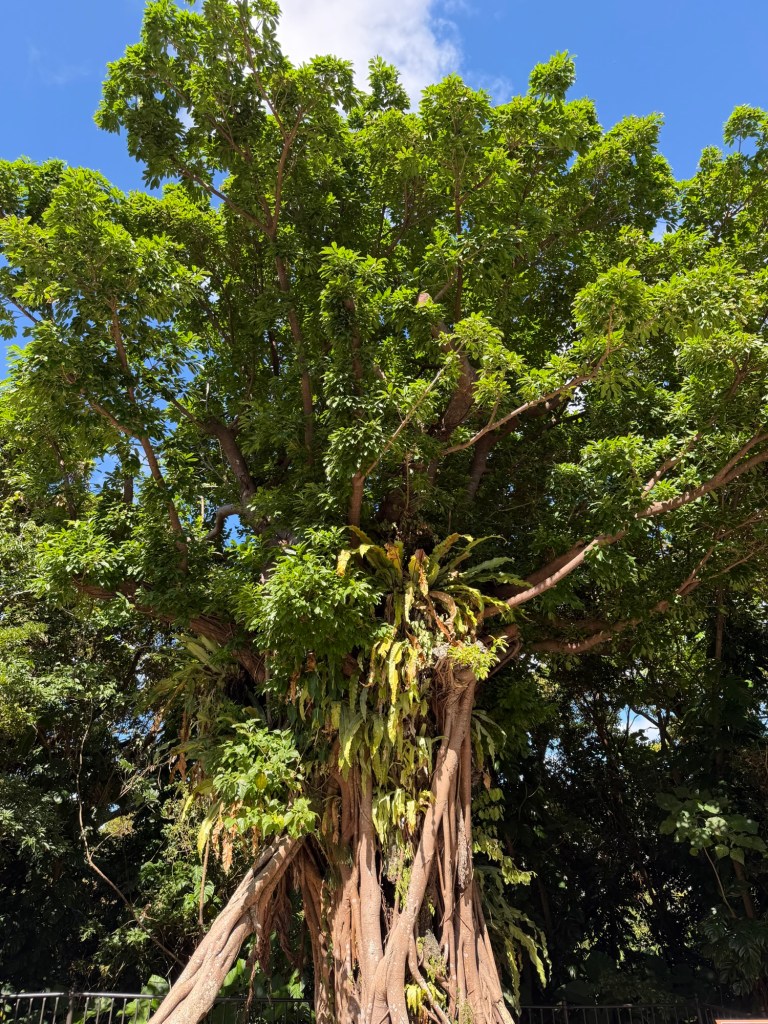
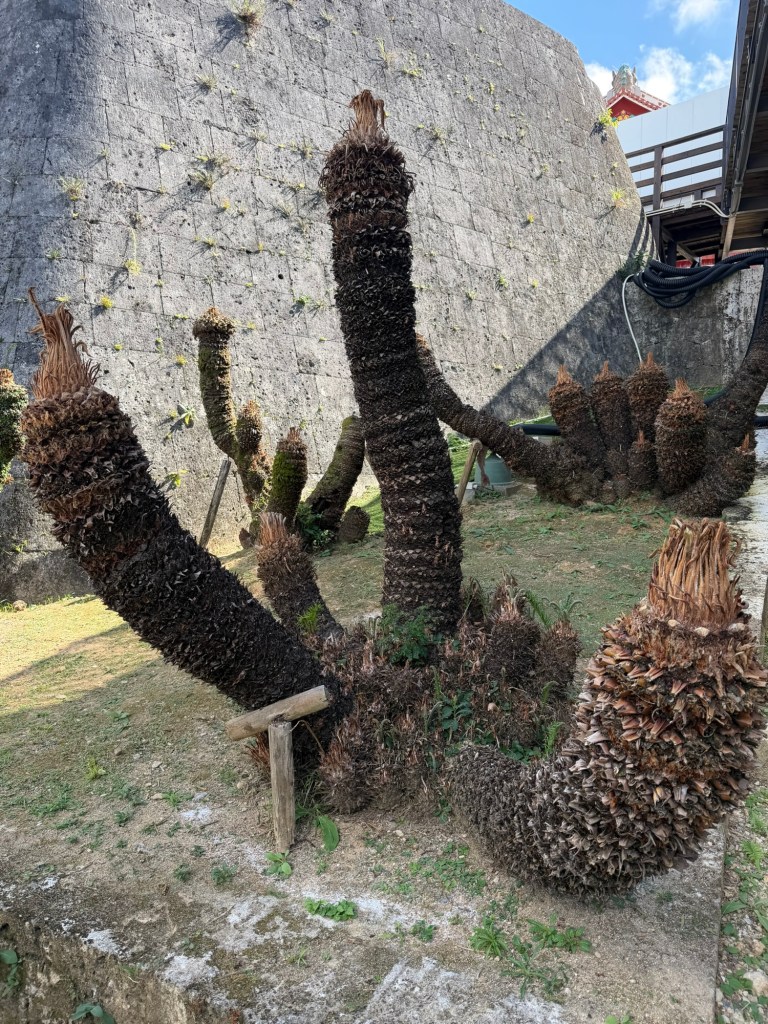
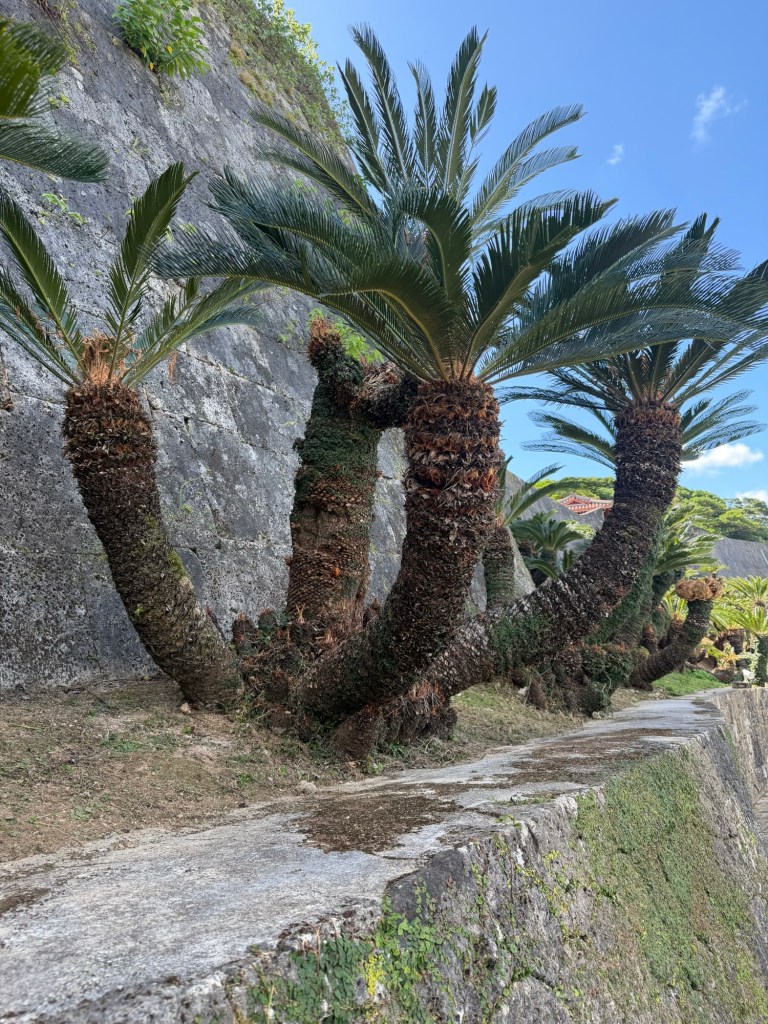
Another victim of the war was this giant Akagi tree, situated by the castle walls. Before the war some of its branches, some as thick as one metre in diameter, stretched towards the castle walls, providing shade. Damage caused in the war ravaged the tree, leaving only its withered trunk. Now, an Akou tree has attached itself to the remaining trunk. Shade was something we craved today, it was intensely hot at times.
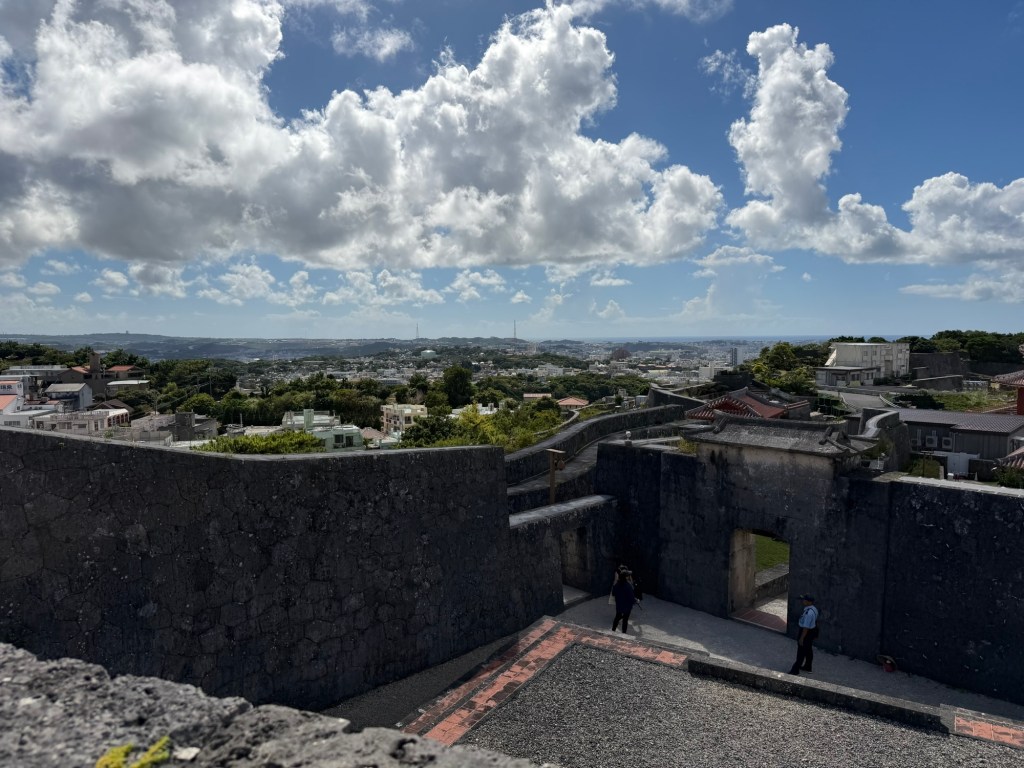
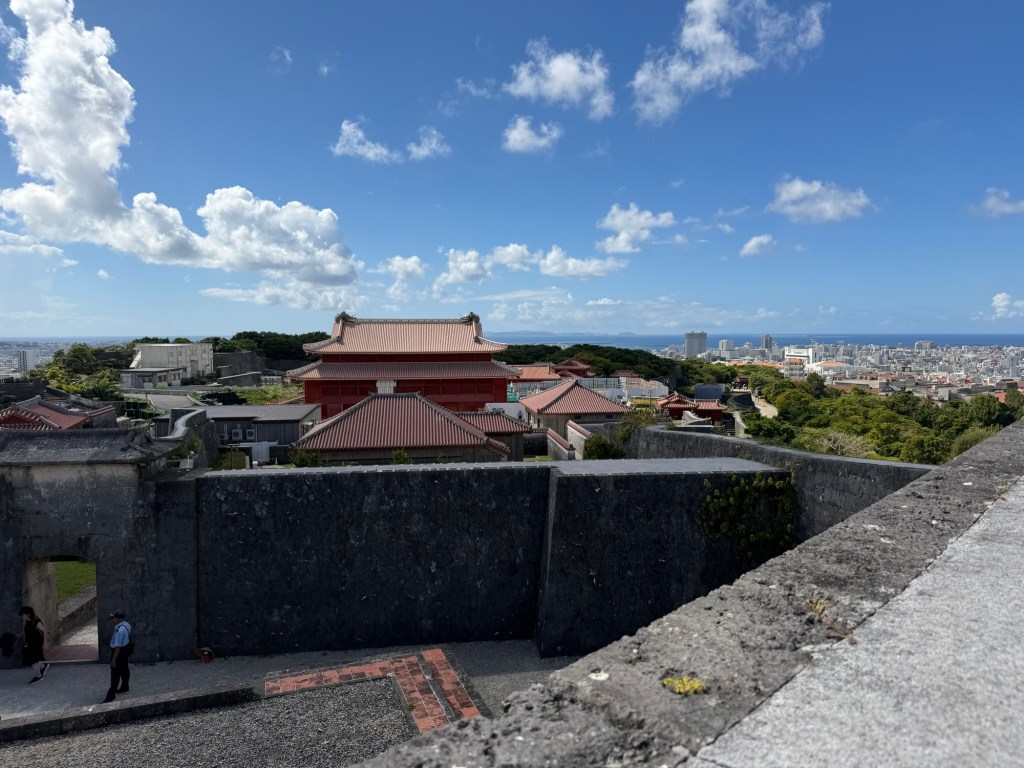
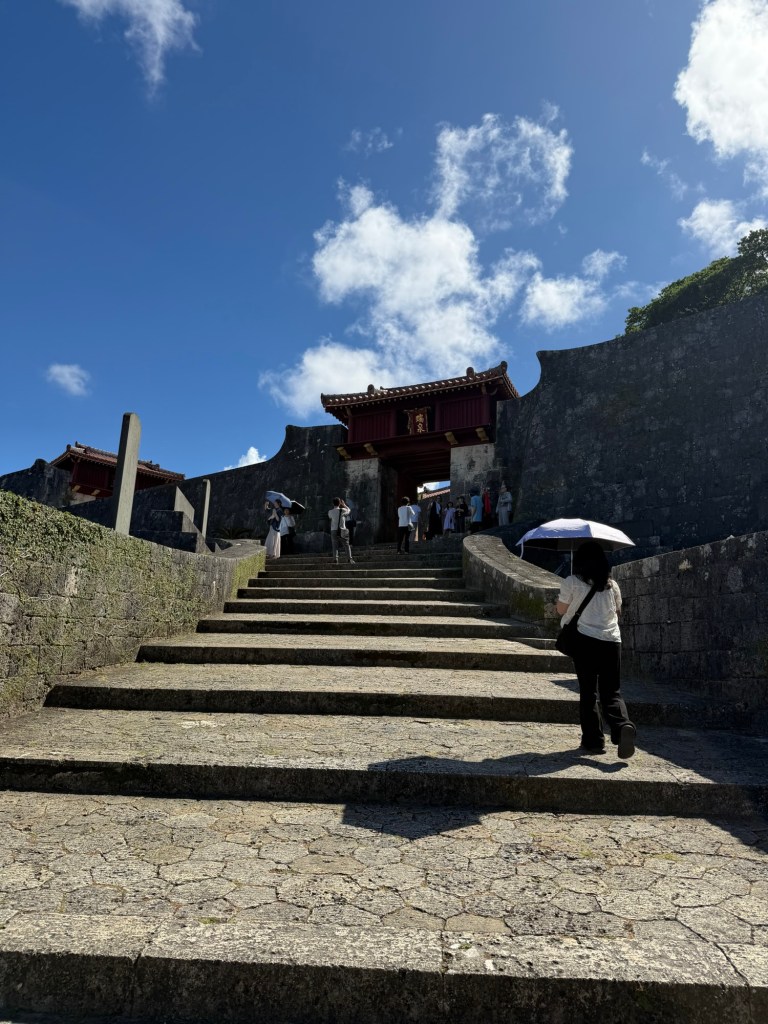
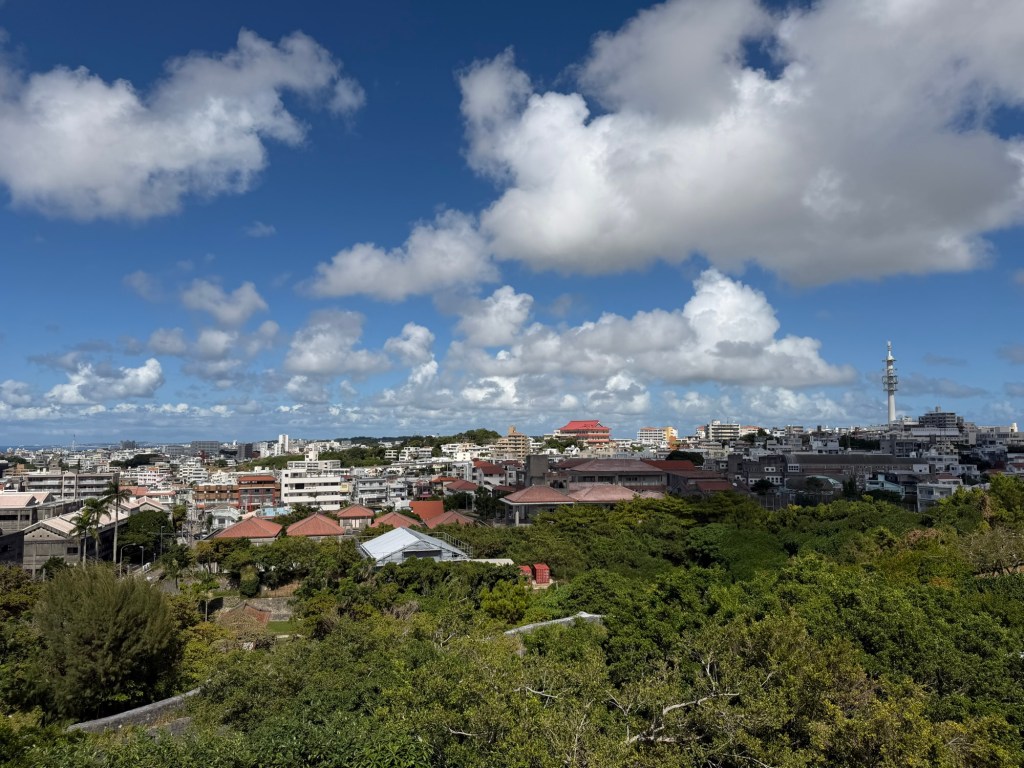
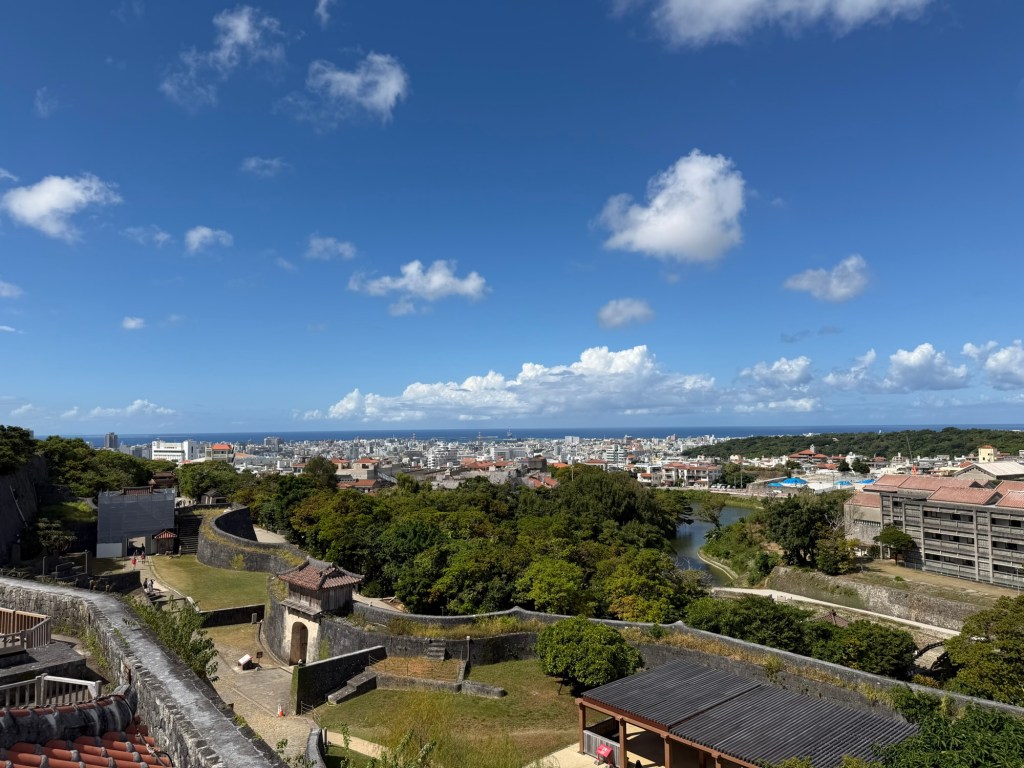
Shuri Castle is an impressive sight from below but we found it to be undergoing extensive refurbishment works, including the creation of a giant, life-size, ceramic dragon. We did feel somewhat aggrieved as it looks like quite some project. So we skirted around the walls and grounds, appreciated the view from the high ground (only mad dogs and Englishmen go out in the midday sun!) and headed back down.
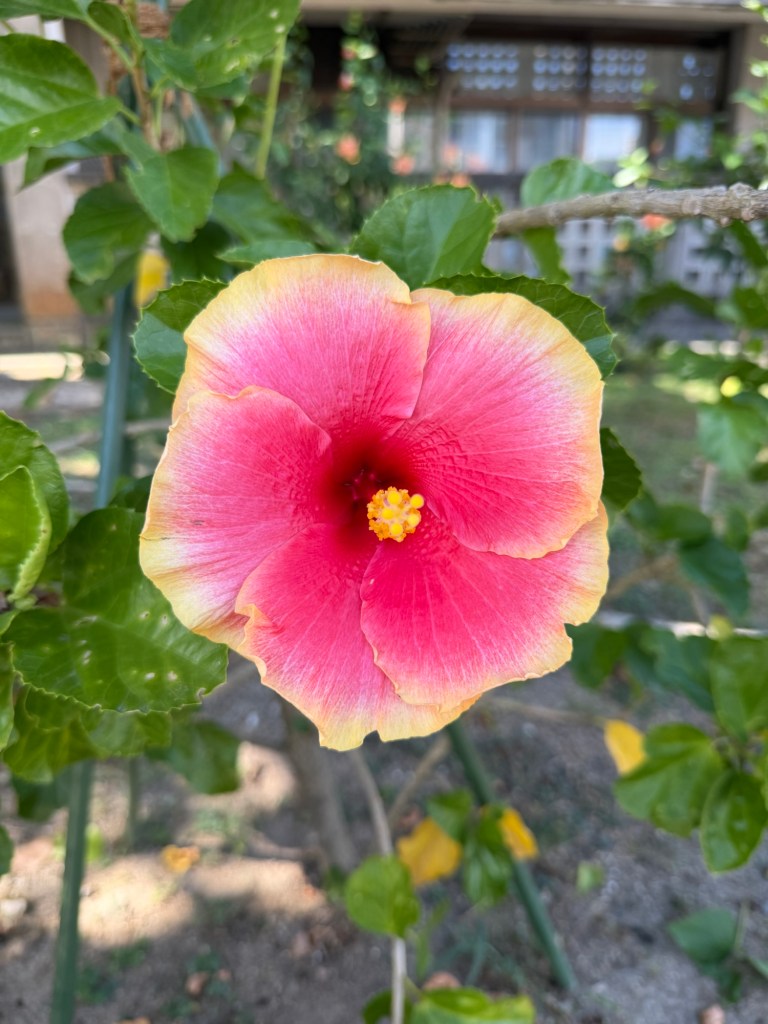
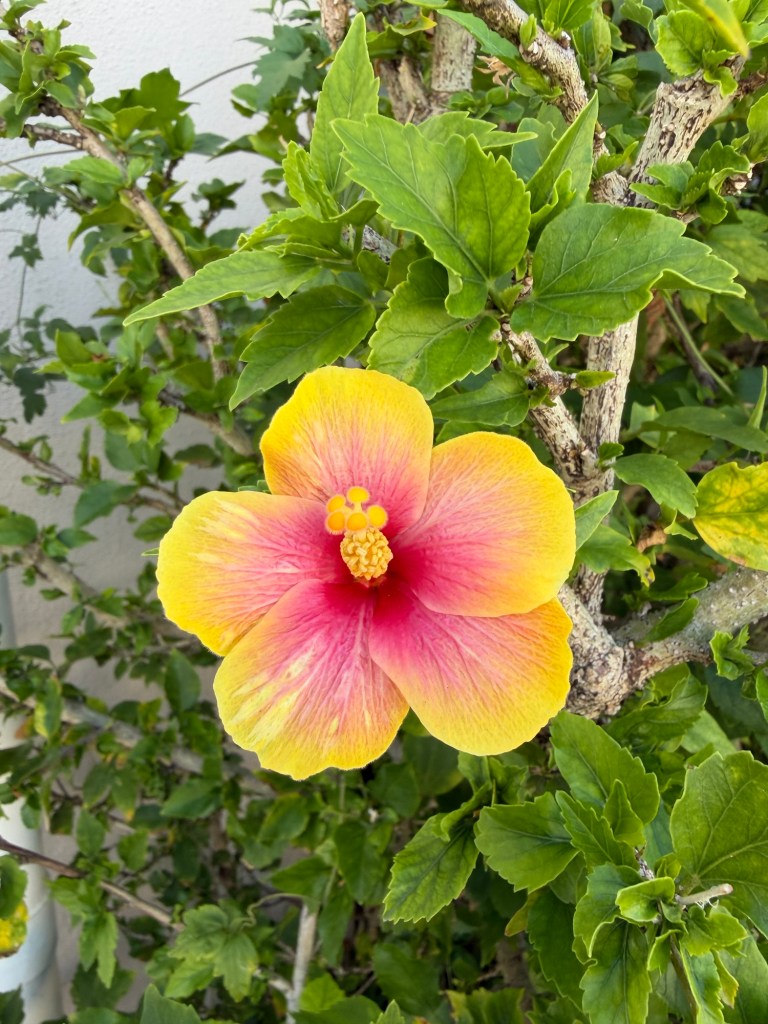
Some interesting plants/trees (?) caught our attention, as did a couple of beautiful flowers hanging on in there, in the October heat.
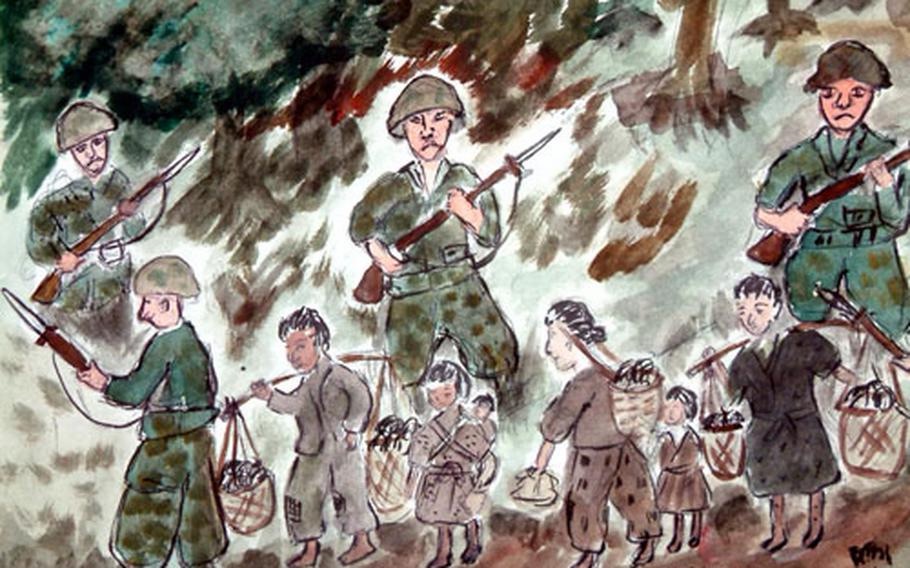
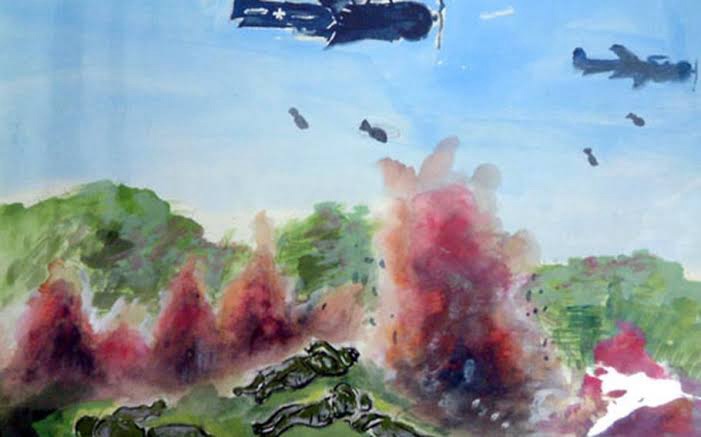
In 2005, an exhibition of 100 drawings depicting war scenes that took place on the island 60 years previously — when most of the illustrators were children — was opened to the public at a Naha gallery. They are part of a collection of 700 drawings owned by the Buddhist group, Soka Gakkai Okinawa.
The drawings are telling in their brutal simplicity…
And then there is this well known photograph taken during the Battle of Okinawa in 1945, showing a U.S. Army officer, Lt. Richard Jones, with two Japanese children
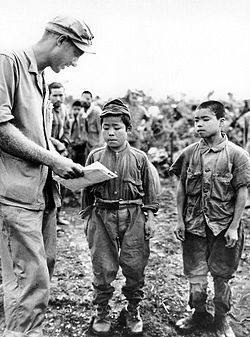
How does one ever begin to make any sense of such things?
It was a little less clear tonight so sunset took on a different aspect; spectacular nonetheless.
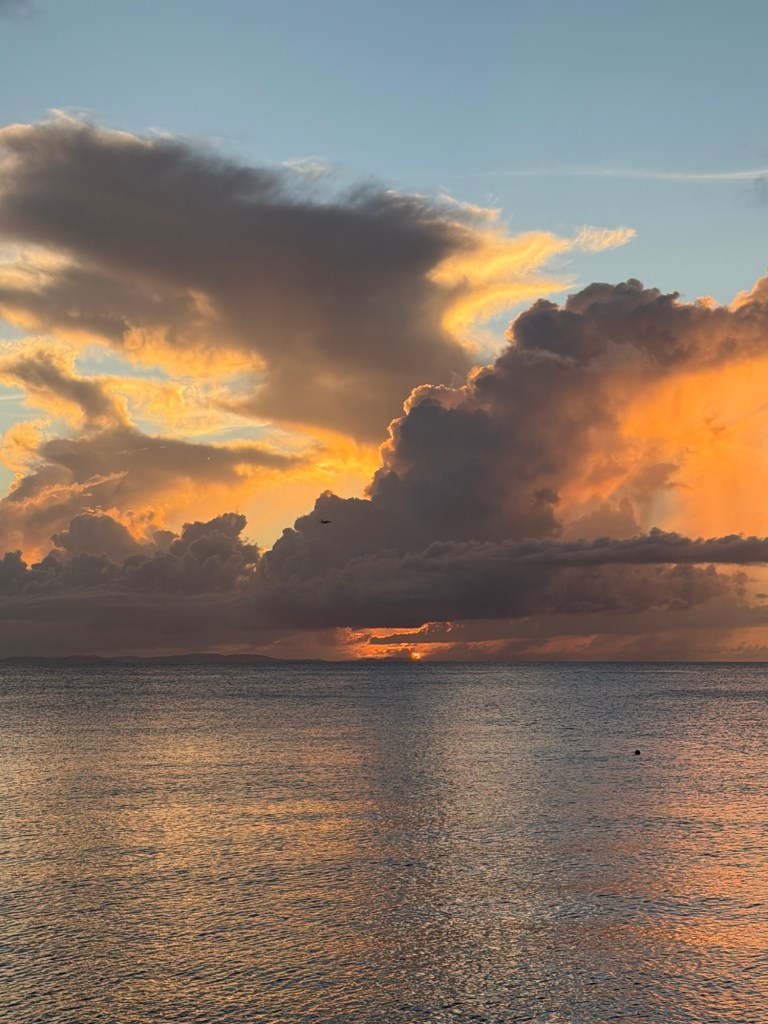
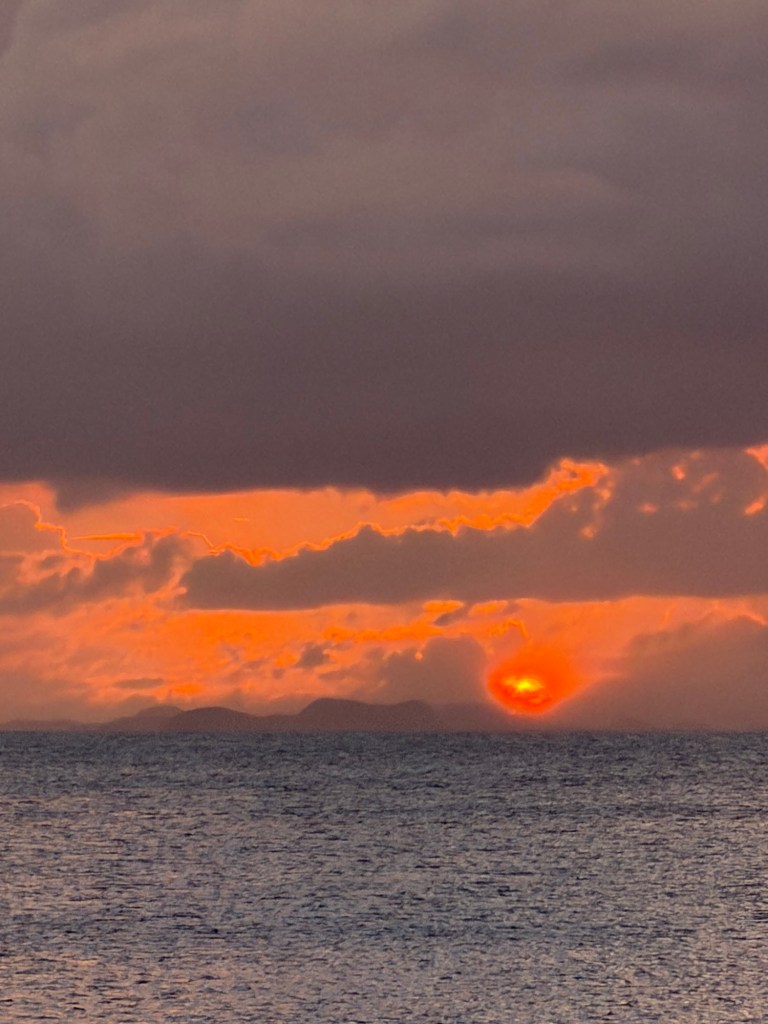
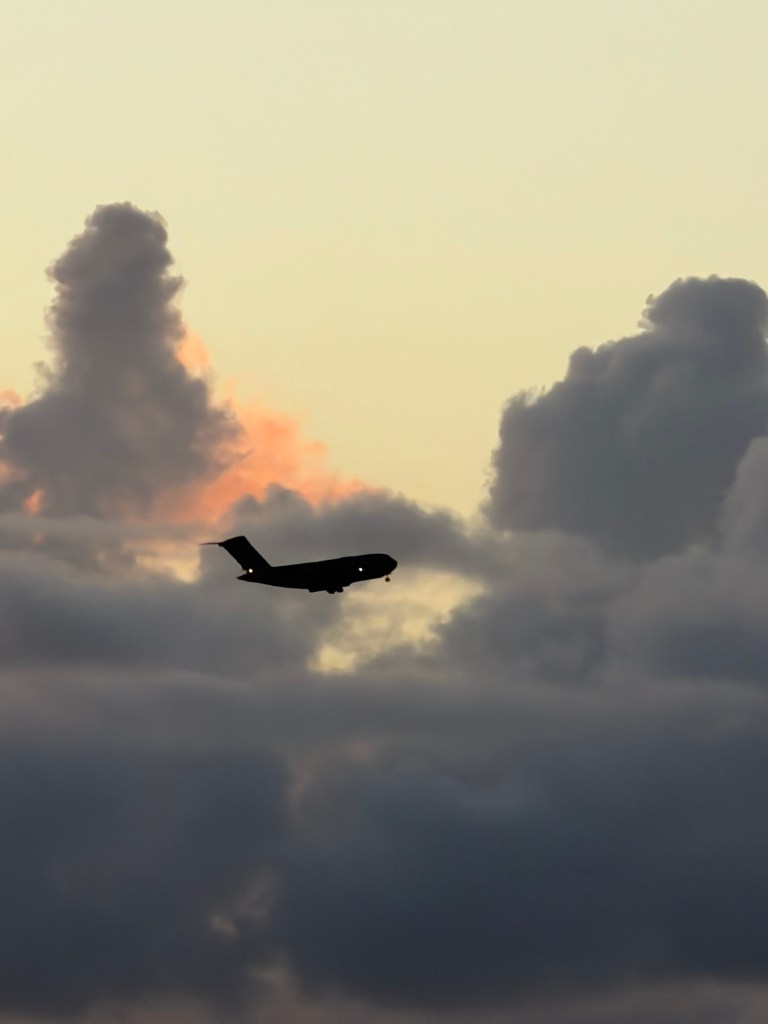
On the way out this evening, something totally unexpected, a drone light show.
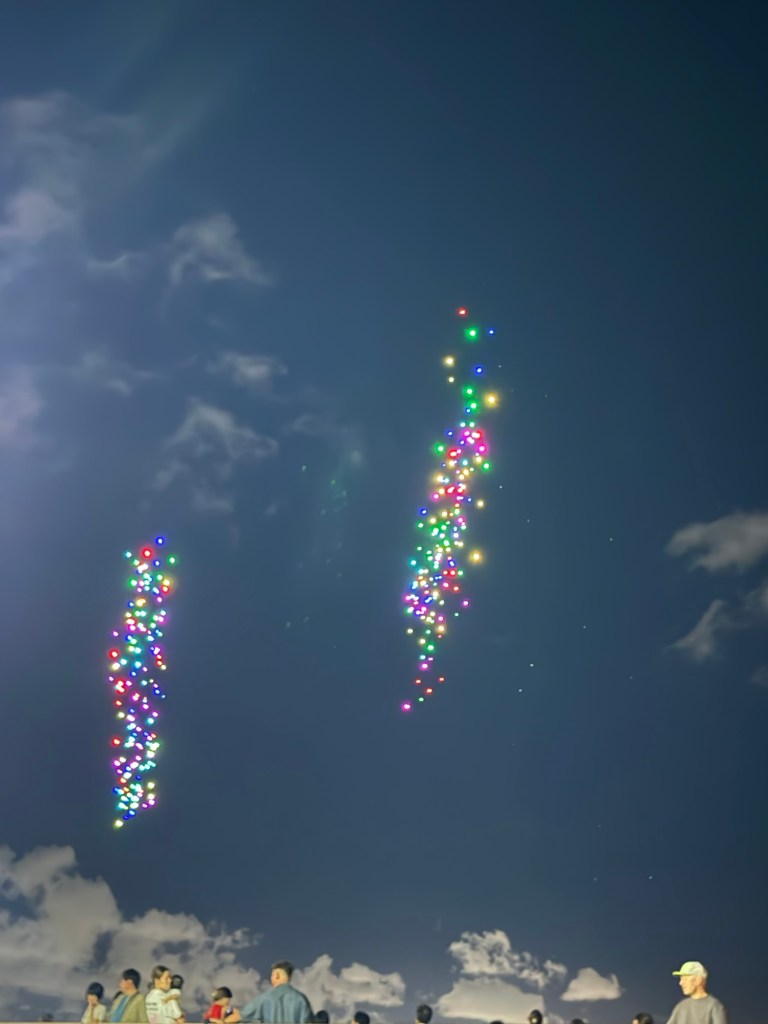
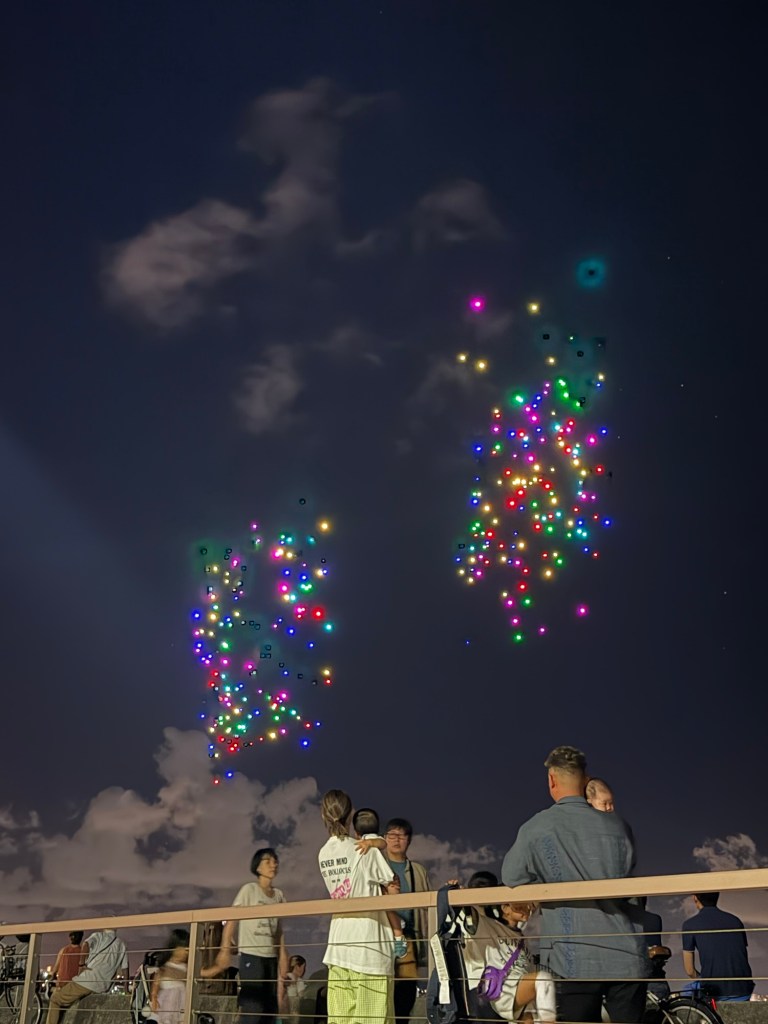
And we were just in time to see them return to base.
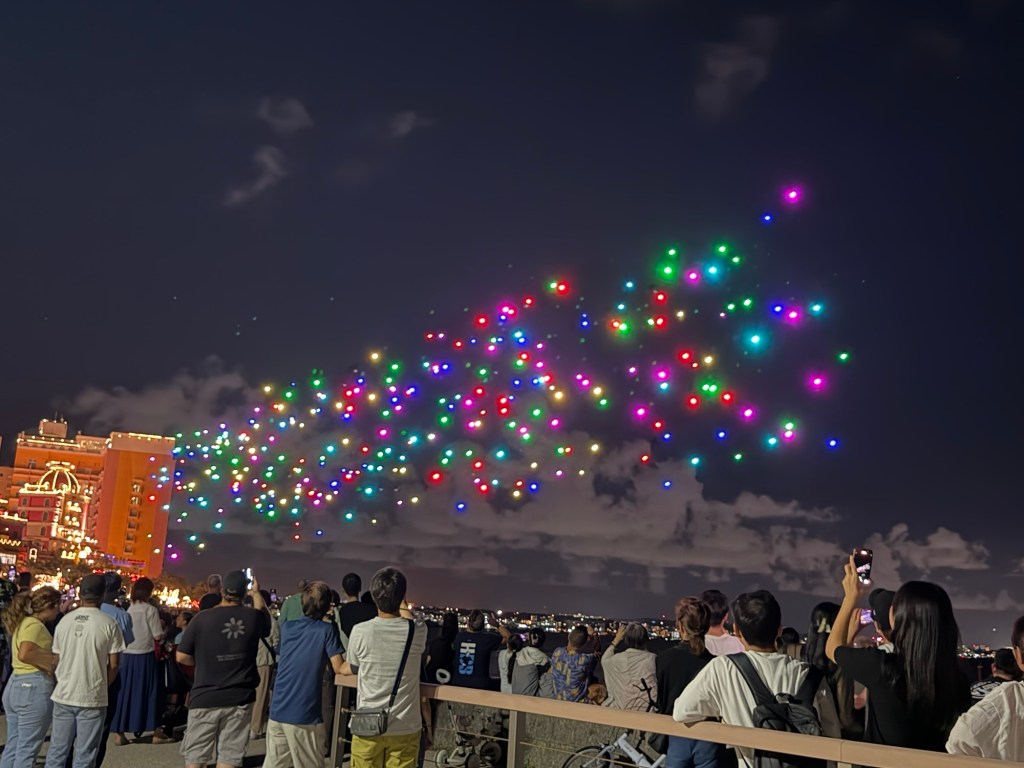
Pretty impressive! But then, returning, reluctantly, to the matter of war, this technology is being used all over the world in a far more destructive capacity. If only we could practise such ingenuity in strictly positive and beneficial ways. No more hiroshimas!
 Sailing off to Sparta
Leave a comment