
Your man from yesterday’s coffee was up to scratch (a good 8/10), so we set out today suitably energised.
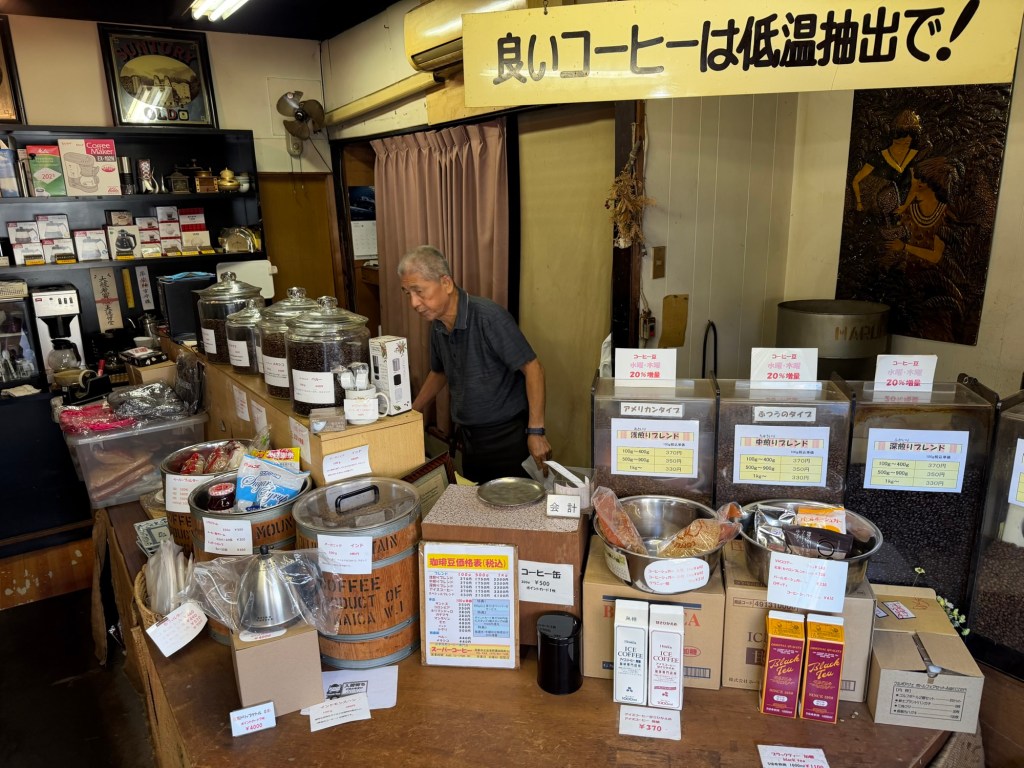
We tend not to take breakfast in city hotels, much preferring to find a local cafe for a far more interesting experience – commonly, considerably cheaper, too.
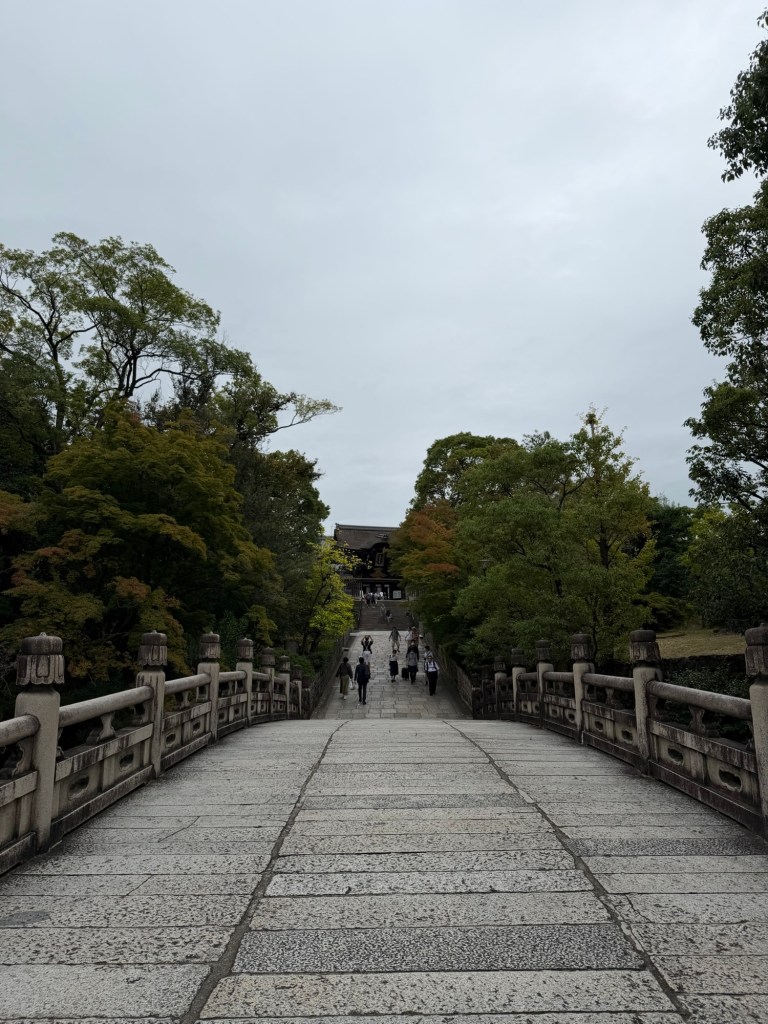
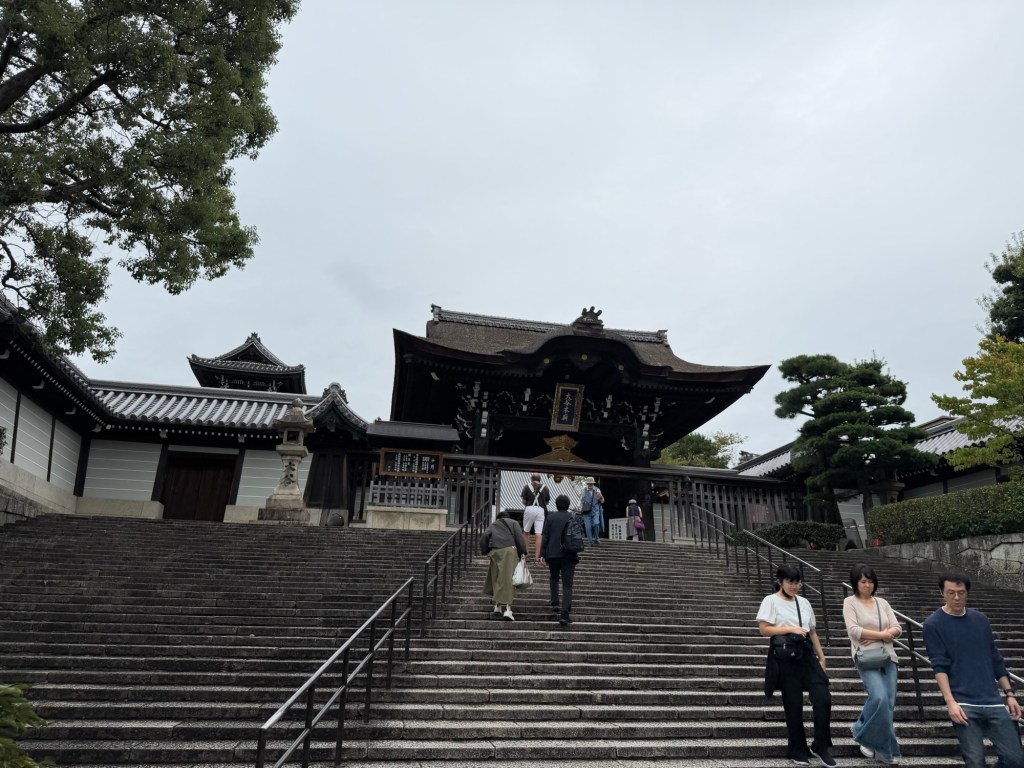
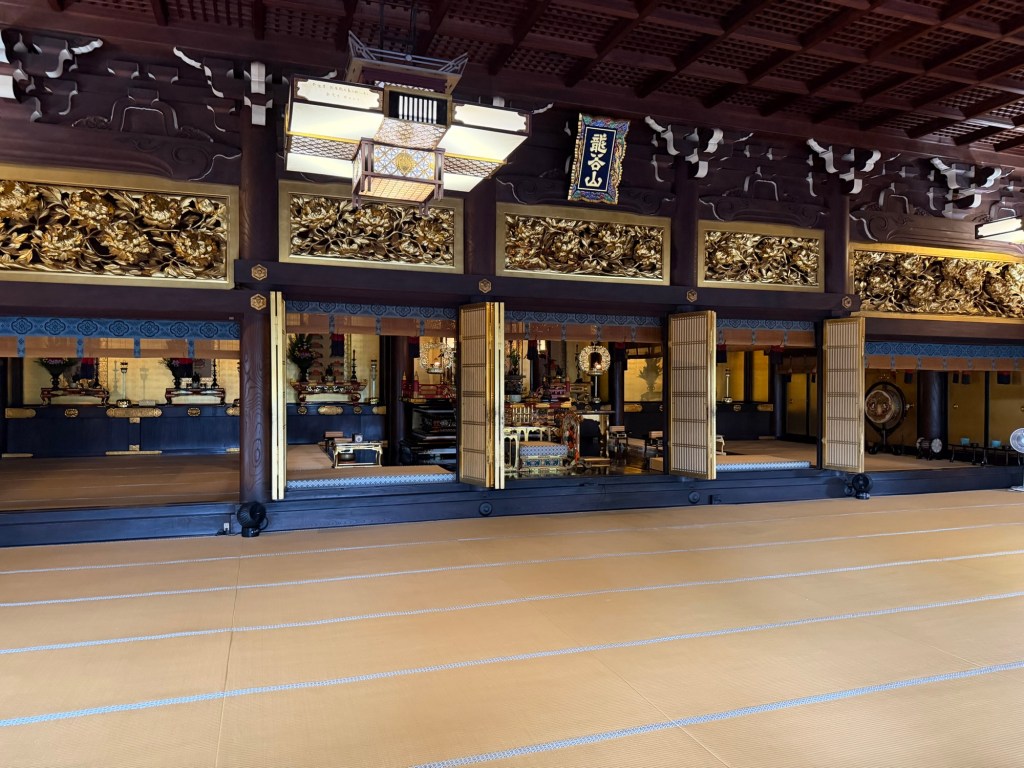
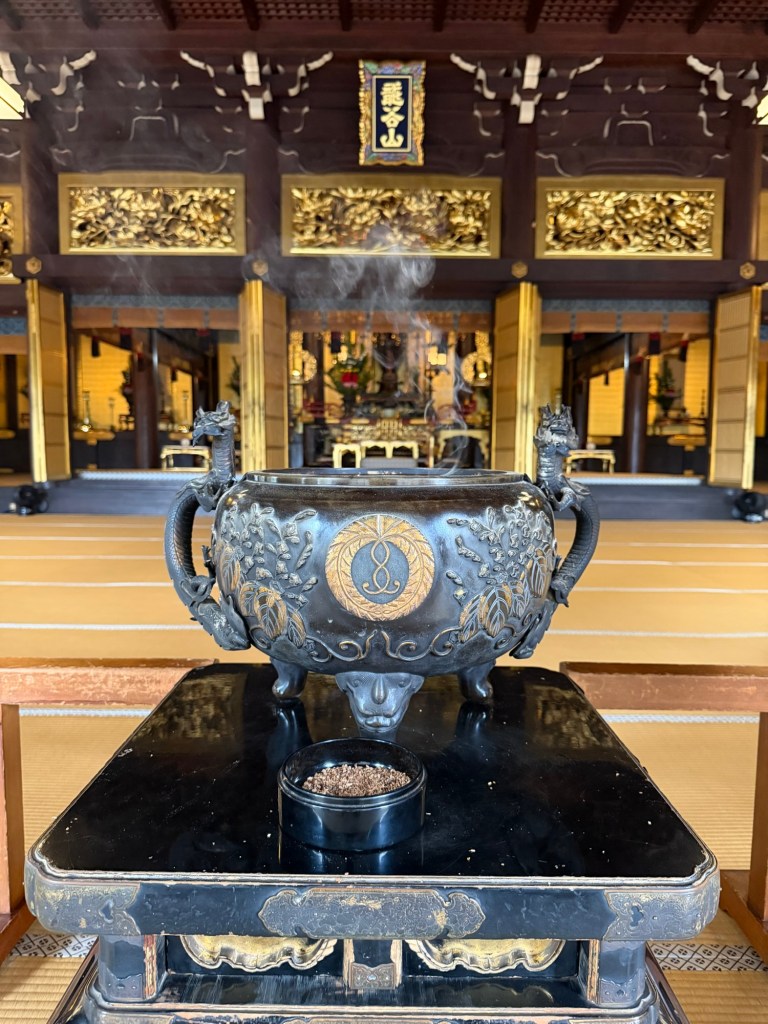
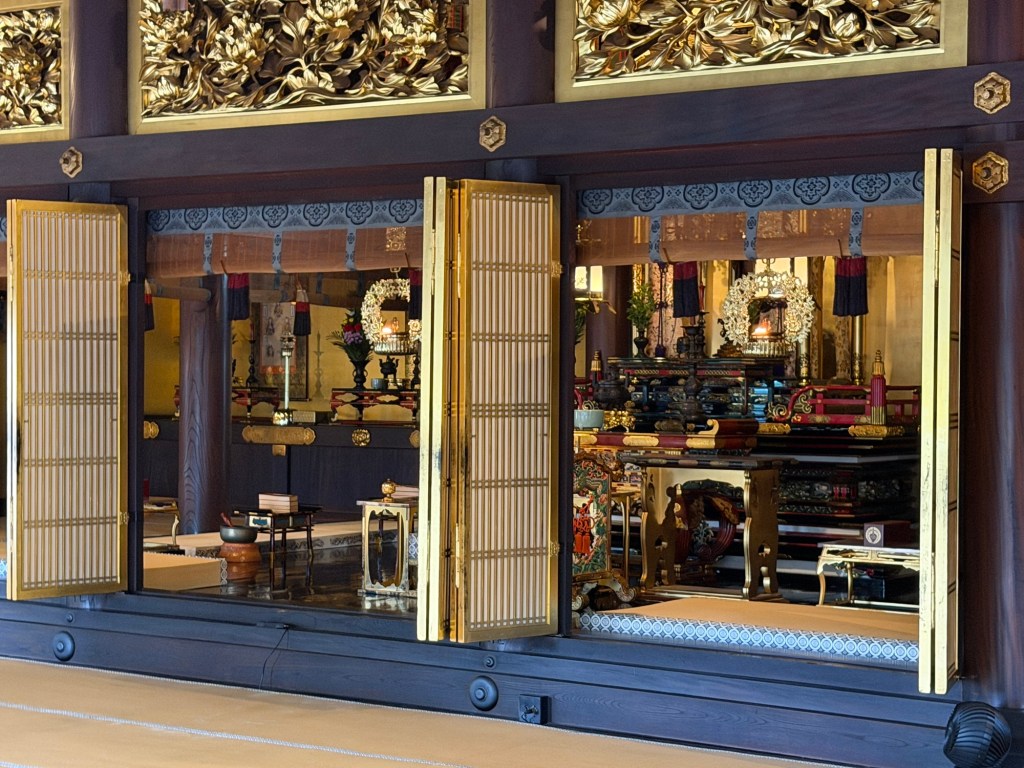
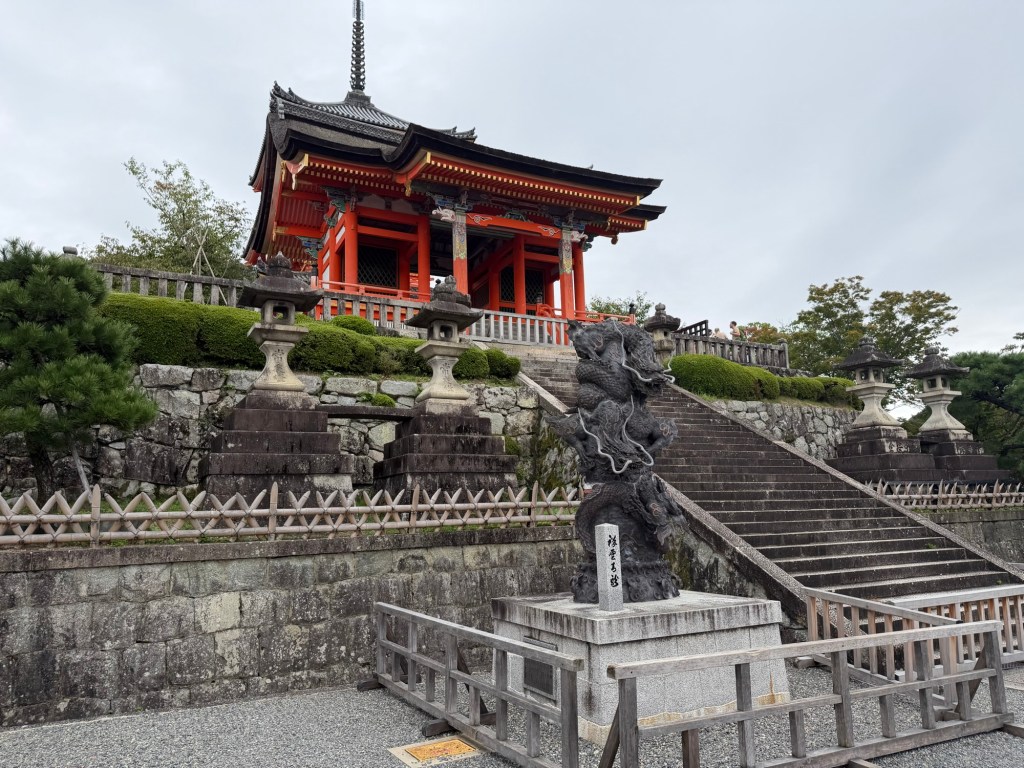
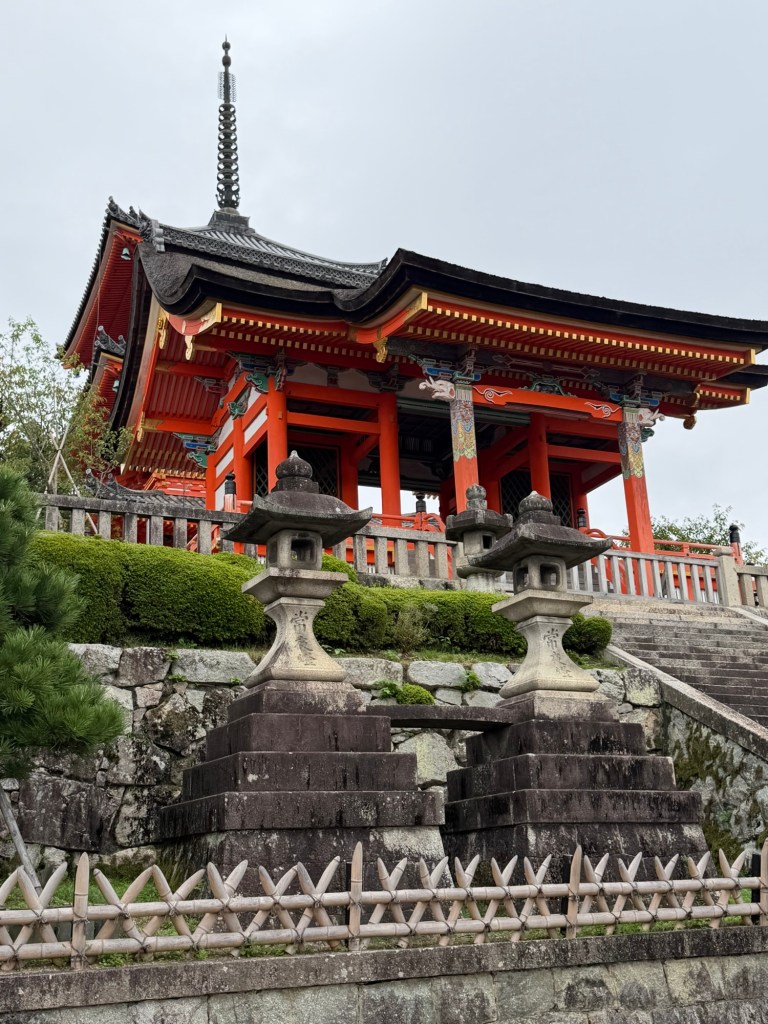
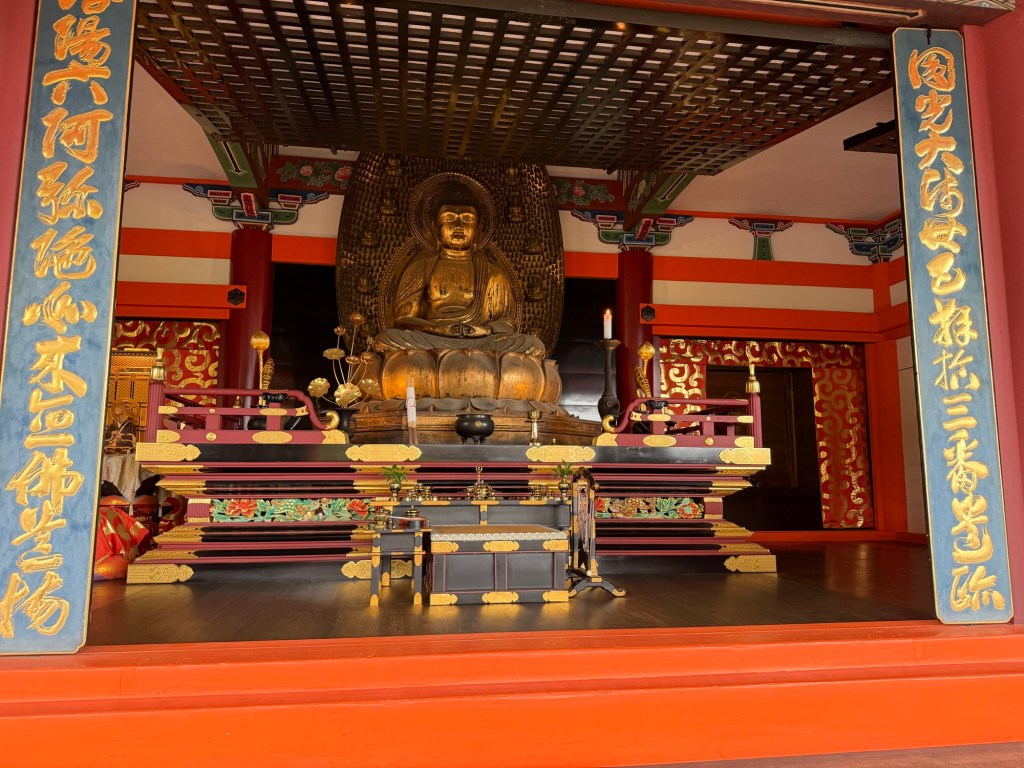
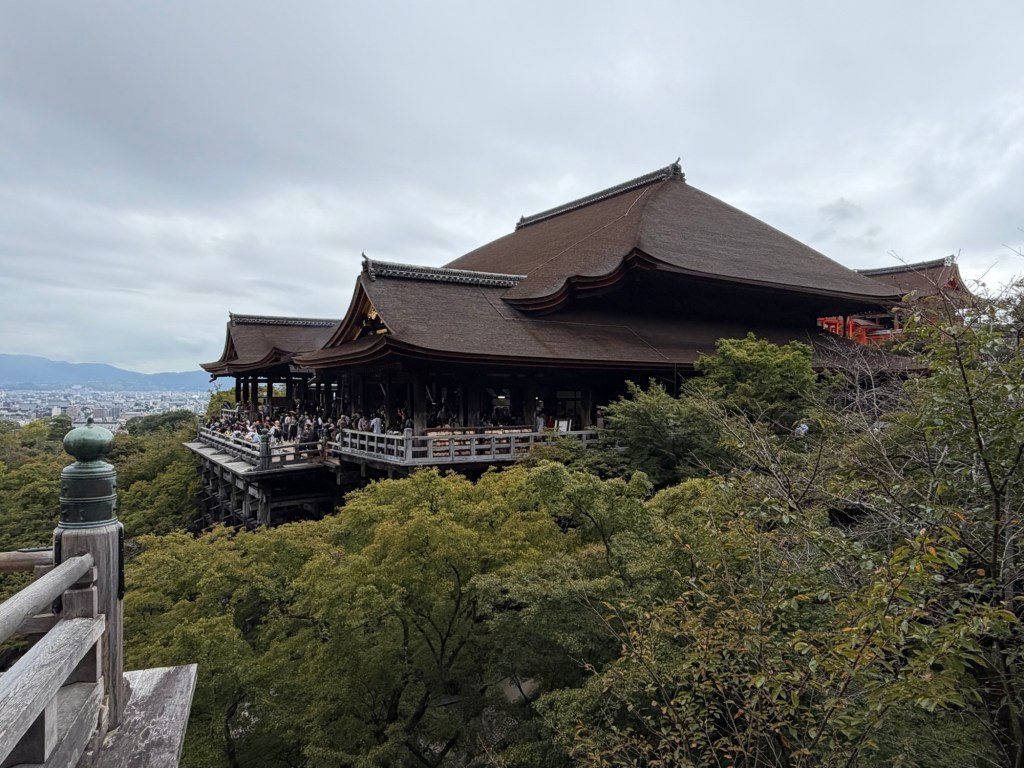
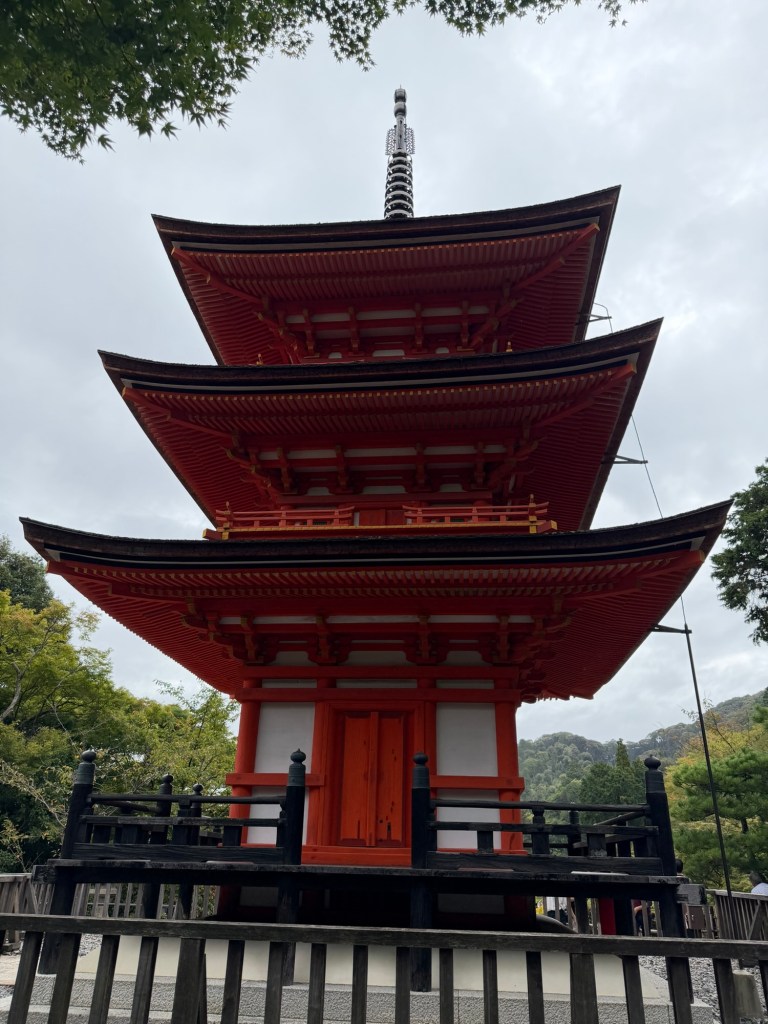
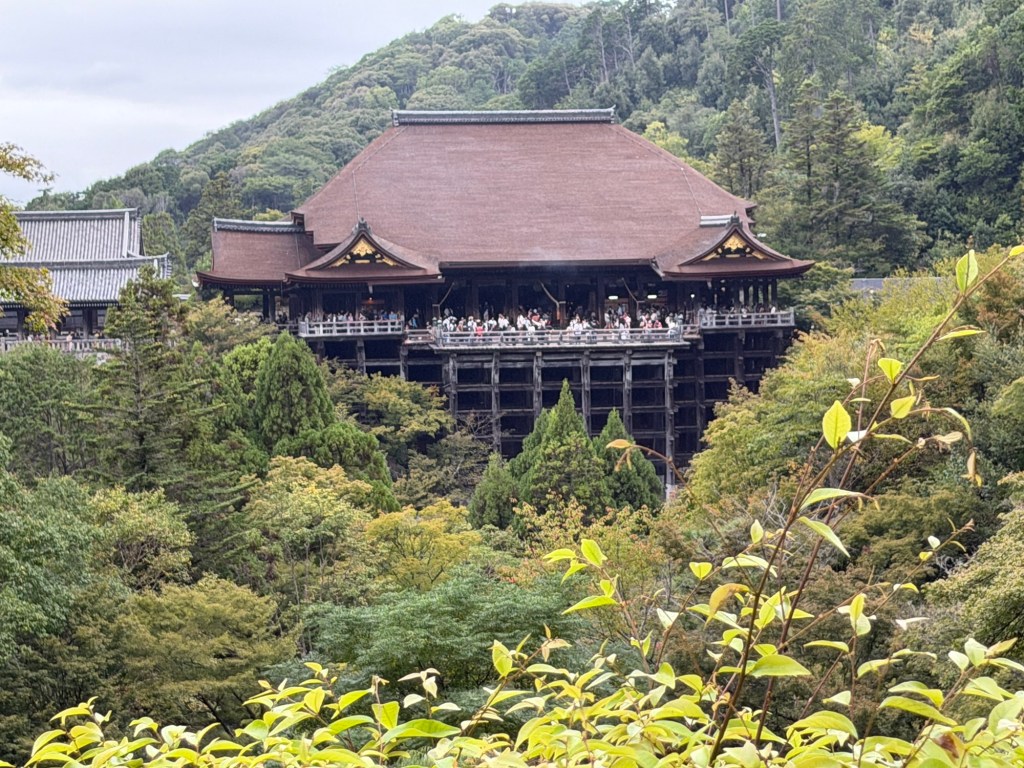
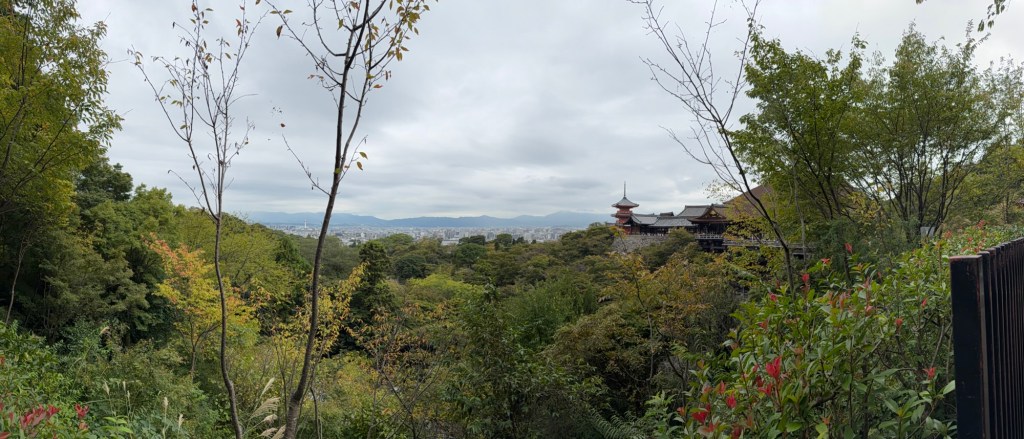
First stop today: the temple of Kiyomizudera (清水寺, “Pure Water Temple”). It was founded in 780 on the site of the Otowa Waterfall in the wooded hills east of Kyoto and derives its name from the fall’s waters. The temple was originally associated with the Hosso sect, one of the oldest schools within Japanese Buddhism, but formed its own Kita Hosso sect in 1965. In 1994, the temple was added to the list of World Heritage Sites.
A short (12 minute) bus ride
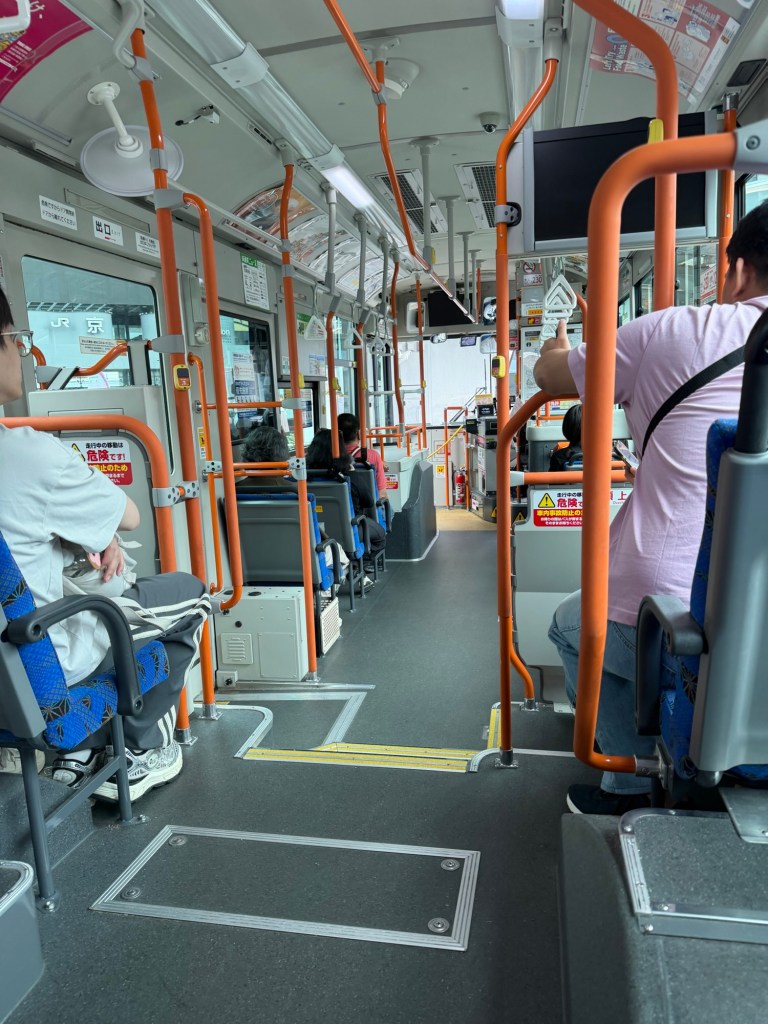
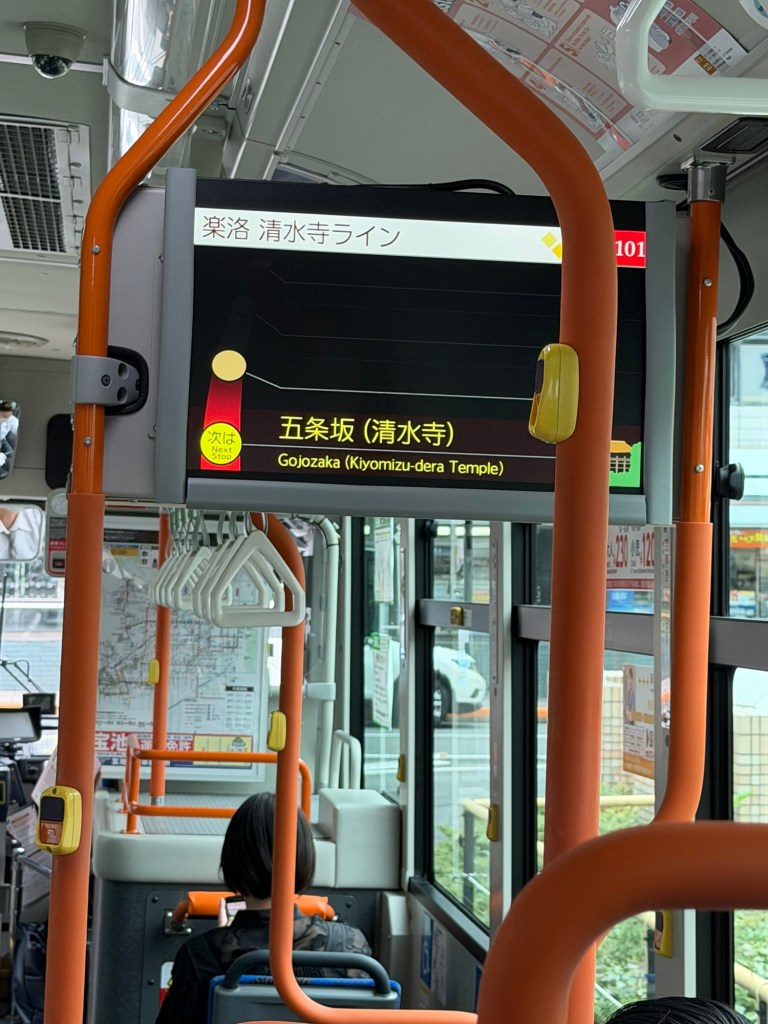
On the way up to Kiyomizudera
How do you want to be cared for in your dotage?
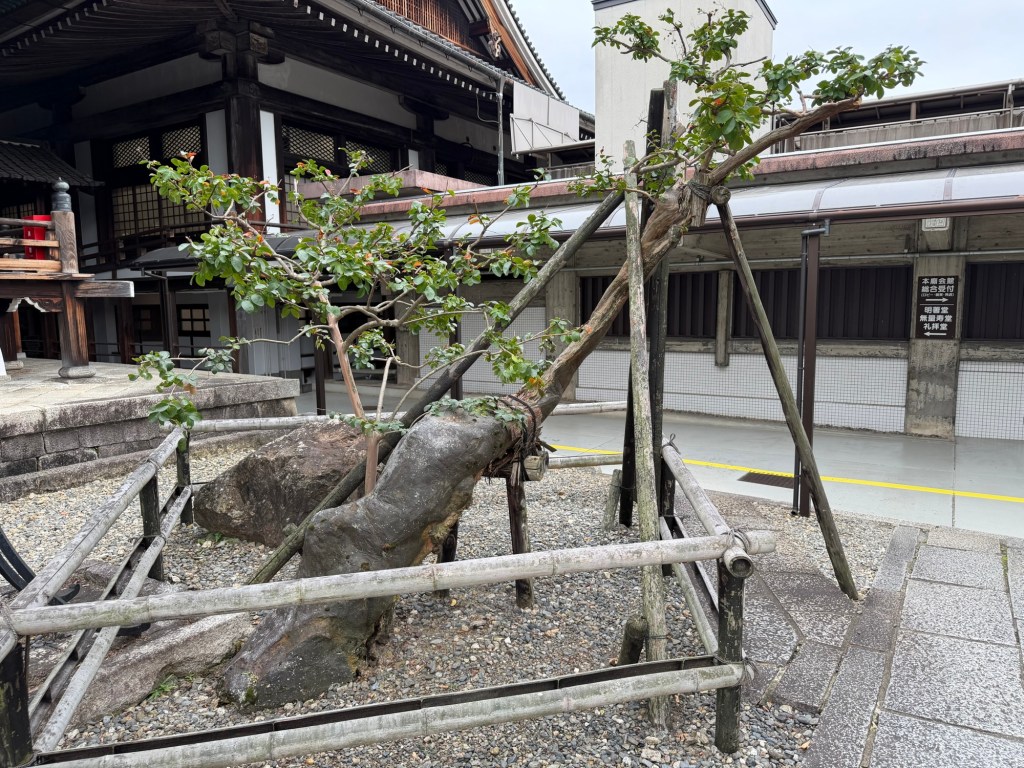
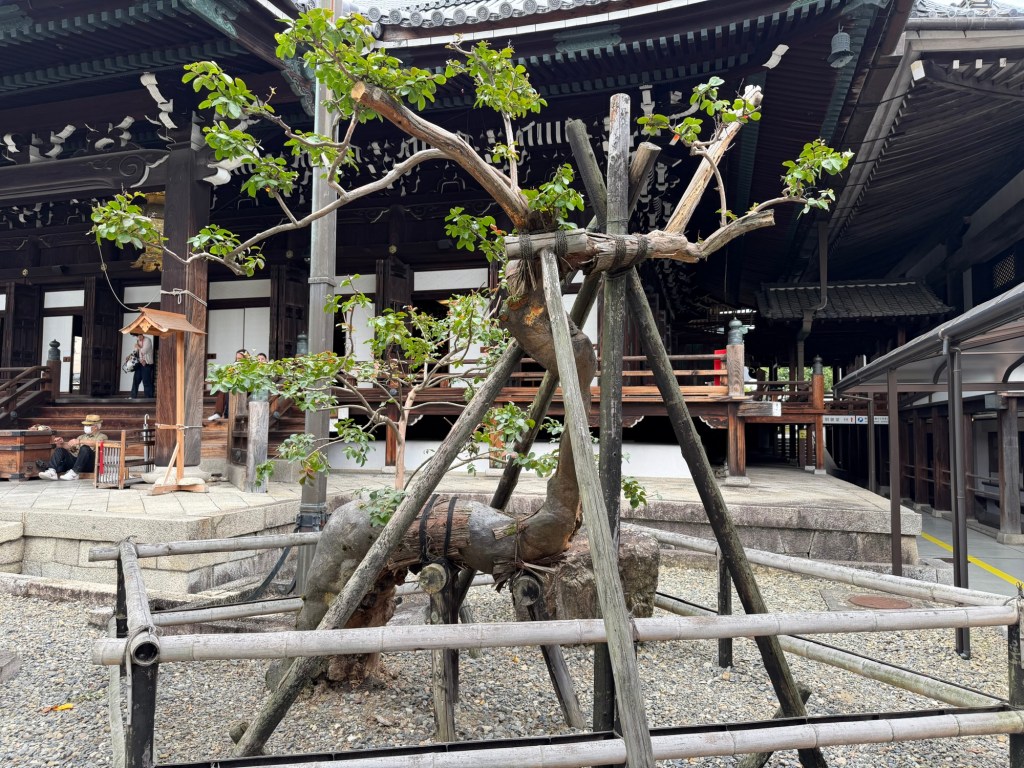
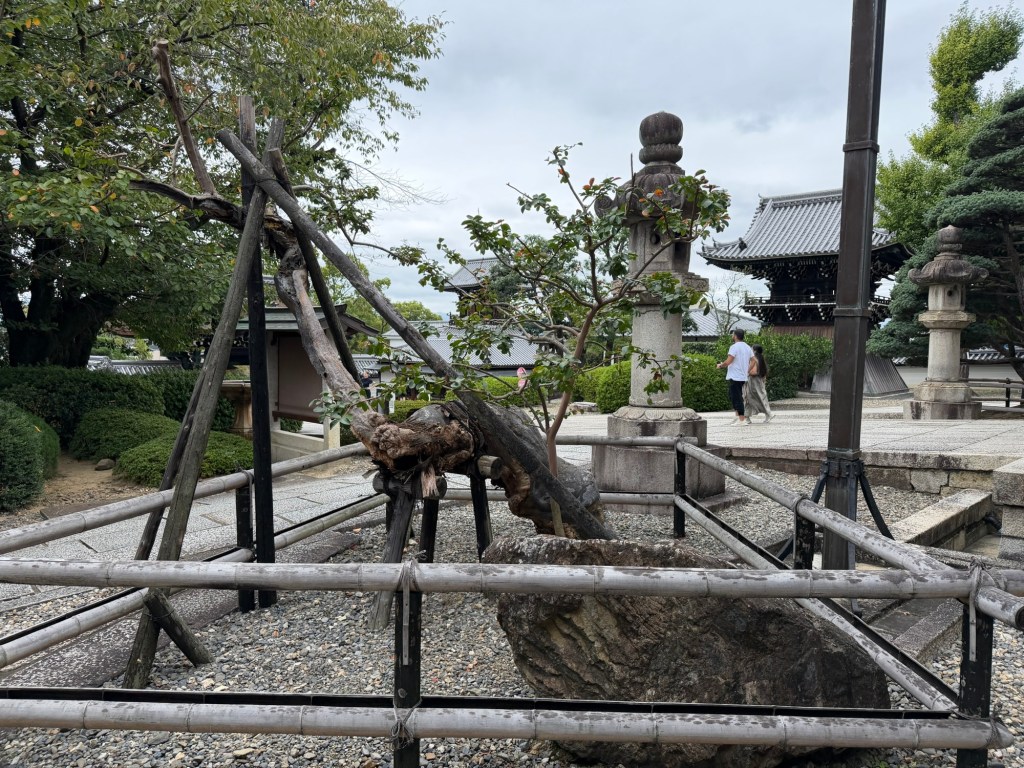
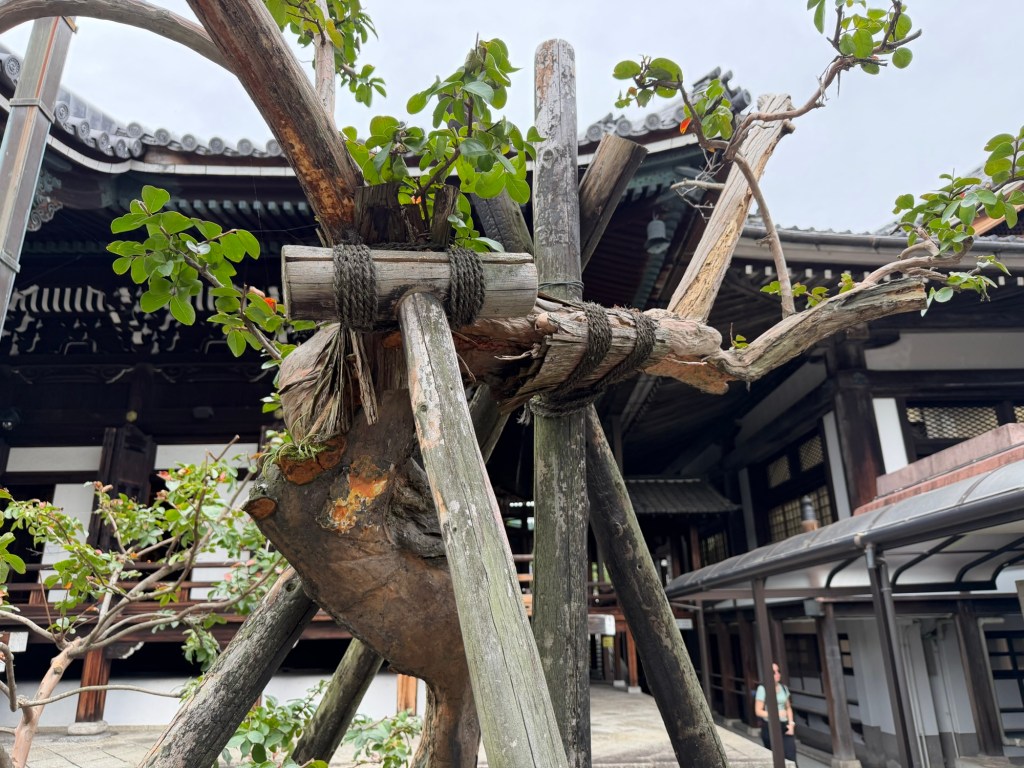
As to the other end of the continuum, birth and nurture…
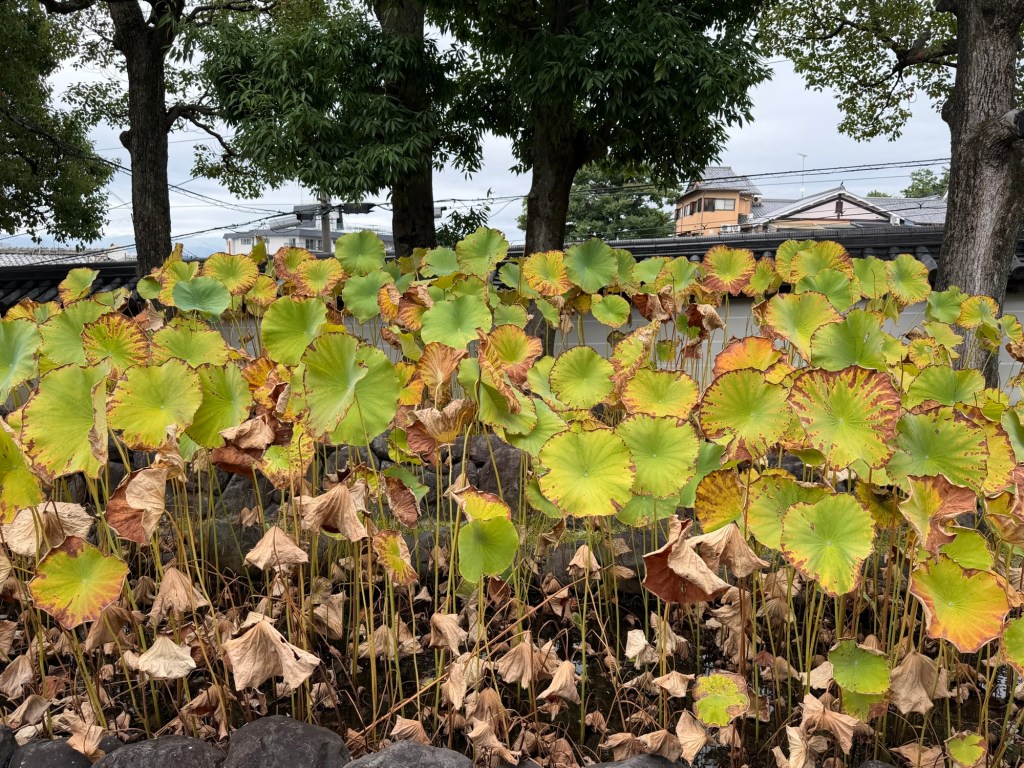
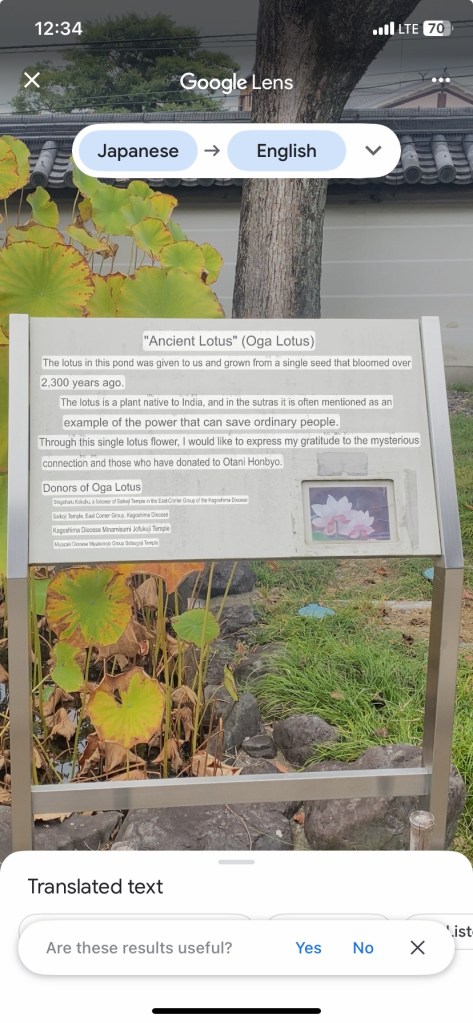
2,300 years of heritage. Simply incredible!
Kiyomizudera itself: after ascending the hill and steps you come to the Hondo (Main Hall) known for its 200 sq. metre veranda called the butai (stage). It is made of hinoki (cypress) and is suspended 13m above the hillside below on 18 zelkova wood pillars dating back some 400 years.
Next stop, via the local train, Fushimi Inari Shrine (伏見稲荷大社, Fushimi Inari Taisha), an important Shinto shrine in southern Kyoto. It is famous for its thousands of vermilion torii gates, which straddle a network of trails behind its main buildings. The trails lead into the wooded forest of the sacred Mount Inari, which stands at 233 metres and belongs to the shrine grounds.
We had a snack on the way up: sweet potato chips.
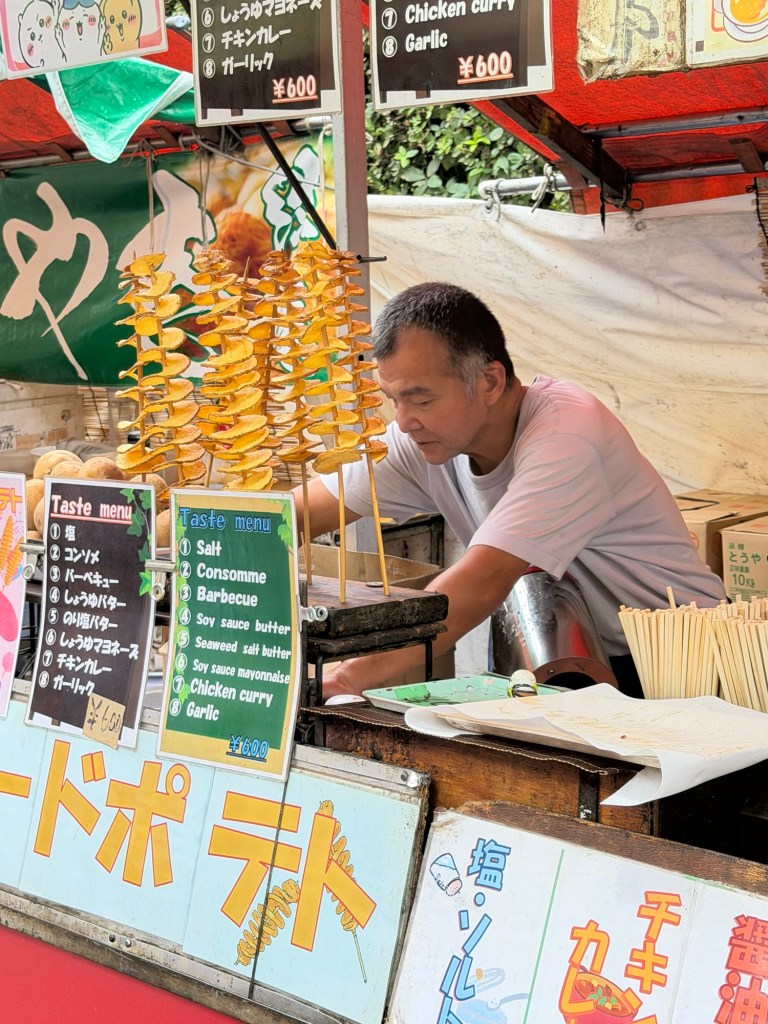
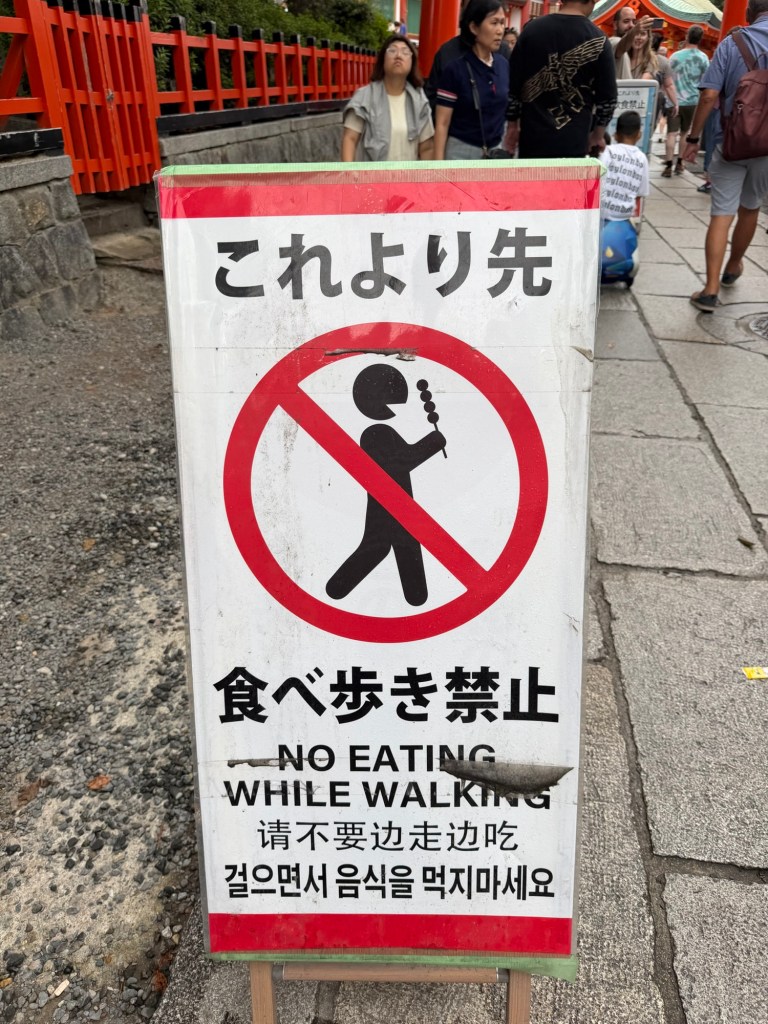
Again, good order was secured as it was made clear that you eat close to the stand where you bought your food and then hand any waste to the stall owner who would dispose of it for you. After that, no eating allowed on the move.
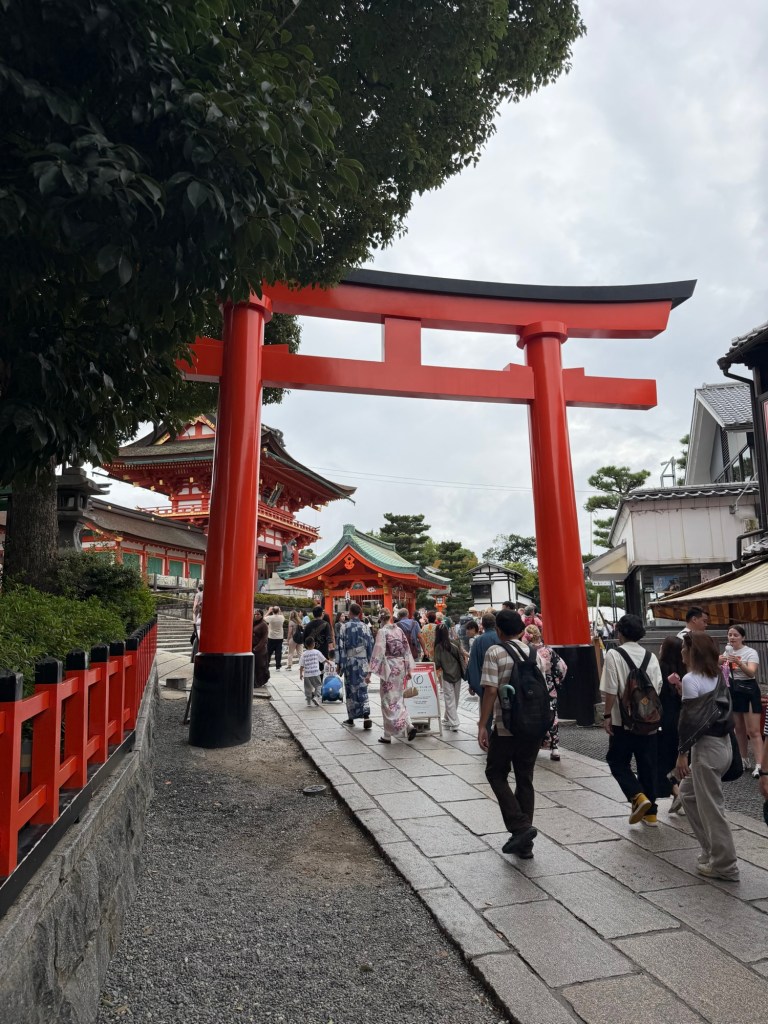
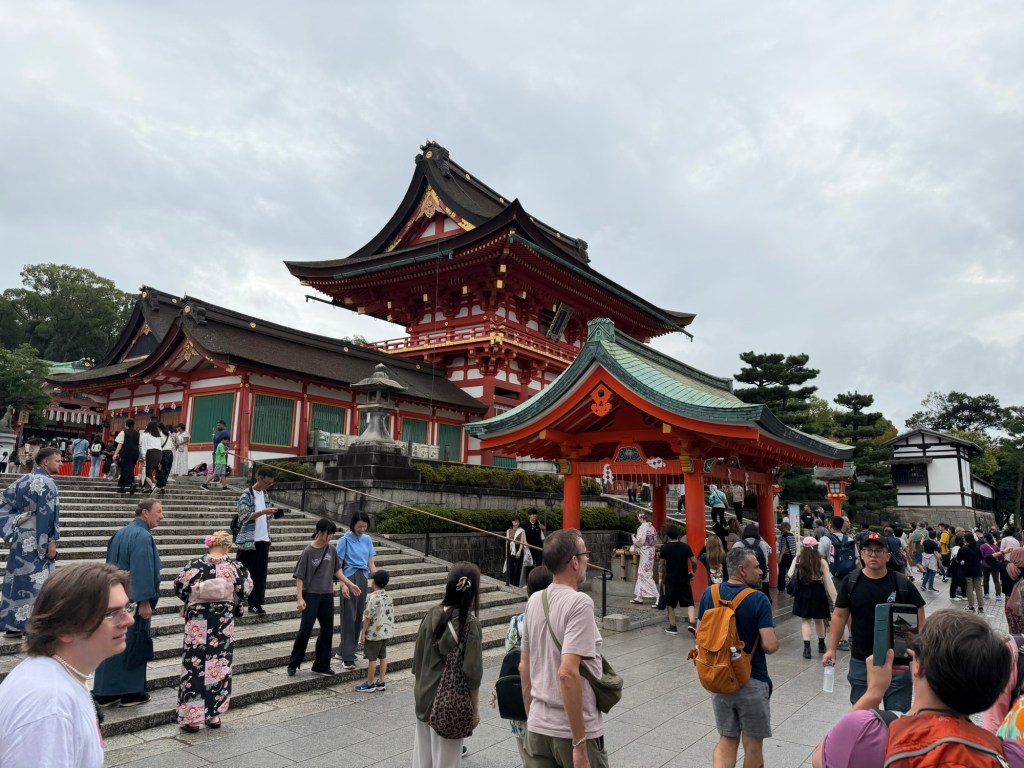
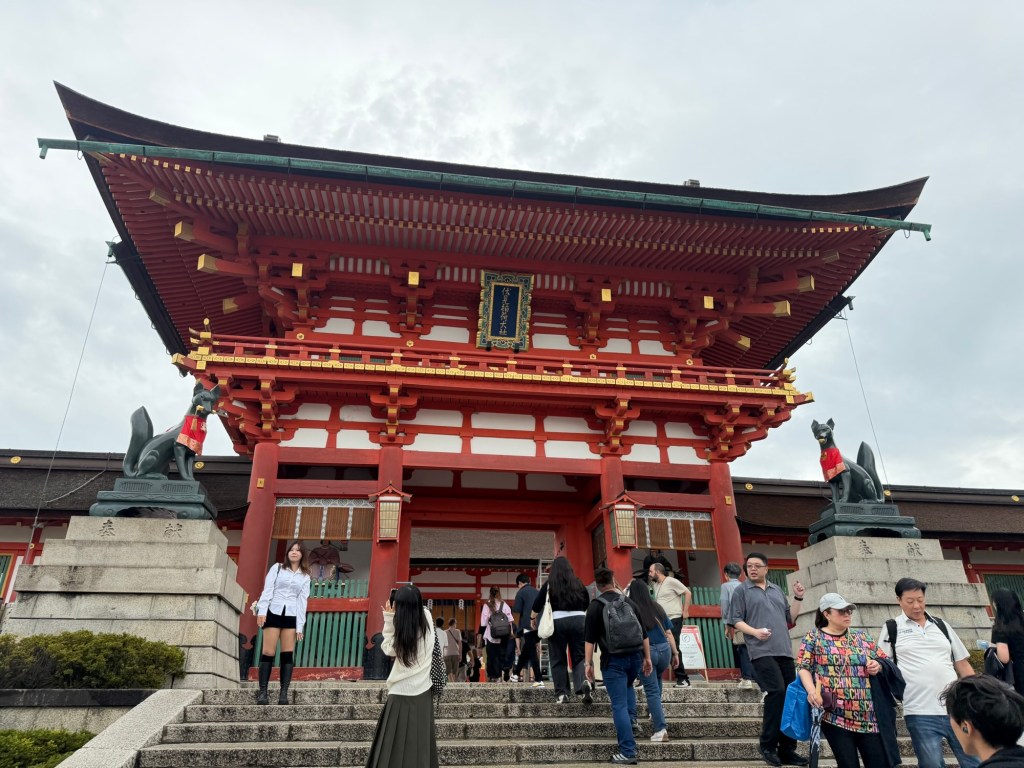
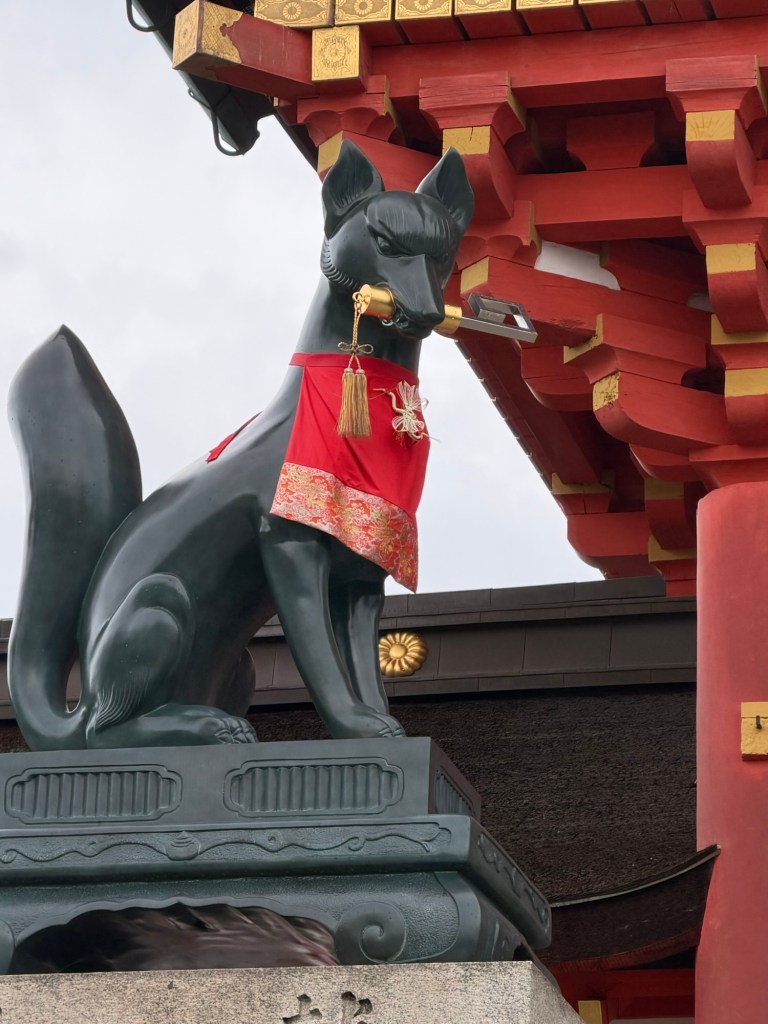
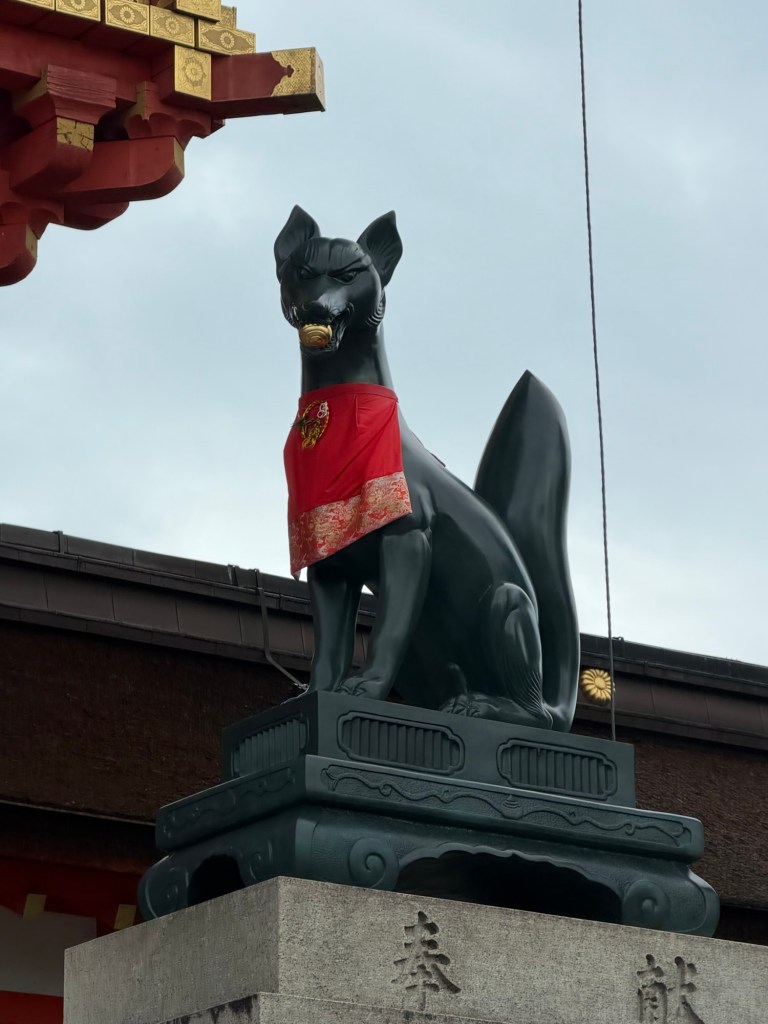
Fushimi Inari is the most important of several thousands of shrines dedicated to Inari, the Shinto god of rice. Foxes are thought to be Inari’s messengers, resulting in many fox statues across the shrine grounds. The key often seen in the fox’s mouth is for the rice granary.
We came across this concept in both Indonesia and India, the presenting of ‘offerings’ at shrines and temples. We were often taken aback by the scale and range of such offerings. Such was the case here…
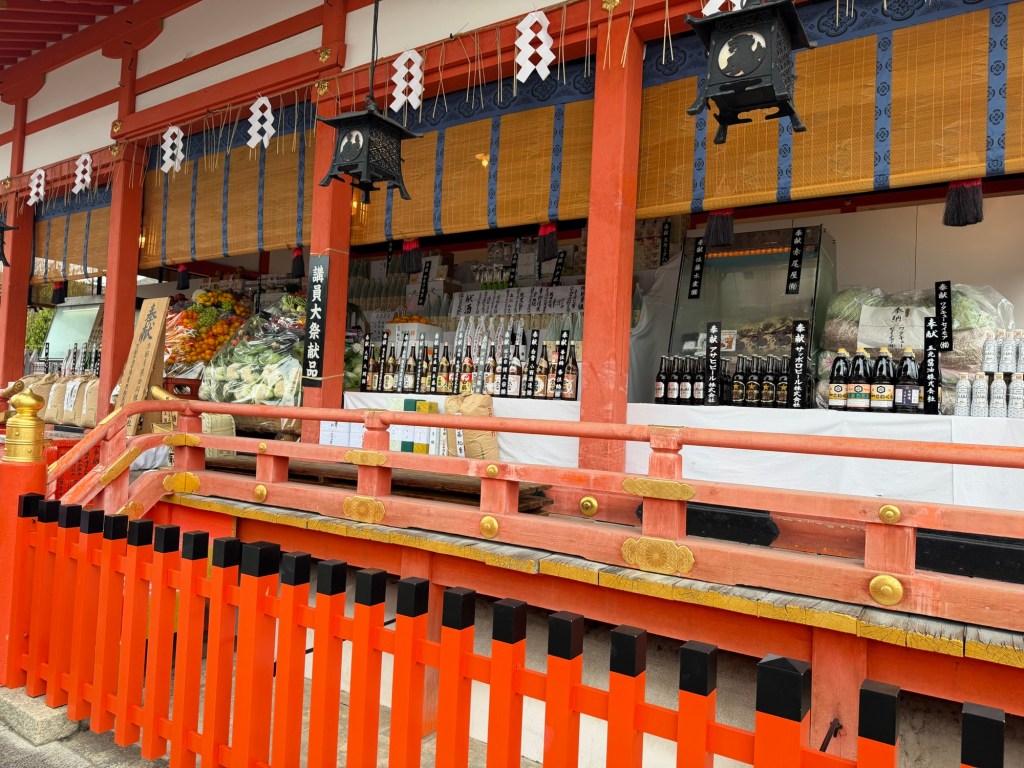
And then, looking a little closer…
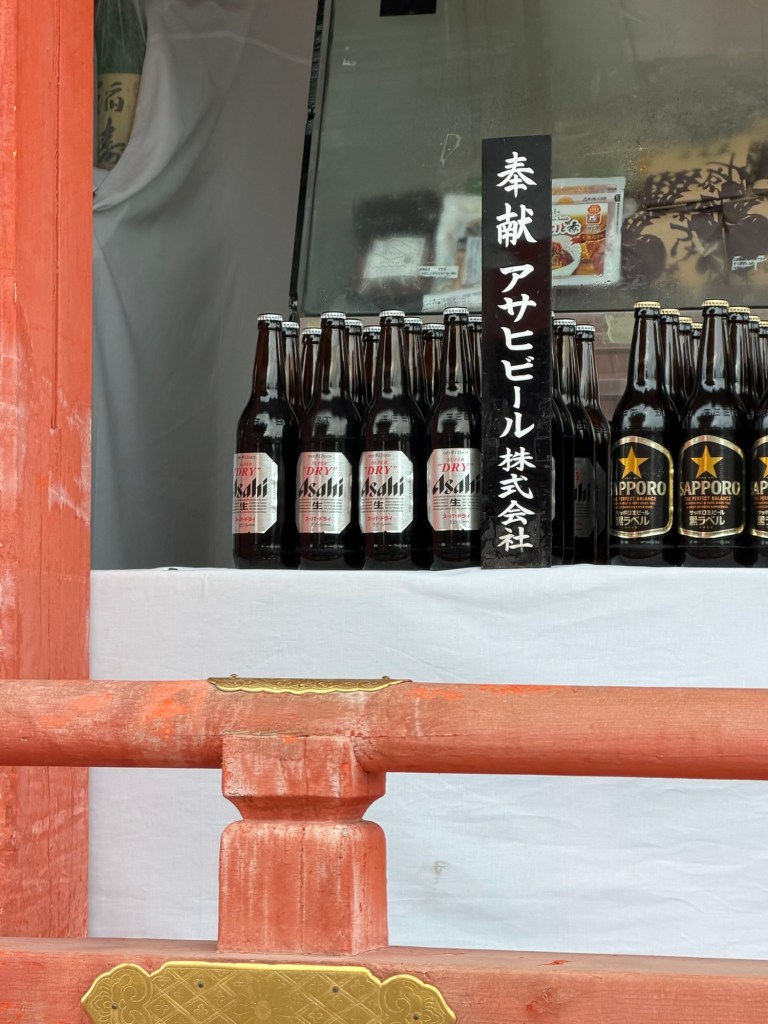
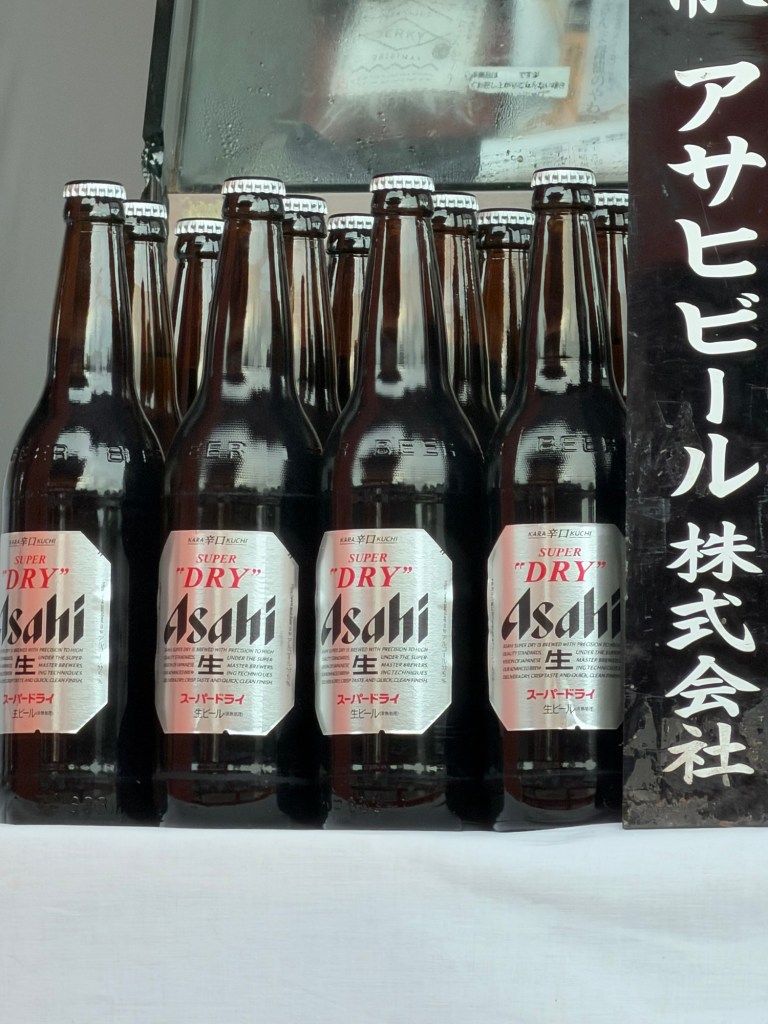
I’m saying nothing but given the latest news on Asahi
On the torii gates: the trails do lead into the forest but they also – if you keep on going – continue all the way up and loop around Mount Inari. Mount Inari is 233 metres high, and it is 233 metres high! Be prepared for quite a climb, but it is worth it – something quite different. The 4km looping pathway is called Sen-bori-torri (1000 torii), but it’s more like 10,000 (this is a fact), with several steep flights of steeps, a few of them significantly long, at that. The route is punctuated with hundreds of sub-shrines and fox statues – made all the more atmospheric as the light fell.
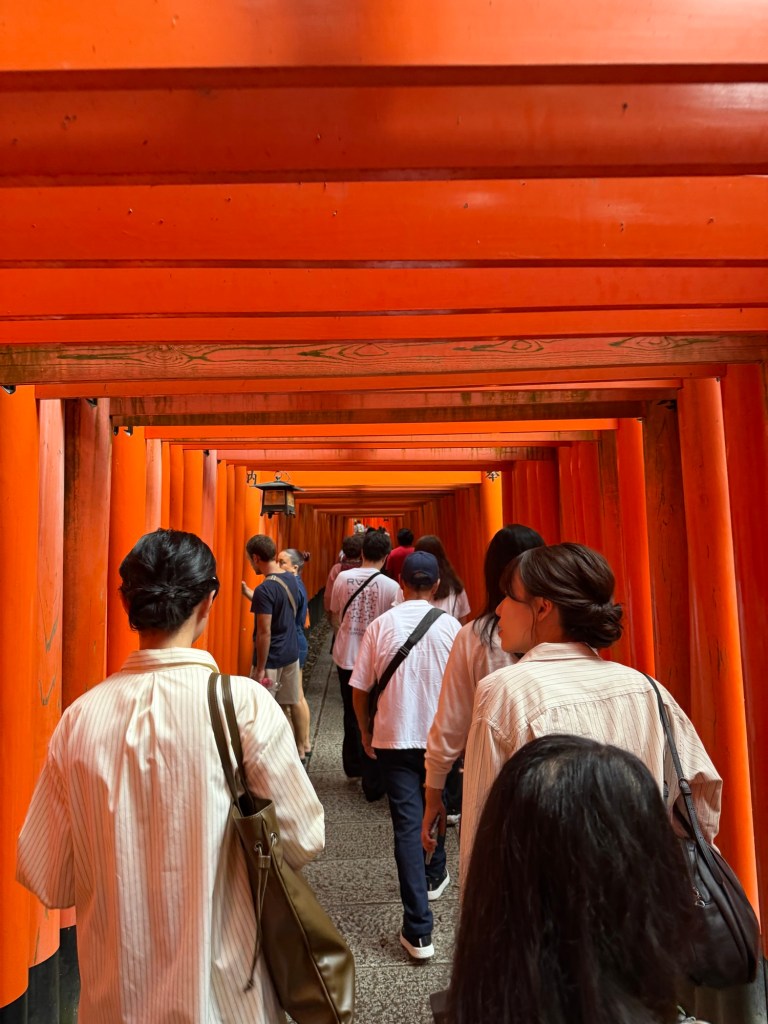
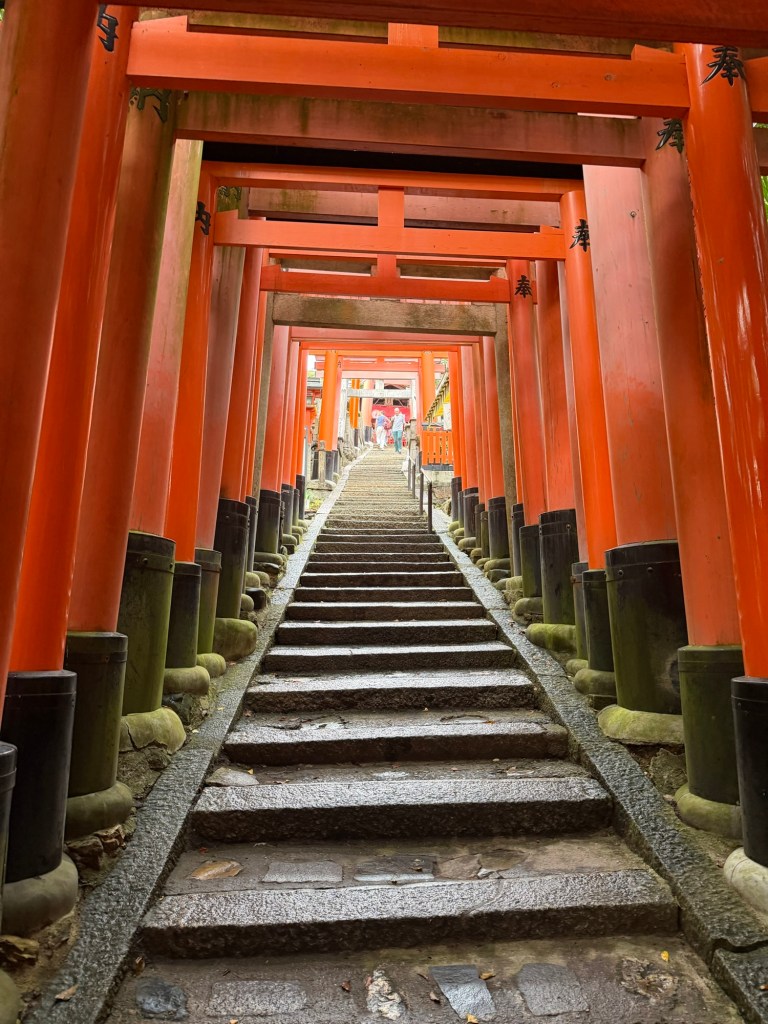
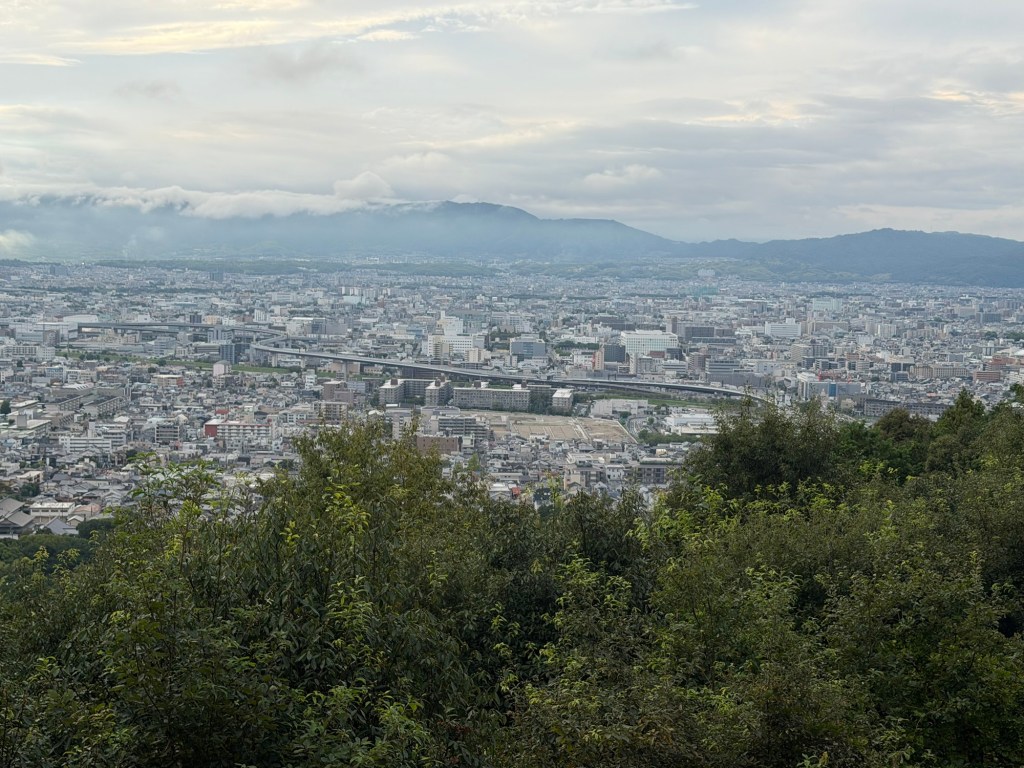
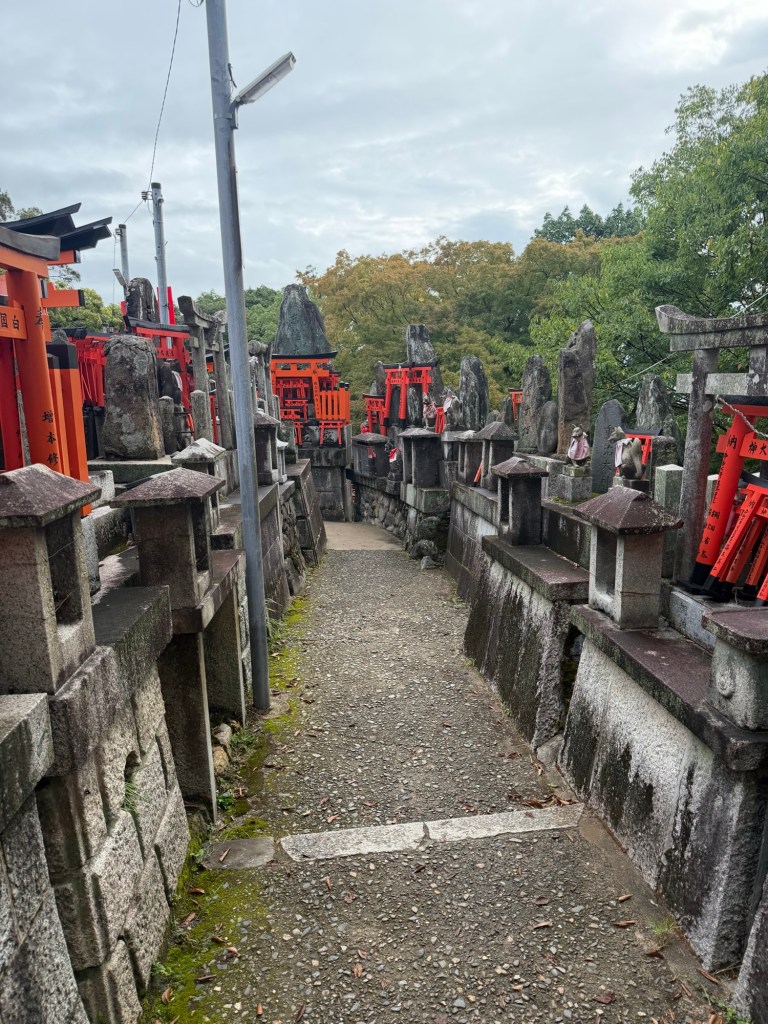
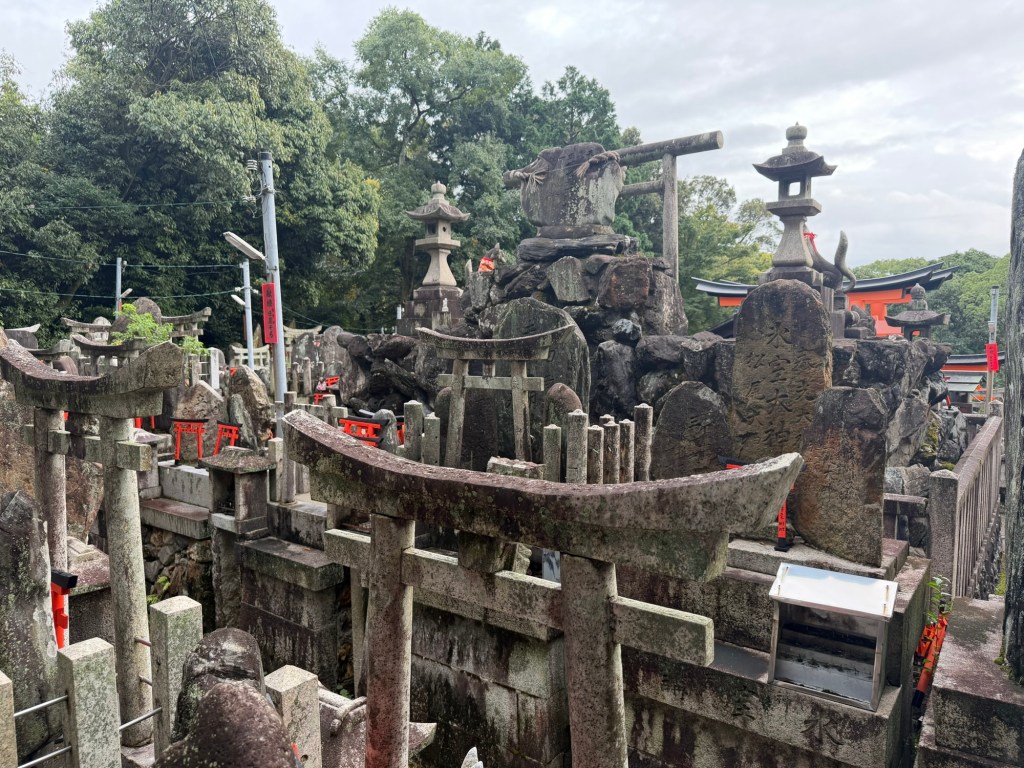
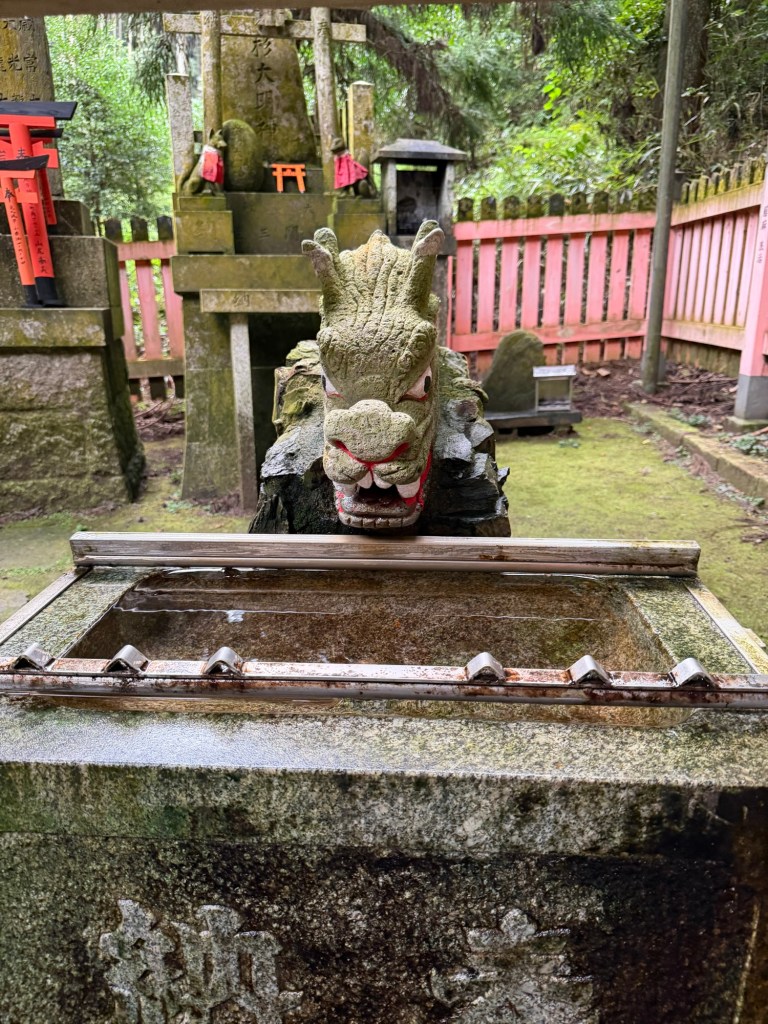
The higher you go, the more peaceful it becomes as people peel off. Heading back down is a blessed relief. I wonder, did Edmund Hillary feel quite so chuffed with himself as we did? Of course he did. Good on you, Ed!
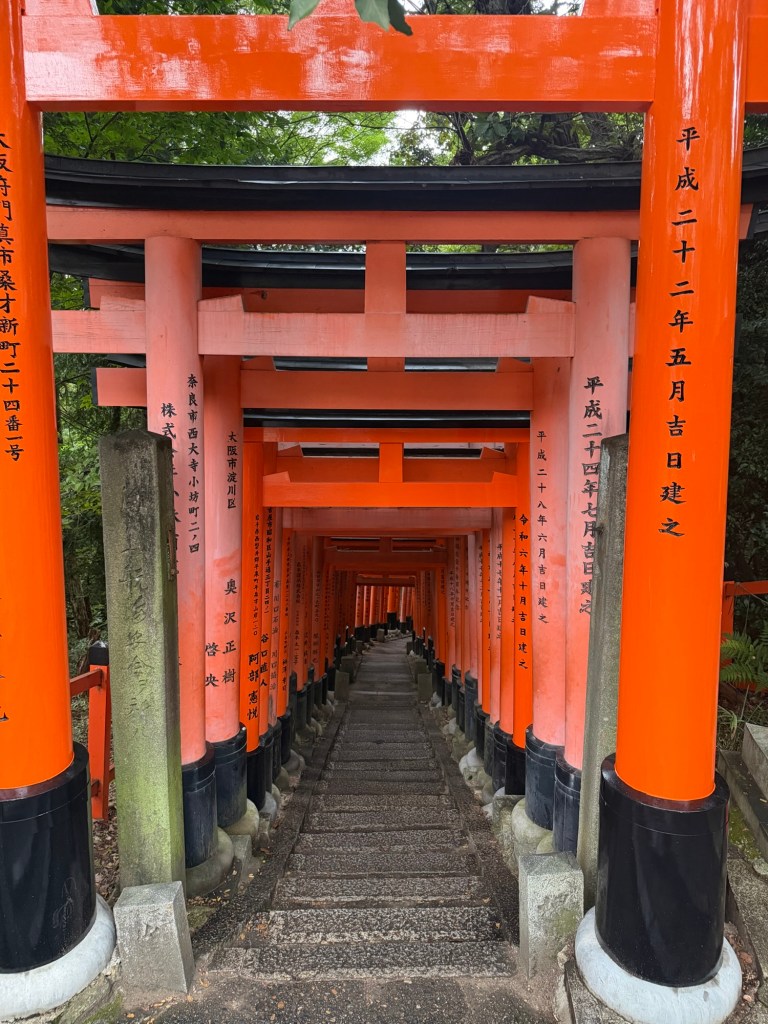
We have really enjoyed today. Something to eat, a couple of beers and a day trip to Osaka to look forward to tomorrow.
 Sailing off to Sparta
Leave a comment