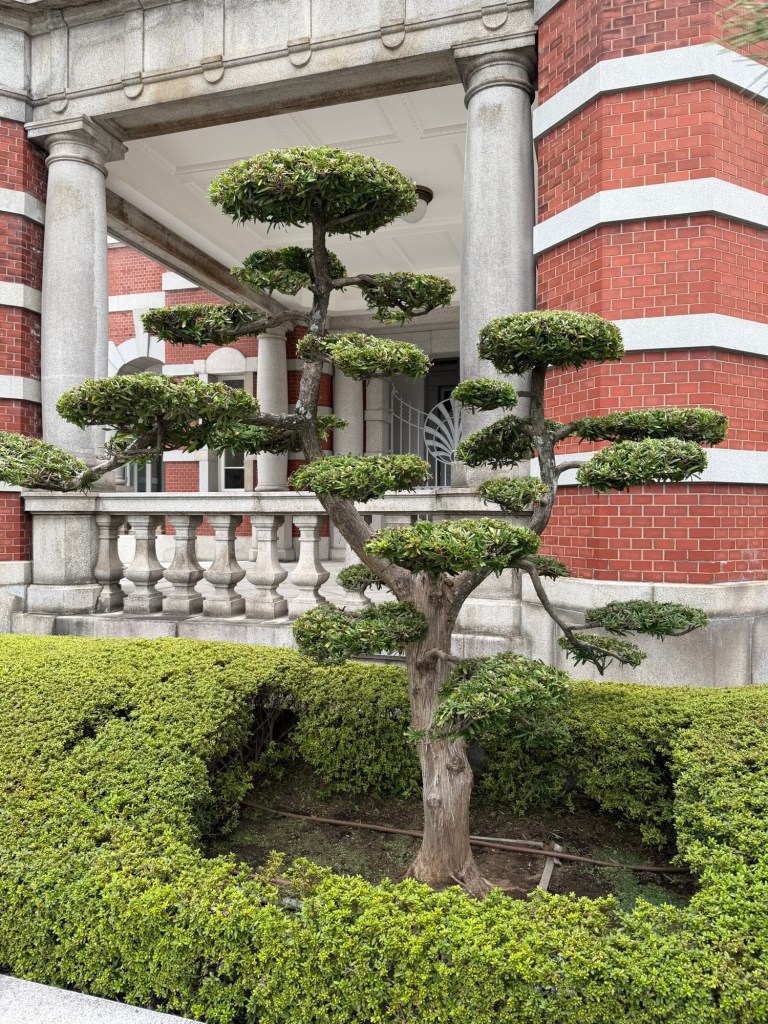
In Japanese, Tokyo (東京) means “Eastern Capital”.
- 東 (tō): This kanji character means “east”.
- 京 (kyō): This kanji character means “capital” or “metropolis”.
Before 1868, the city was known as Edo (江戸), a name derived from the words for “cove” and “entrance”.
The name “Tokyo” was chosen in direct relation to Kyoto (京都, Kyōto), the former capital of Japan.
- Kyoto means “capital city”.
Today is our last full day in Tokyo before moving on to Kyoto, tomorrow.
Our first target today is Ginza. According to the Lonely Planet guide, Ginza has a reputation for being Tokyo’s ‘swankiest neighbourhood’, and is the city’s ‘premier shopping spot’. Ginza is where the silver-coin mint factory was located during the Edo period – in Japanese, gin means ‘silver’.
Walking to Ginza we hit upon this long (300m or so) run of places to eat, tucked under the railway arches.
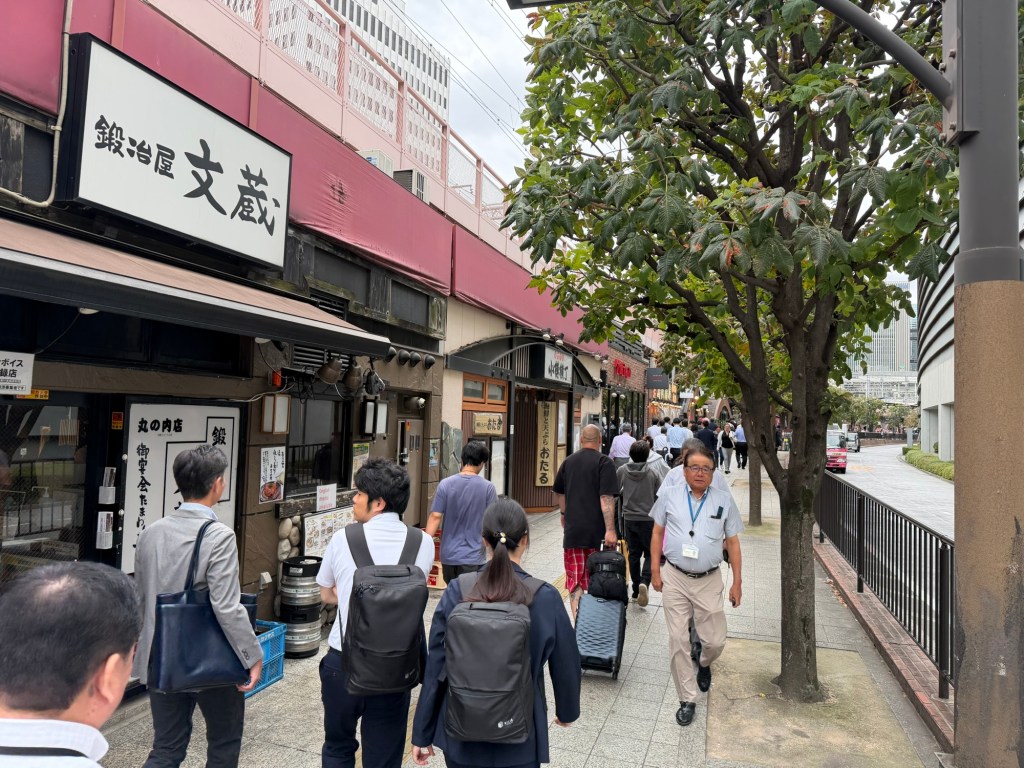
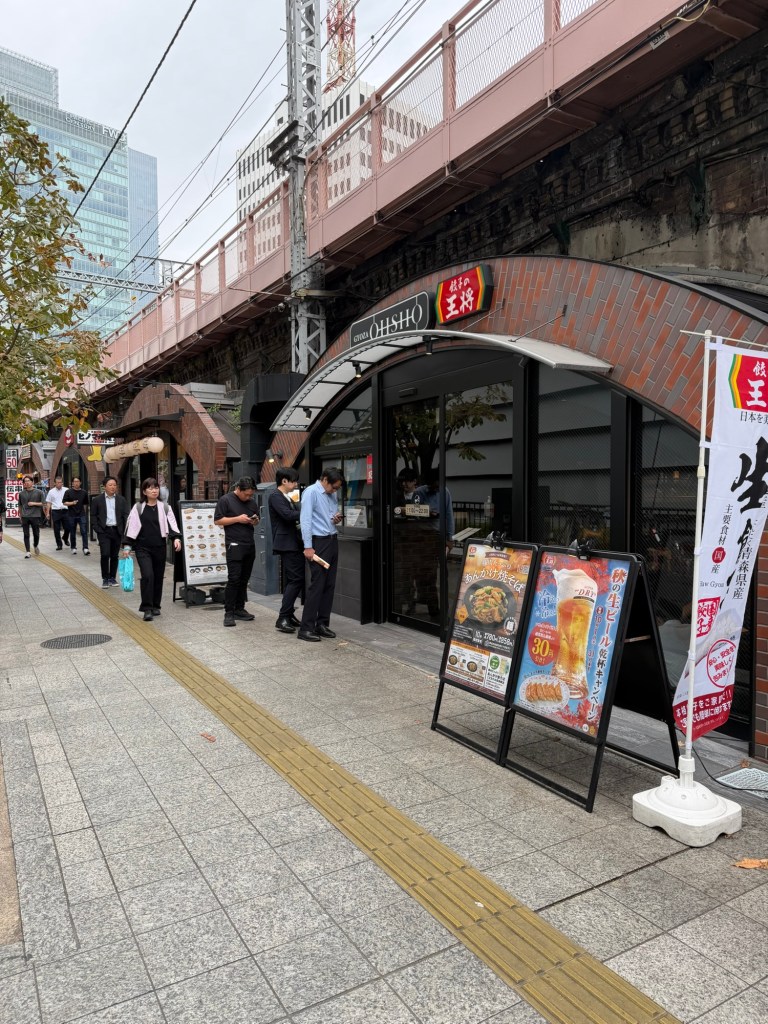
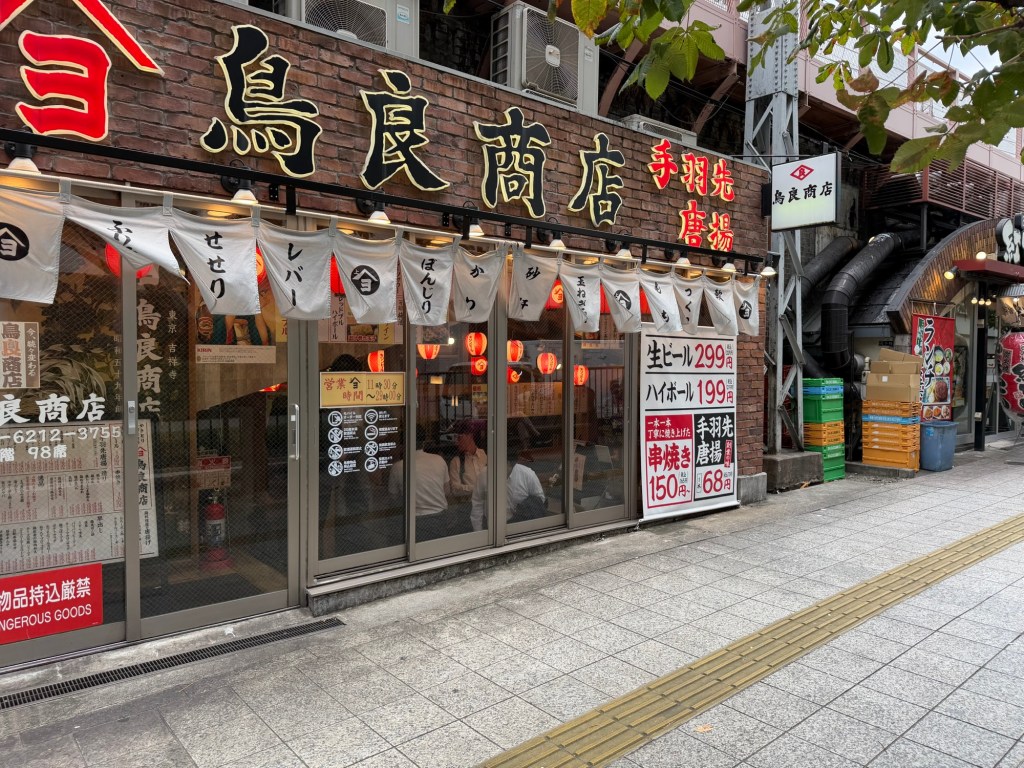
Clearly, they are places popular with office workers. Marking it down as a potential area for eating out this evening, we jumped in elsewhere for a coffee and something sweet.
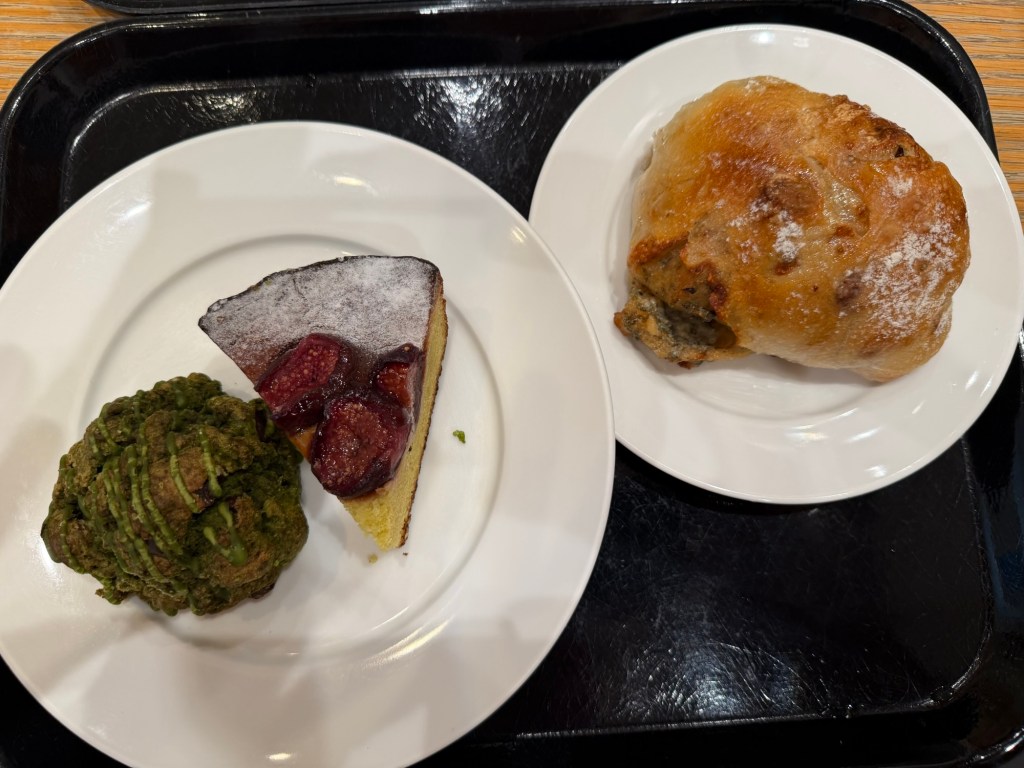
Green tea scone, fig and pistachio cake + Gorgonzola and walnut bread.
Sat enjoying the fare, a quick Google consultation resulted in this:
The row of eating places under the arches near Ginza is called Yurakucho Gado-shita (or Gado-shita), a traditional term for restaurants situated under train tracks. Makes sense. Typically logical. We like the Japanese, no nonsense, descriptions. And that goes for direction, too.
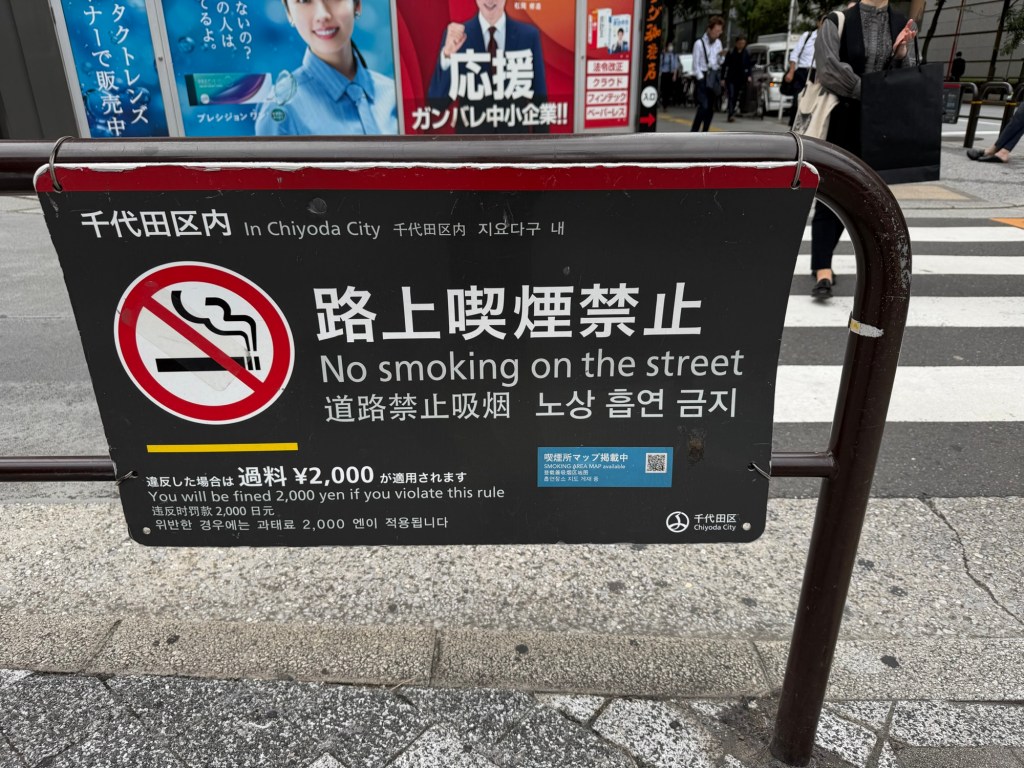
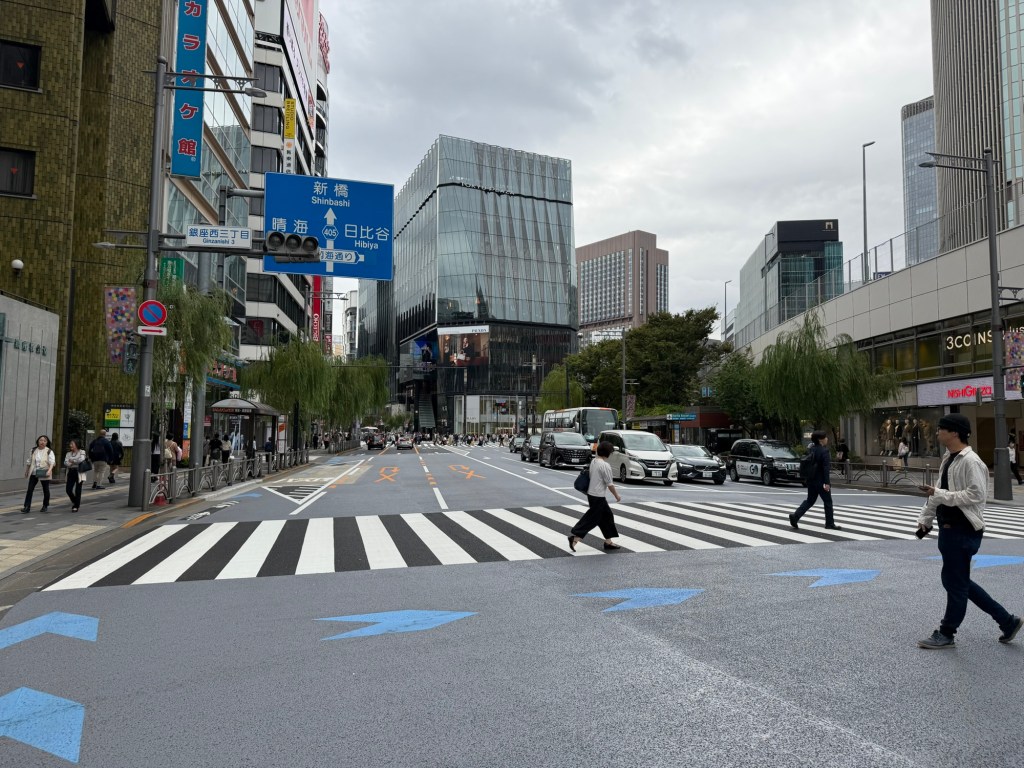
Central Tokyo really does have such a sense of space. Street etiquette is very marked, nobody but nobody disobeys the lights at the plentiful crossing points. And guess what, you fall in with everyone else and do the right thing! How often do we do the exact opposite in ‘the Western World’?

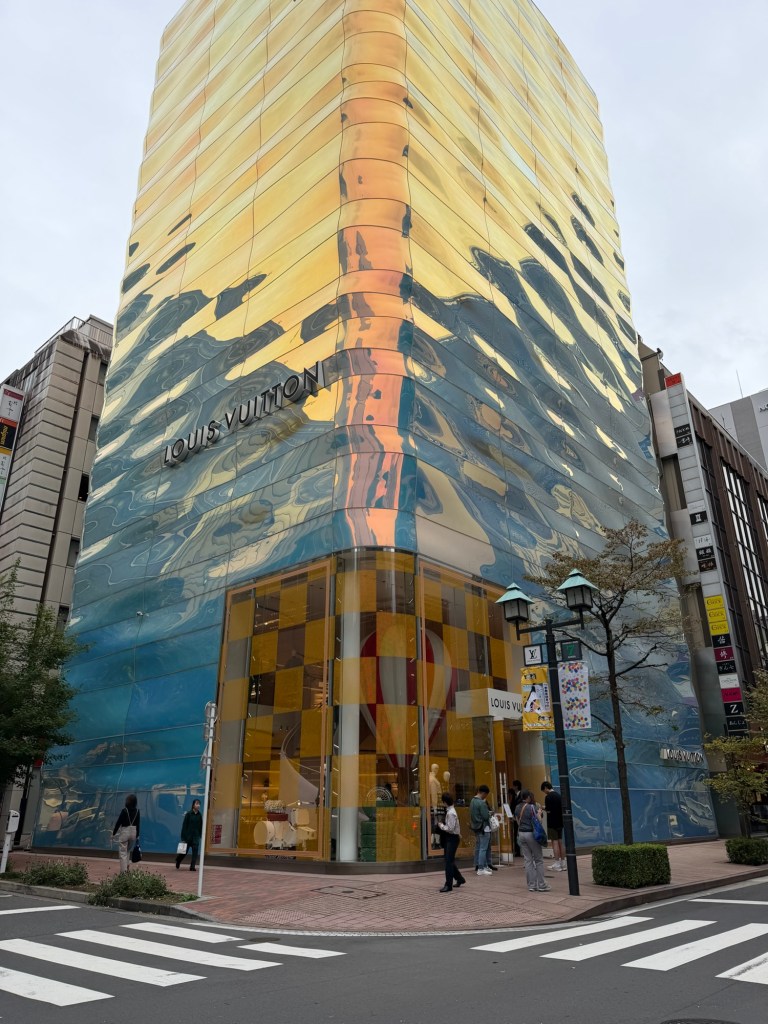
We found the posh shops. Impressive style, equally impressive prices. I guess someone has to pay for the facia, not to mention the rates.
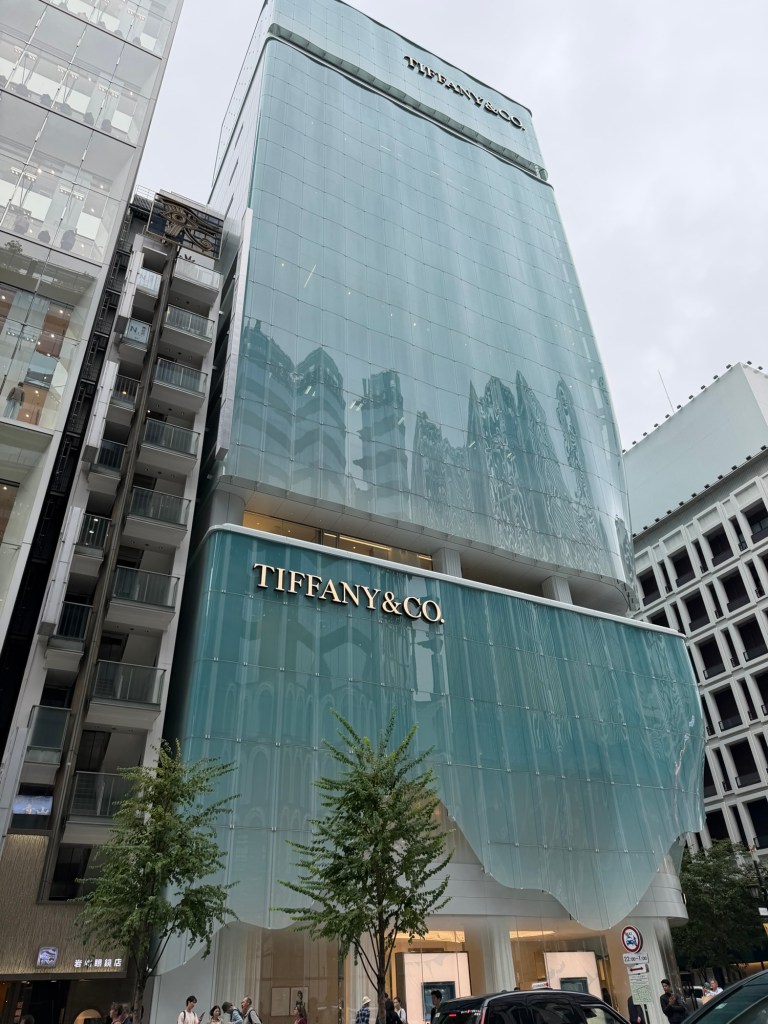
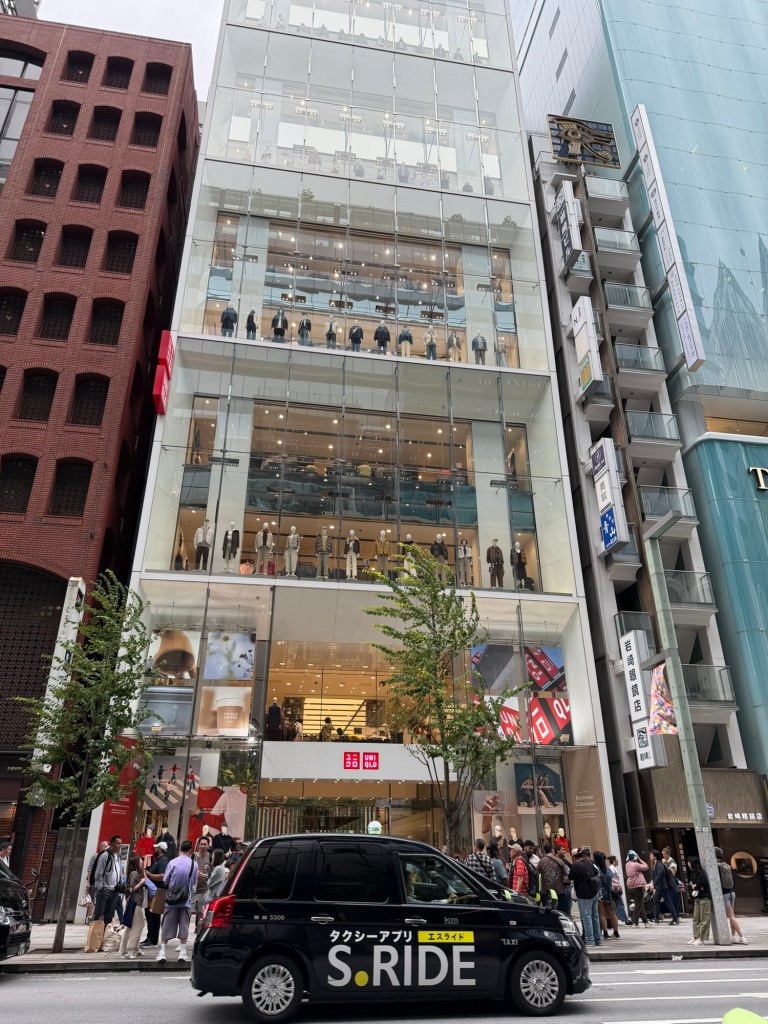
We have favoured Uniqlo for a while now, more within our spend bracket. Check this baby out…
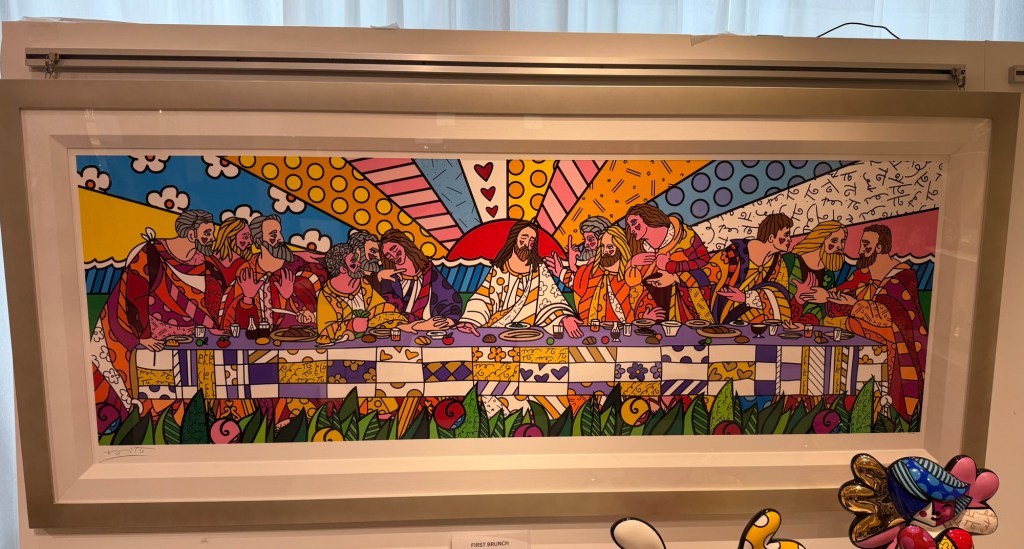
We found the perfect picture to hang over our dining table back home.
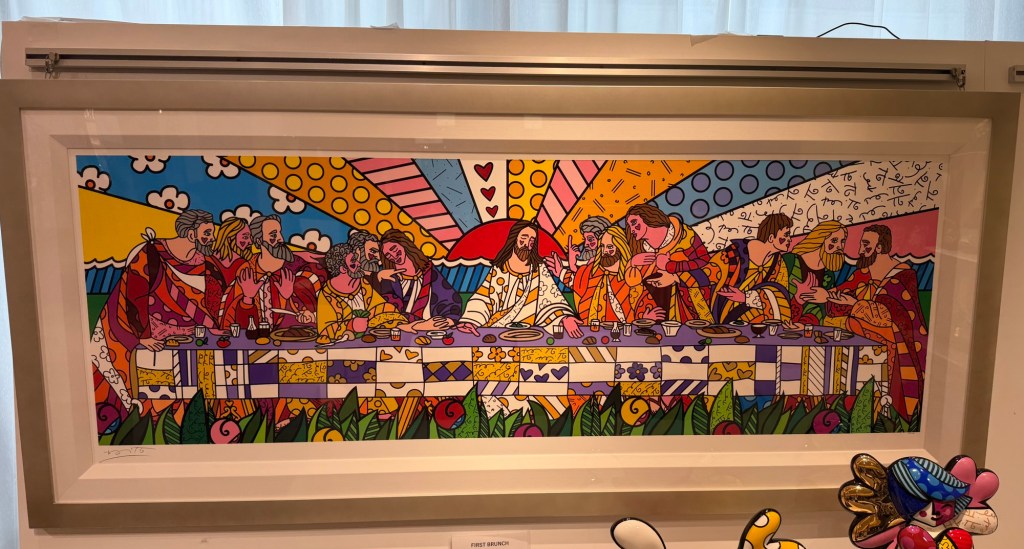
A little irreverent perhaps or simply fun? We are going with the second. Price? £4,000 plus! We moved on…
The artwork is by Brazilian-born, Romero Britto, founder of the Happy Art Movement. We are all for spreading happiness in our home but cannot extend to that, unfortunately.
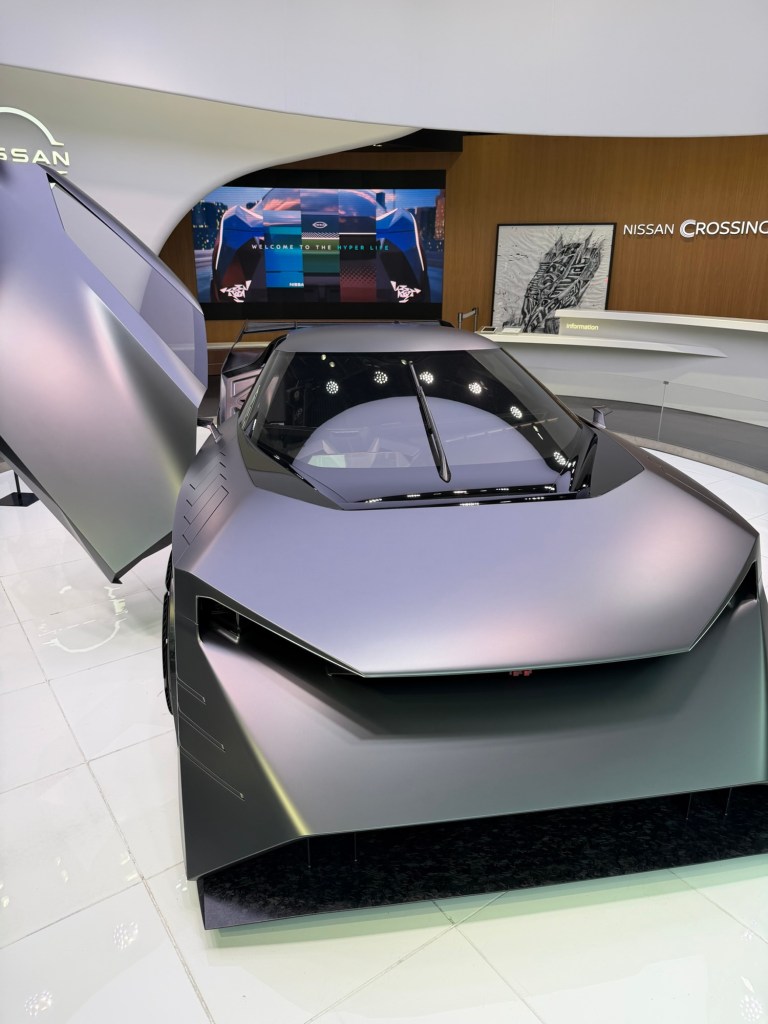
New car anyone?
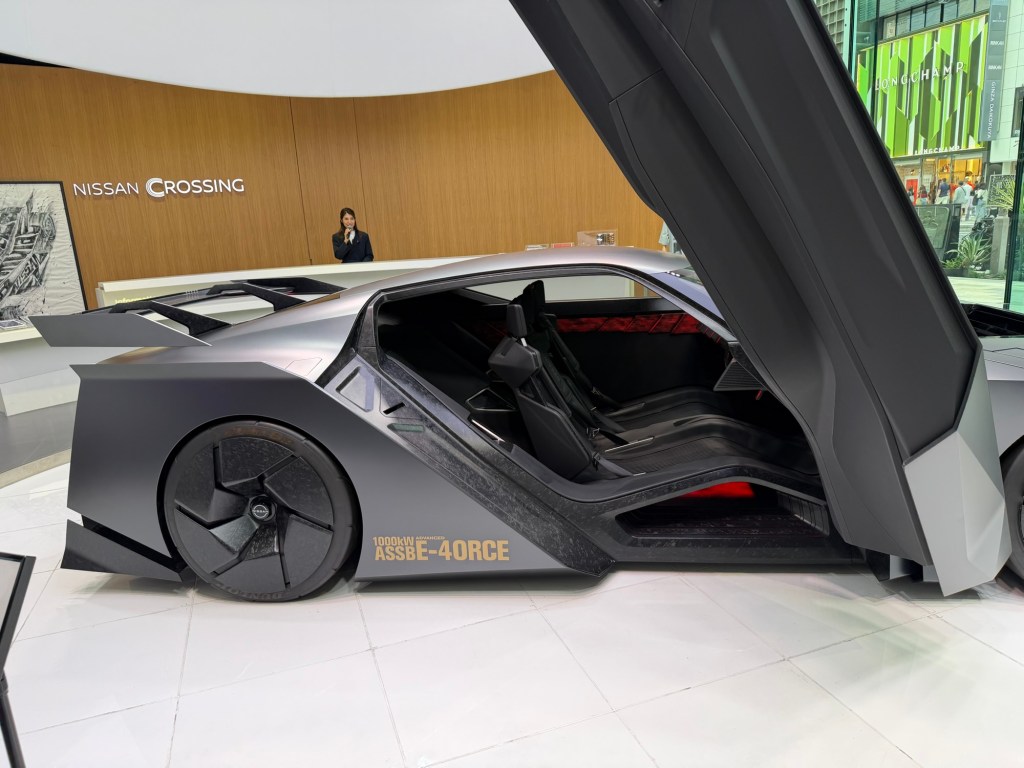
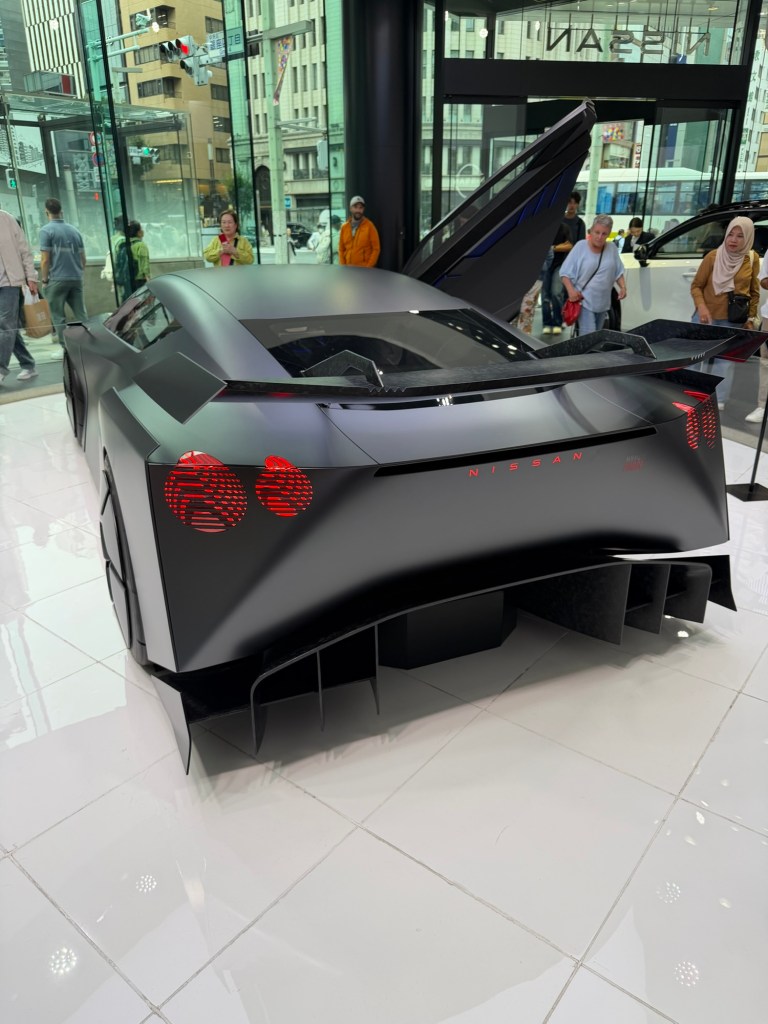
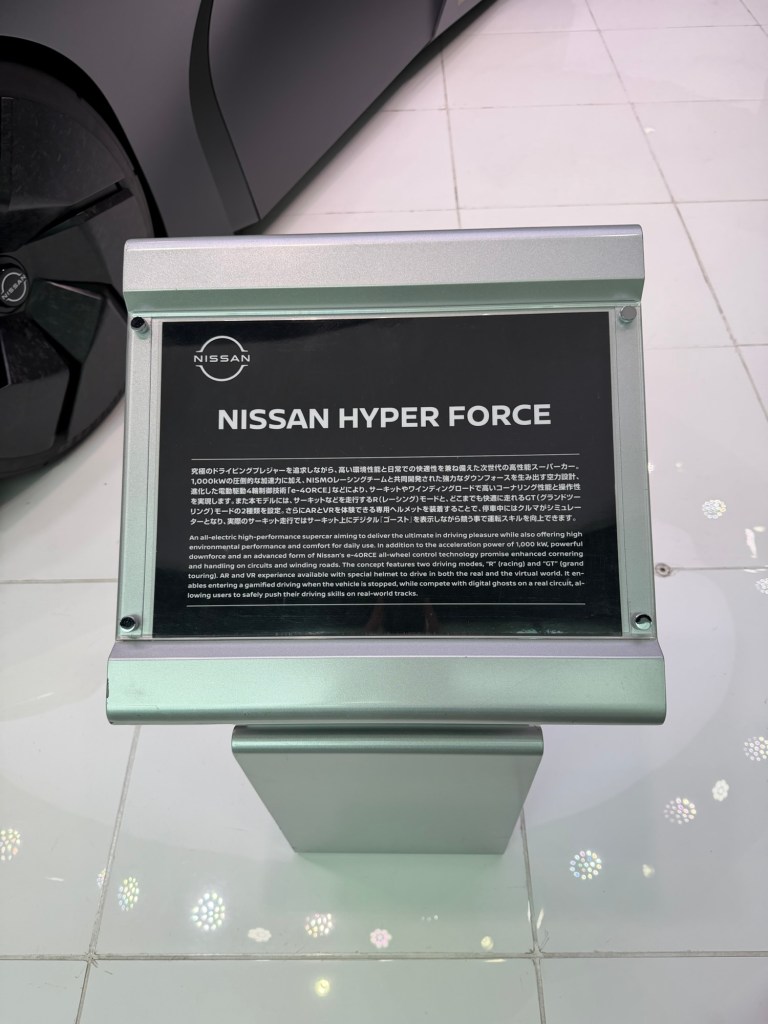
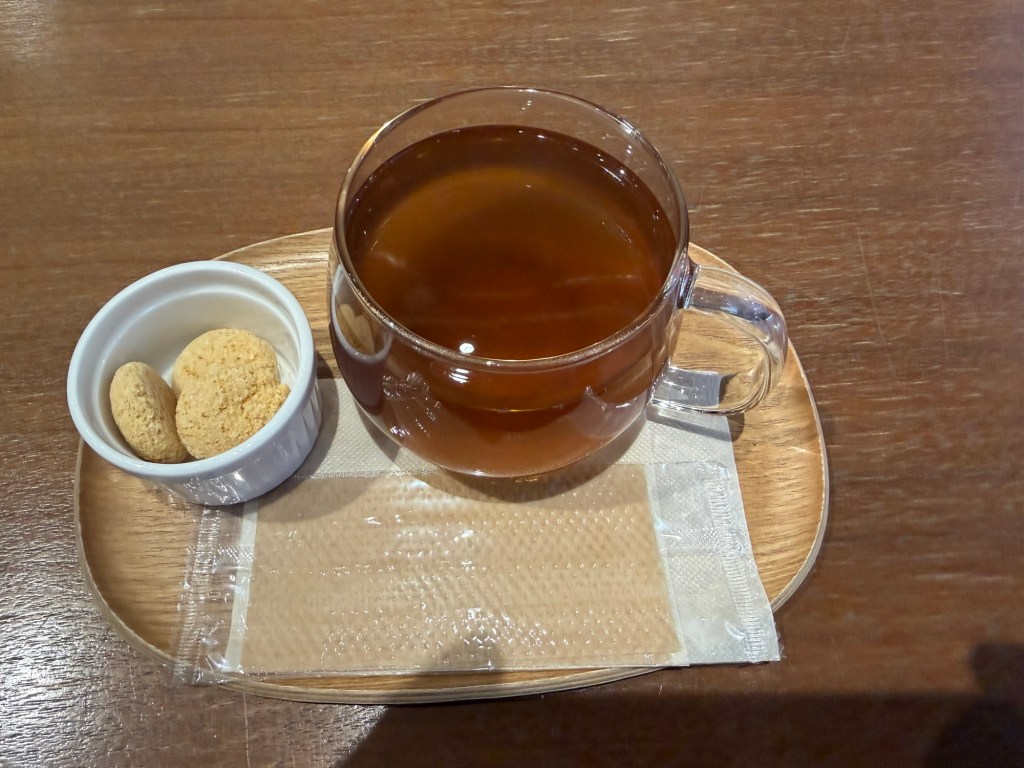
Halt for a roasted green tea. Flavourful and very refreshing.
Next stop was Tsukiji Outer Market (築地場外市場), the place go for a spot of freshly caught seafood or sushi. Unfortunately for us, they start early and shut up shop at 2 p.m.
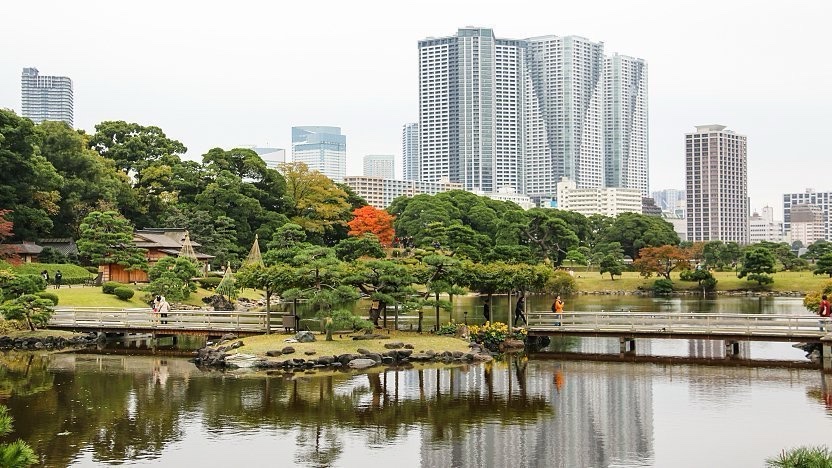
Ah well, we moved on down to Hama Rikyu (浜離宮, Hama Rikyū), a large landscape garden alongside Tokyo Bay. It was originally built as a feudal lord’s Tokyo residence and duck hunting grounds during the Edo Period (1603-1867). I wonder what he would make of today’s skyline?
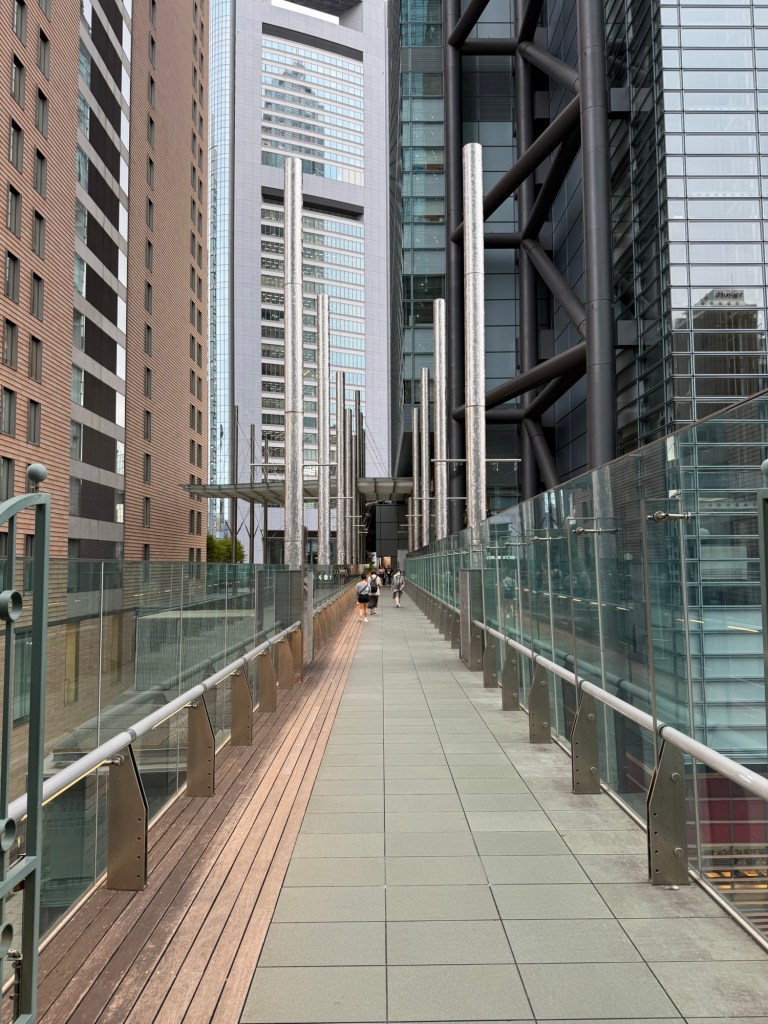
In certain areas elevated walkways – à la Hong Kong – allow for a safer and easier walk, above street level.
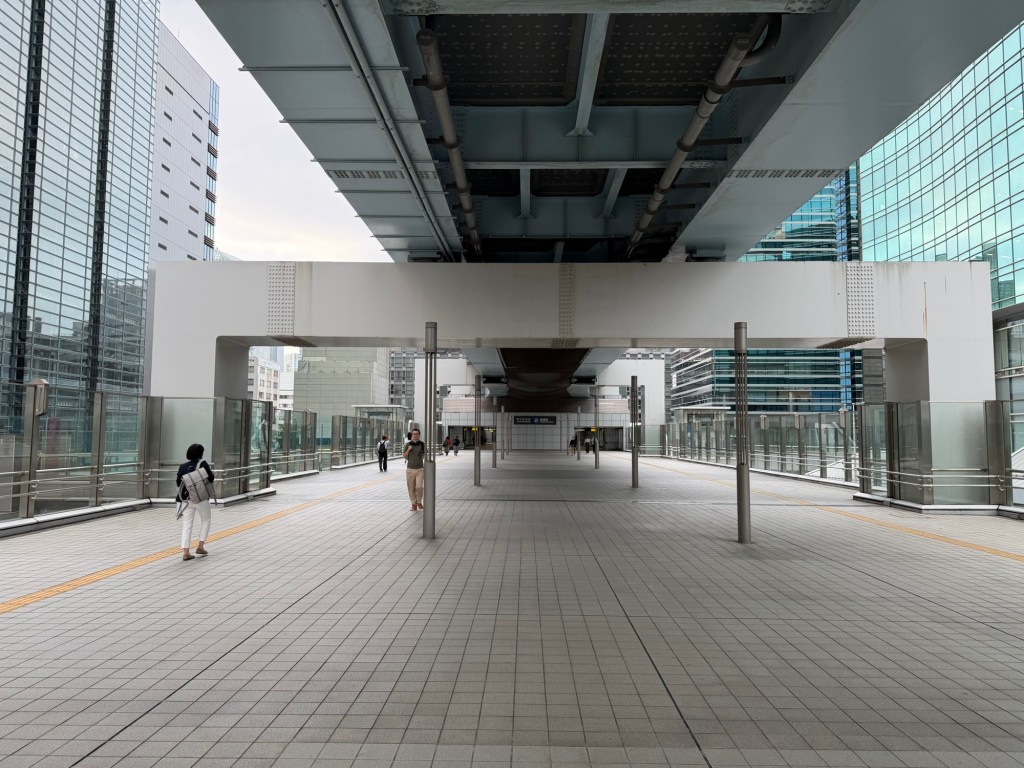
Underneath the arches it was for our evening meal. We really did feel that we were out with the locals, and all the better for that.
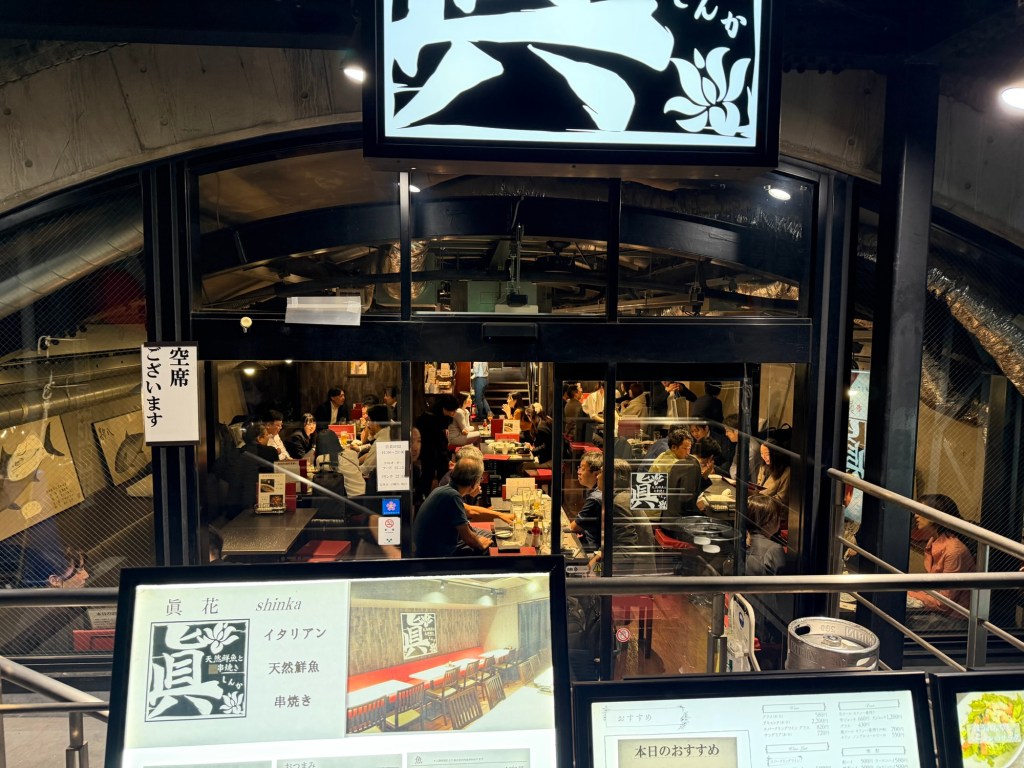
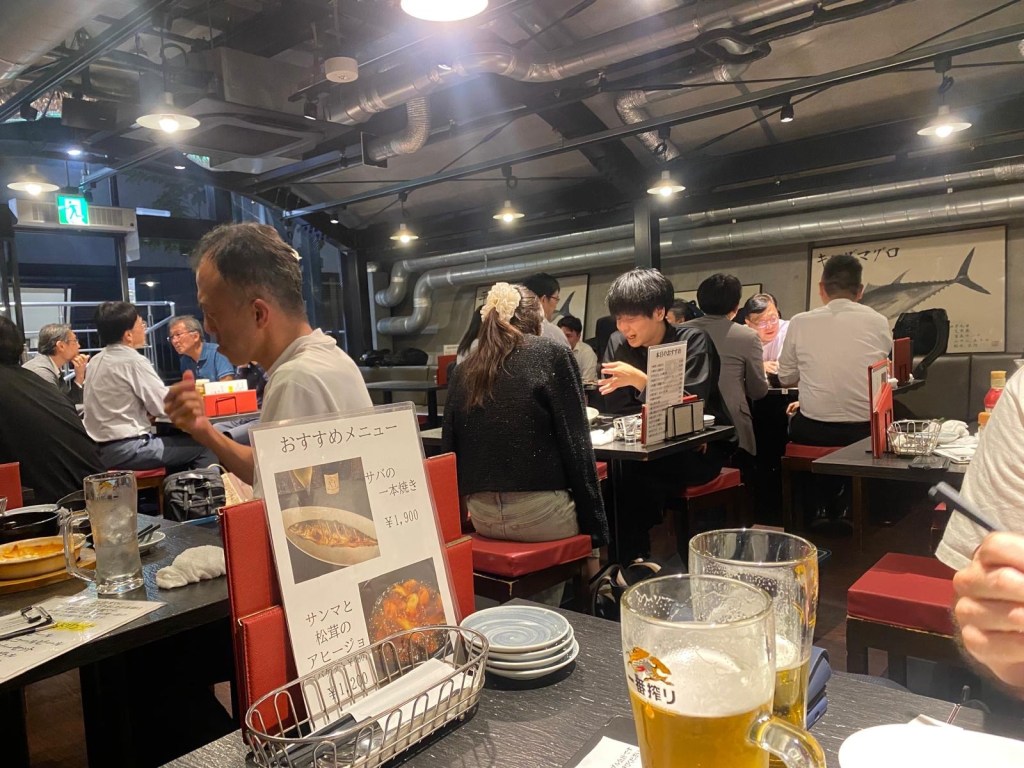
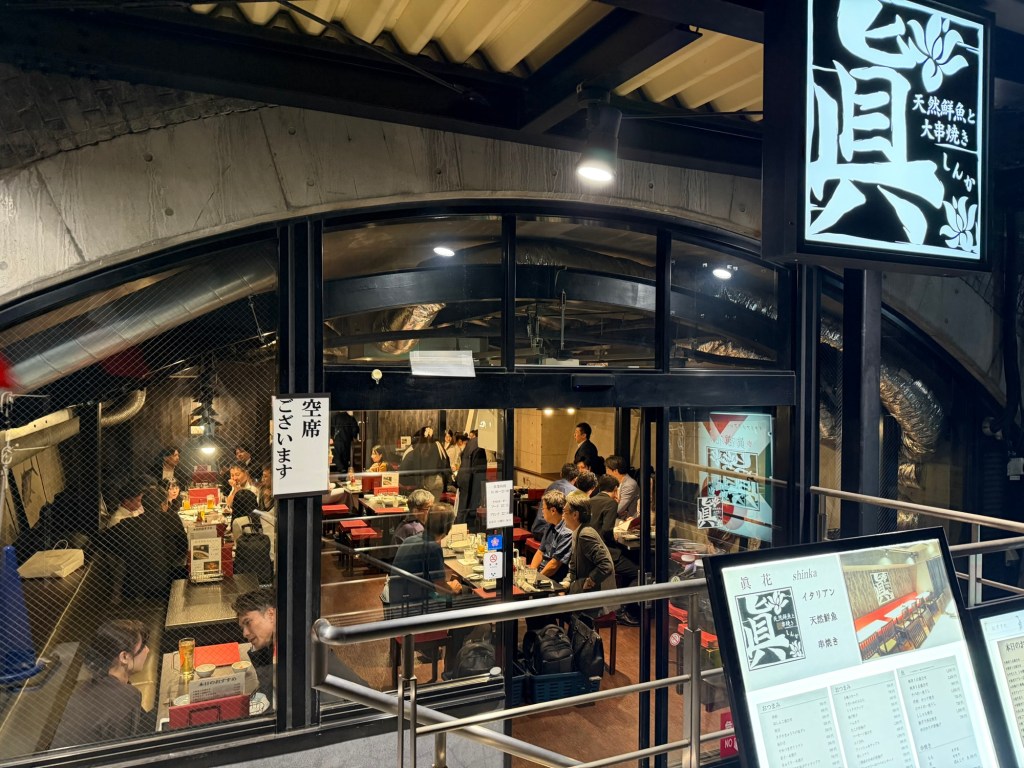
And, for the record, ‘our local’ in Tokyo, Stand T, Marunouchi.
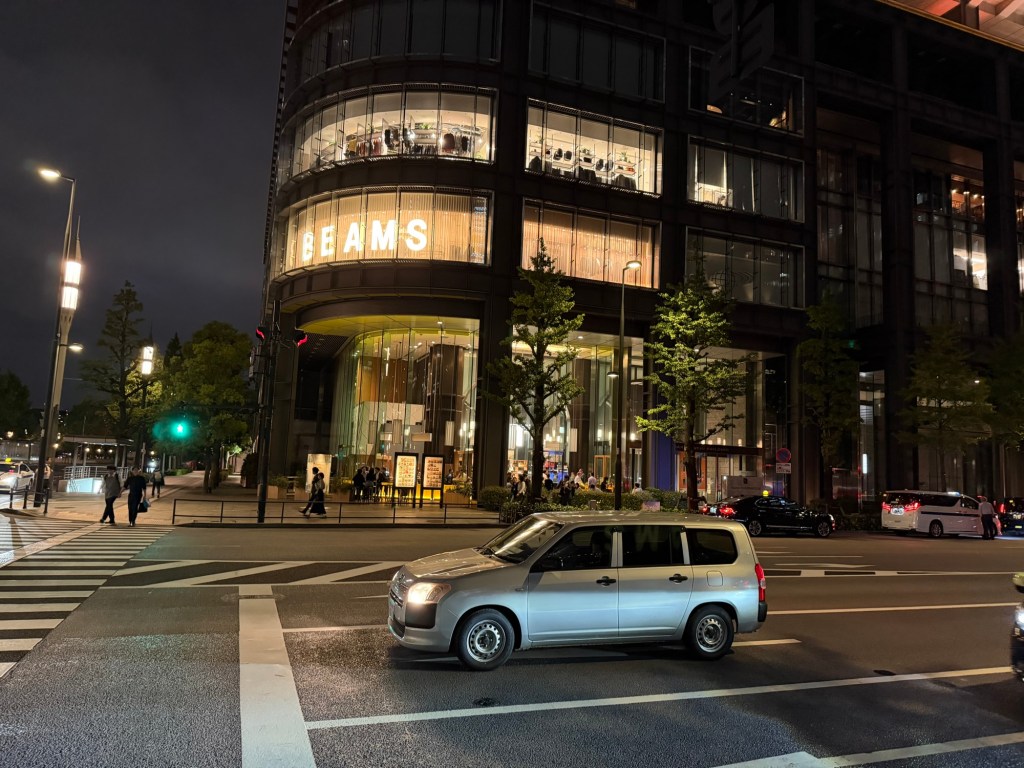
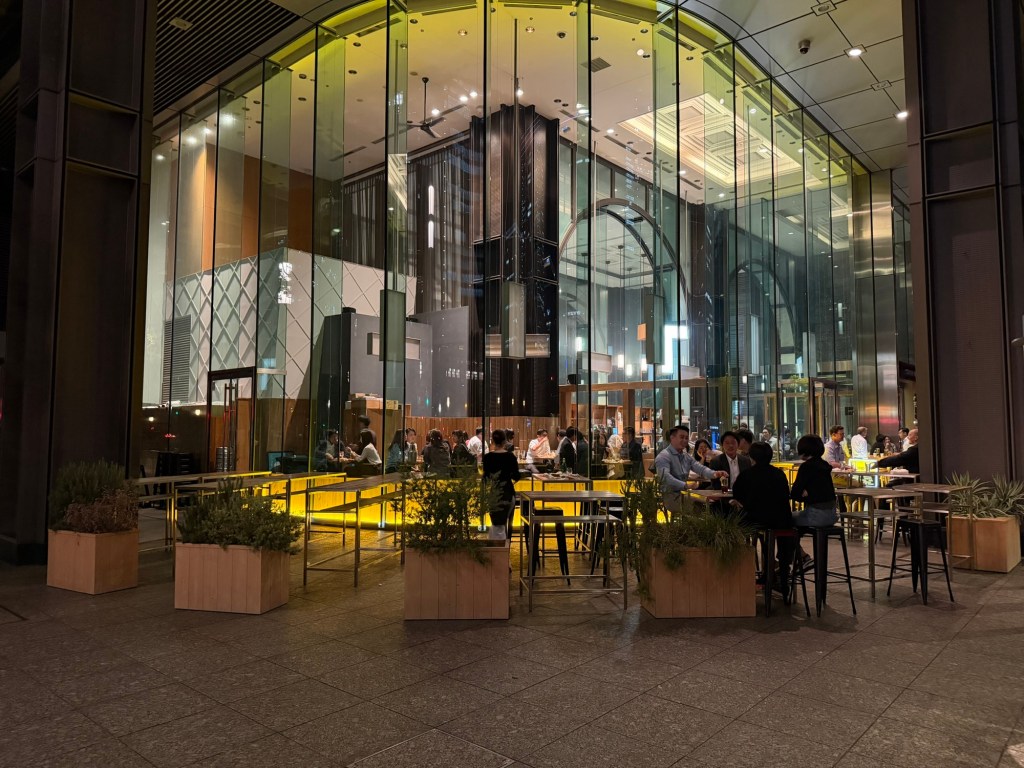
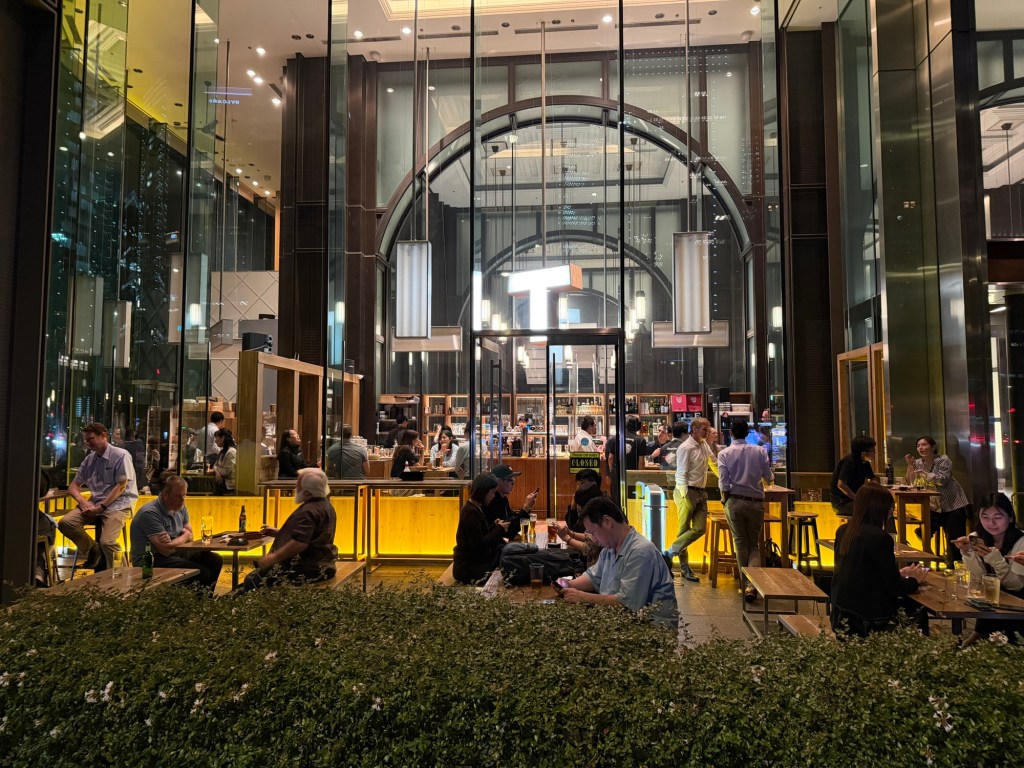
Another memorable day in Tokyo. Our final day. On to Kyoto 京都, tomorrow.
 Sailing off to Sparta
Leave a comment